

Afghanistan’s Trade Recalibration: Why Pakistan Remains the Indispensable Partner
Afghanistan’s new rulers often speak proudly of their country as “the heart of Asia,” a phrase meant to recall the glorious Silk Road days when caravans passed through its mountain valleys linking...

Afghanistan’s new rulers often speak proudly of their country as “the heart of Asia,” a phrase meant to recall the glorious Silk Road days when caravans passed through its mountain valleys linking empires and markets. But that romantic vision no longer fits today’s world. Global trade now flows through the oceans, digital networks, and complex global supply chains, not along the rugged passes of Central Asia. In this new era, a landlocked, industrially weak, and politically isolated Afghanistan struggles to find any real leverage. Despite its ambitions, the Taliban regime depends heavily on the goodwill and geography of its neighbors, above all, Pakistan.
Unrealistic Shift Toward Iran and Central Asia
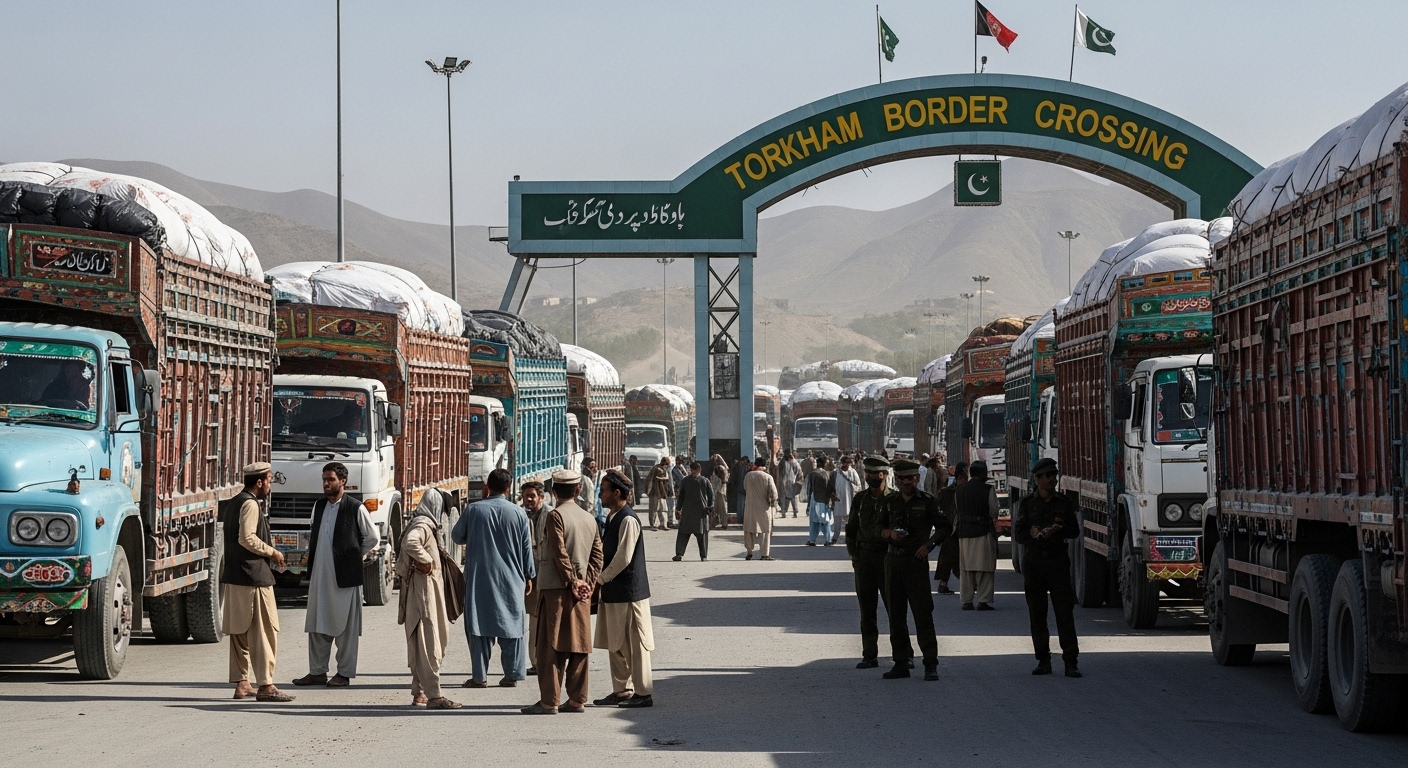
Deputy Prime Minister Mullah Abdul Ghani Baradar recently urged Afghanistan to shift trade away from Pakistan toward Iran and the Central Asian Republics. The idea may sound like independence, but the reality is far less promising. Pakistan provides Afghanistan with the fastest and most efficient route to the sea. Goods traveling through Pakistan’s Karachi Port reach their destination in just three to four days. The same journey through Iran takes six to eight days, while routes through Central Asia are even longer. Southern provinces like Kandahar and Helmand are only 150 to 300 kilometers from the Chaman–Spin Boldak crossing into Pakistan, but more than 1,200 kilometers from the Iranian route at Zaranj or Delaram. Even the northern provinces, Balkh and Baghlan, are 500 to 700 kilometers from Pakistan’s Torkham border, compared with nearly a thousand kilometers to Iran’s Islam Qala. Geography clearly favors Pakistan.
Economic Costs of Bypassing Pakistan
The cost difference tells the same story. Transport through Iran or the Central Asian Republics raises expenses by 30 to 50 percent. Shipments that once reached their destinations within 22 to 25 days through Karachi now take up to 60 days via Iran, adding another two to two-and-a-half thousand U.S. dollars per container. Trade with India also depends on Pakistan. About 90 percent of the USD 500 million annual India-Afghanistan trade passes through the Wagah border. Any attempt to bypass this route would increase costs by 15 to 20 percent, forcing India to provide additional subsidies. For Afghan exporters, especially those dealing in fresh fruits and perishables, which make up more than 80 percent of their exports, such longer and more expensive routes mean disaster. Spoilage, delays, and poor cold-storage facilities would strip Afghan goods of their competitiveness in regional markets.
Iran’s Distrust and the Cultural Divide
Even politically, turning toward Iran carries serious risks. Despite sharing a long border, Iran and Afghanistan have limited cultural or ethnic affinity. Many Iranians look down on Afghans as socially and economically inferior, and this bias is reflected in the harsh treatment of Afghan migrants. Tehran’s attitude hardened further after the Iran-Israel conflict, when Afghan access to major Iranian cities was restricted and deportations reached as many as 3,000 Afghans per day. Long-standing disputes over the Helmand River’s water, border security issues, and fears of ISIS-K infiltration have deepened mistrust. Instead of cooperation, Afghan dependence on Iran would likely become one-sided and exploitative, leaving Kabul more vulnerable than before.
How U.S. Sanctions Reinforce Dependence
There is also a hidden geopolitical trap. Afghanistan’s reliance on Iranian routes would quietly increase U.S. leverage over the Taliban regime. Access to Iran’s Chabahar Port is controlled by six-month sanctions waivers granted to India. If Washington chooses not to renew them, Afghan trade could grind to a halt overnight. U.S. sanctions also block many Iranian banks, making dollar and euro transactions almost impossible. Afghan traders could be forced into barter deals or third-country currencies, exposing their banks to the risk of secondary sanctions. Rising insurance costs, limited port capacity, and shipping delays would further weaken supply-chain reliability. In effect, Afghanistan’s economy would become subject to U.S. regulatory decisions, giving Washington indirect control over the Taliban’s behavior.
Internal Power Shifts Within Afghanistan
Inside Afghanistan, a shift in trade corridors would also reshape the balance of power. The eastern and southeastern province, Kandahar, Kabul, Nangarhar, and Paktia, are predominantly Pashtun and have historically prospered because of their proximity to Pakistan. They have enjoyed better trade access and greater political influence. If routes shift westward or northward through Iran and the Central Asian states, the economic and political weight could move away from these traditional power centers. Western and northern regions, long marginalized, might gain influence at the expense of the Pashtun heartland. This internal rebalancing could erode the authority of eastern commanders, weaken their revenue streams, and upset the patronage networks that have kept the Taliban movement cohesive.
Strategic Gains for Pakistan
For Pakistan, however, these developments could bring long-term advantages. The regulation or partial closure of Afghan transit trade would help reduce the estimated Rs 3.4 trillion Pakistan loses every year to smuggling and another Rs 1 trillion due to the re-entry of duty-free Afghan imports into local markets. Curtailing these flows would also help restrict narcotics, illegal weapons, and militant infiltration from across the border. Domestically, reduced cross-border trade could encourage greater economic integration of Pakistan’s Pashtun population in Khyber Pakhtunkhwa and Balochistan with the developed provinces of Punjab and Sindh, strengthening national unity and cohesion.
Pakistan’s Expanding Connectivity Beyond Afghanistan
At the same time, Pakistan is not standing still. Through projects linked with China, it is building entirely new trade routes that bypass Afghanistan altogether. The development of the Gwadar Port, the Karakoram Highway, and the expansion of the TIR system have opened direct links between Pakistan, China, and Central Asia. The upgraded Thakot–Raikot section worth two billion dollars, along with new overland corridors like Karachi–China–Kazakhstan–Moscow and the emerging Pakistan–Russia railway, are transforming Pakistan into a major regional logistics hub. Gwadar is being designed as a center for rapid air and cargo transport under the international Customs Convention, allowing secure, high-speed shipments to Central Asia and beyond. These connections ensure Pakistan’s relevance in the region’s future trade networks, whether or not Afghanistan cooperates.
Every Road Still Leads Through Pakistan
Despite the Taliban’s talk of self-reliance and new corridors, Afghanistan cannot escape the geography that ties its economy to Pakistan. The alternatives through Iran or Central Asia are longer, costlier, and politically risky. Pakistan remains the only practical route to the sea, the only reliable transit partner, and the only country capable of anchoring Afghanistan’s trade within a stable framework. For Islamabad, maintaining selective control over these routes offers not only economic benefits but also strategic leverage. It allows Pakistan to demand stricter border management, better counter-terrorism assurances, and cooperation against smuggling and narcotics. In a region shaped by shifting alliances and economic ambitions, one fact remains unchanged: for Afghanistan, every road to prosperity still runs through Pakistan.
Author