


An international report dated 31st December 25 by the International Crisis Group on Pakistan–Afghanistan relations exposes an unpleasant reality about the new post-2021 regional status quo: that Pakistan has emerged as the most destabilized country due to the resumption of power by the Afghan Taliban in Kabul. Instead of reaping the strategic benefits, Islamabad has had to bear the human, economic, and security costs of a bad Afghan situation, and constant denial and evasion by the Taliban government and an indifferent regional world.
The militant violence within the territory of Pakistan has increased dramatically since the Taliban takeover in August 2021. Formal Pakistani statistics and unofficial security monitors indicate that terrorist attacks have more than grown by a significant margin of 60 per cent in the year 2021 to 2025. The ICG report indicates that over 600 Pakistani soldiers and police officers were killed in 2025 alone with most of them being targeted in Khyber Pakhtunkhwa and Balochistan. The losses associated with militancy have surpassed 1,200 civilians in a year when the number of casualties is put into consideration. Such statistics put Pakistan in the category of the most terrorism prone states in the world, even with its large terrorism infrastructure and decades of successful organized campaigns against terrorist organizations.
The Tehreek e Taliban Pakistan (TTP), also termed as Fitnah Al Khwarij (FAK) by the state of Pakistan, is at the center of this new instability. UN surveillance teams have consistently indicated that the FAK is based on the Afghan soil and has logistical facilities, as the Taliban openly reject the existence of the same group. In the case of Pakistan, it is no mere rhetoric, but it is a recognized security issue. Islamabad estimates that more than 70 percent of the major cross-border attacks since 2022 had includes the militants who had infiltrated the country through Afghanistan. The Taliban’s unwillingness to surrender FAK leadership or even break its networks has actually provided a free hand to violence against Pakistan.
The critics of Pakistan frequently refer to its history concerning the involvement into the Afghan Taliban groups in the post-2001 period, but most of them fail to take into consideration the further development of the policy and the subsequent sacrifices of this country. Pakistan has suffered over 80,000 lives through terrorism between 2003 and 2020.
by including civilians, security personnel, and law enforcement officials. According to the Ministry of Finance (Pakistan), the economic cost of this war was over 150 billion US dollars. These losses are not indicators of sponsoring militancy, but rather the result of being a frontline state in several overlapping wars.
In 2021-22, Islamabad had tried to control the TTP threatening dialogue with the help of the Afghan Taliban this was a practical attempt to save bloodshed and not a case of sovereignty compromise. The ceasefire became a visible display of concrete achievements: the foundations of the attacks decreased almost by 40 percent. It crumpled after TTP demanded the reversion of the constitutional merger of the old tribal regions with Pakistan into Khyber Pakhtunkhwa and introduction of parallel governments, stipulations that are incongruent with the Pakistan constitutional order. Such conditions could not be tolerated by any state that is facing an armed insurgency.
The ICG report also recognizes Taliban confession in private that they cannot or cannot take decisive actions against the TTP because of their ideological similarities, local preference and fear of internal disintegration. This confession points to a life and death mismatch. And Pakistan is likely to shut the rugged 2,600-kilometre frontier, and stave off militant leakage, whereas the de facto Afghanistan government are unwilling to take command of groups that assault a neighbouring state. Even with over 95 percent of the Durand line fenced at a price of more than 1 billion dollars, incursions of the border is still experienced by Pakistan depicting that border management is not sufficient to replace Kabul cooperation.
Further to the issue of security of Pakistan is the continued occurrence of separatist violence in Balochistan. Islamabad has also shown proof of foreign sabotage of Baloch militant organizations, consisting of funding and logistical assistance followed back to aggressive intelligence agencies. As much as international reporting tends to handle such claims with care, there have been numerous cases where the arrests, intercepted communications as well as confessions have implicated transnational aspects of the insurgency. This way, Pakistan is able to challenge Pakistan on two fronts within internal security and the two provinces are the ones bordering Afghanistan.
Pakistan has been restrained regionally. Although there were only some cross-border strikes in October 2025 after the fatal attacks, a ceasefire was agreed in Doha at the defence level of talks. Later participation in a diplomatic mission in Istanbul which did not result in any achievement can be traced to the nature of Pakistan’s inclination of diplomacy rather than escalation. This is different to the description of Pakistan as being reflexively militaristic. As a matter of fact, the activities of Islamabad have been measured, reactive and limited by an extreme concern of a regional escalation.
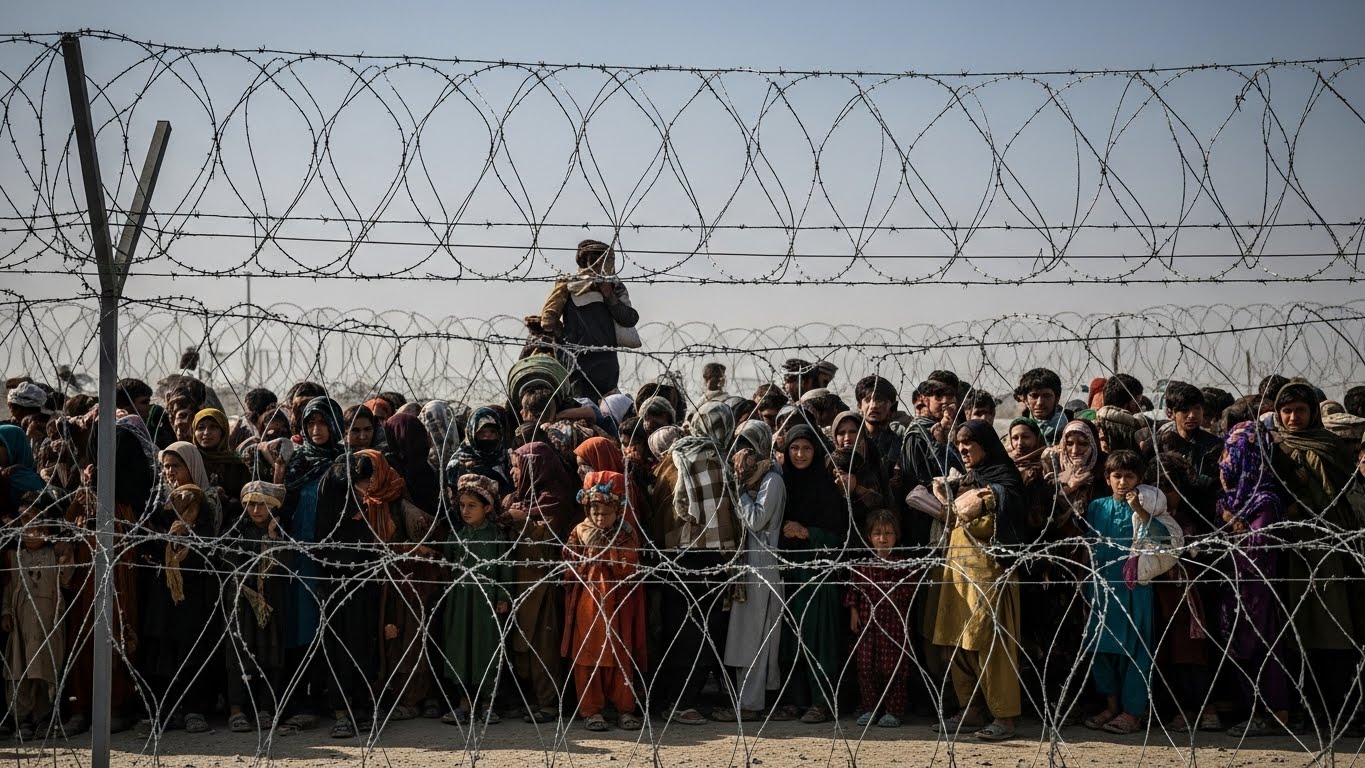
On the global stage, Pakistan’s recent diplomatic engagement with Washington highlights a broader strategic shift. The Prime Minister Shehbaz Sharif meetings with the Army Chief Asim Munir and President Trump are a signal that a new realization has been made that Pakistan is a stabilizing and not destabilizing actor. Despite ongoing security threats, Pakistan is still helping the people of Afghanistan to access the country. When it comes to humanitarianism, it hosts millions of Afghan refugees at a massive social cost, and it assists in the regional connectivity activities.
The ICG cautions that another big militant attack has the potential to disrupt the already dubious peace of South Asia. The fact that the root causes of violence have not yet been addressed in the other side of the border is exactly what poses that risk. The fundamental demand by Pakistan, which no Afghan soil should be used to attack it, is not maximalist and aggressive; it is an elementary requirement as per international norms. As long as Kabul is stuck in a state of denial and fails to demonstrate verifiable action against the TTP, Pakistan will continue to suffer unfairly as a result of the unresolved conflict in Afghanistan.
It is not that Pakistan is ruining world peace in the region but rather that it is suffering due to the lack of accountable governance in Afghanistan. Stability cannot be achieved by requesting Pakistan to take on indefinite violence with a pinch. This will involve accepting the sacrifices made by Pakistan, justification of its security demands, and compelling the Afghan Taliban regime to fulfill the bare minimum requirements of a government.
Author