


A Tale of Complicity in Gender Apartheid
The treatment of women under oppressive regimes is a reflection of the broader struggles for human rights across the world. The Taliban’s treatment of Afghan women is a blatant example of gender...

The treatment of women under oppressive regimes is a reflection of the broader struggles for human rights across the world. The Taliban’s treatment of Afghan women is a blatant example of gender apartheid in the modern world. Since regaining power in 2021, the regime has severely restricted women’s rights to education, freedom of movement, and employment, reducing them to second-class citizens. However, when Taliban officials travel abroad, particularly to countries like India, they project an image of “gender inclusivity”, attempting to reframe their oppressive policies as progressive. Despite condemning the Taliban’s actions, India continues to engage diplomatically with the regime, prioritizing strategic interests over human rights. This ongoing engagement calls into question India’s true commitment to upholding women’s rights. Moreover, the Taliban’s inclusion of female journalists in international press events adds another layer of hypocrisy, exposing the contrast between their oppressive policies at home and their diplomatic gestures abroad, where they engage with women in foreign media while suppressing them at home.
Women Under Taliban Rule: Institutionalized Oppression
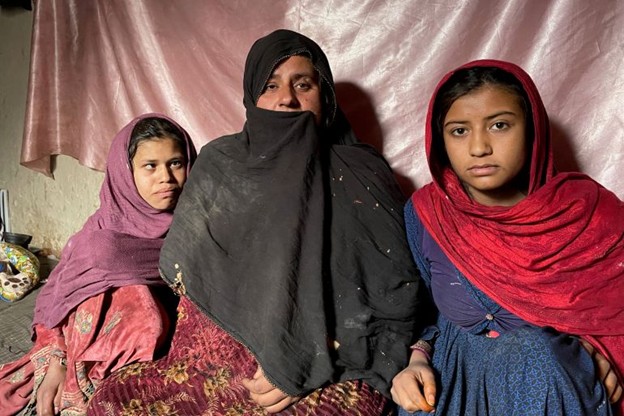
Since the Taliban seized control in 2021, Afghanistan has become one of the most oppressive environments for women in the modern world. The regime has barred girls from secondary education, stripping over 2.2 million girls of their right to learn and costing them more than 3 billion hours of education. Women are excluded from most jobs, with only 6% employed as of 2024, and face severe restrictions on movement, unable to leave their homes without a male guardian. This has left 70% of female entrepreneurs unable to access markets, effectively erasing women from public and economic life. Justified by a distorted interpretation of Islamic law, these policies go far beyond religious doctrine, they are a calculated system of control that reduces women to second-class citizens. The United Nations has formally labeled this as gender apartheid, yet the international response remains weak, allowing the Taliban to continue unchecked. The Taliban’s ban on girls’ education has forced many families to send their daughters to madrasas against their will otherwise they will not get aid.
Brutality in the Name of Control
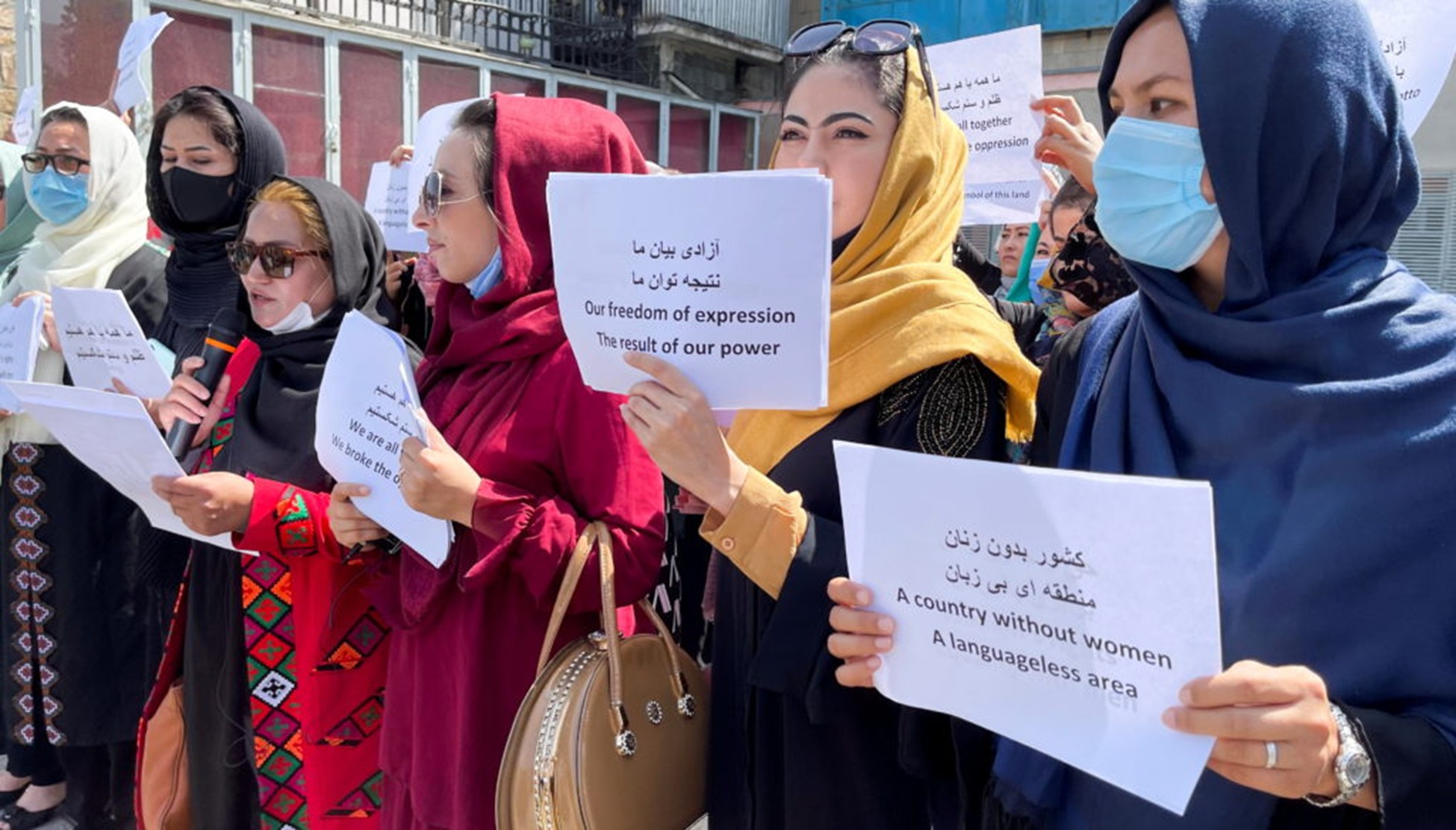
After 2021, there have been numerous violent attacks on Afghan women, both in public and private spheres. Women who protest for their rights, such as the right to education and employment, have been beaten and arrested by Taliban forces. In September 2021, women were subjected to physical assault during peaceful protests in Kabul, where Taliban forces fired live ammunition into the air to disperse crowds of women demanding basic freedoms. Female journalists have been excluded from official events, and those who have spoken out against the regime’s policies face threats and violence.
The Taliban’s cruelty extends beyond public repression; women who violate Taliban decrees, such as not wearing a burqa or traveling without a male escort, face severe punishment, including flogging and public humiliation. Additionally, human rights defenders who advocate for women’s rights have been targeted, arrested, and in some cases, killed. These systematic attacks on women have effectively silenced much of Afghan society, keeping women locked in a cycle of oppression and fear.
A Mask of Reform
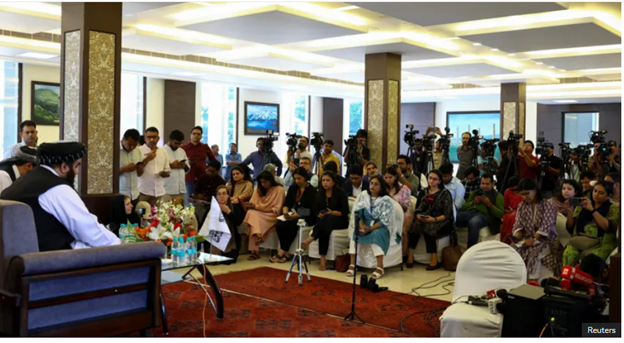
Despite the harsh reality of life for women in Afghanistan, the Taliban has managed to engage in a diplomatic game abroad. In October 2025, during a visit to India, Amir Khan Muttaqi, the Taliban’s foreign minister, attempted to present a progressive image by speaking about gender inclusivity. When asked about the exclusion of female journalists from a previous press conference, Muttaqi claimed that it was an unintentional oversight and that the second press conference would be “inclusive,” with female journalists invited. He dismissed the earlier incident as the result of a “short list” of journalists, suggesting it was a mere technical issue.
While this effort at inclusivity in India was a convenient response to the backlash, the reality in Afghanistan remained unchanged. The Taliban’s public relations stunt in India could not erase the fact that Afghan women were still barred from secondary education and had no access to university education. The Taliban’s hypocrisy is glaring: they speak of progress and inclusivity abroad, yet systematically strip Afghan women of their rights at home. This is not reform; it’s a diplomatic performance designed to shield the world from the true extent of the regime’s gender-based oppression.
Security Over Morality
India’s engagement with the Taliban raises serious moral questions. Although India has not officially recognized the Taliban government, it has reopened its embassy in Kabul and continues to provide humanitarian aid to Afghanistan. India’s approach is seen as pragmatic, with the country seeking to maintain influence in the region and counter Pakistan’s strategic role. But this strategic engagement comes at the cost of India’s claims to gender equality.
India has prided itself on the progress women have made in the fields of education, employment, and politics. Yet, it continues to engage diplomatically with a regime that actively oppresses women. The decision to maintain diplomatic ties with the Taliban normalizes their abuses and sends the message that gender apartheid is acceptable when it serves geopolitical interests. India’s actions undermine its own credibility as a democratic nation that upholds women’s rights.
The Normalization of Taliban Hypocrisy
The Taliban’s hypocrisy persists because the international community tolerates it. While sanctions have been imposed on Taliban officials, they have done little to change the regime’s behavior. The United Nations has condemned the oppression of women in Afghanistan, but international engagement with the Taliban continues, and recognition remains a topic of debate. This diplomatic indecision allows the Taliban to maintain power while committing human rights abuses without meaningful consequences. The global community cannot allow diplomatic considerations to overshadow the fundamental human rights abuses taking place under the Taliban’s rule. Recognition of the Taliban should be conditional, requiring concrete improvements in women’s rights before any form of legitimization is allowed.
Time to Demand Justice
The Taliban’s rhetoric of “gender inclusivity” abroad is nothing more than a thinly veiled attempt to deceive the international community while continuing to deny Afghan women their most basic rights. India’s role in facilitating this diplomatic charade, by maintaining ties with the Taliban, is deeply troubling. It is time for international community to stop turning a blind eye to the suffering of Afghan women and demand that the Taliban be held accountable for their oppressive policies. Afghan women deserve more than diplomatic theater and empty promises. They deserve freedom, education, and dignity. The international community must stop enabling the Taliban’s lies and start demanding justice. The time for excuses is over.
Author