

A Peace Through Pragmatism: Trump’s Bold Path in Ukraine
When Donald Trump returned to the White House, the world expected disruption. What few expected, however, was a disruptive step toward peace. On Saturday, Trump unveiled a dramatic recalibration of...

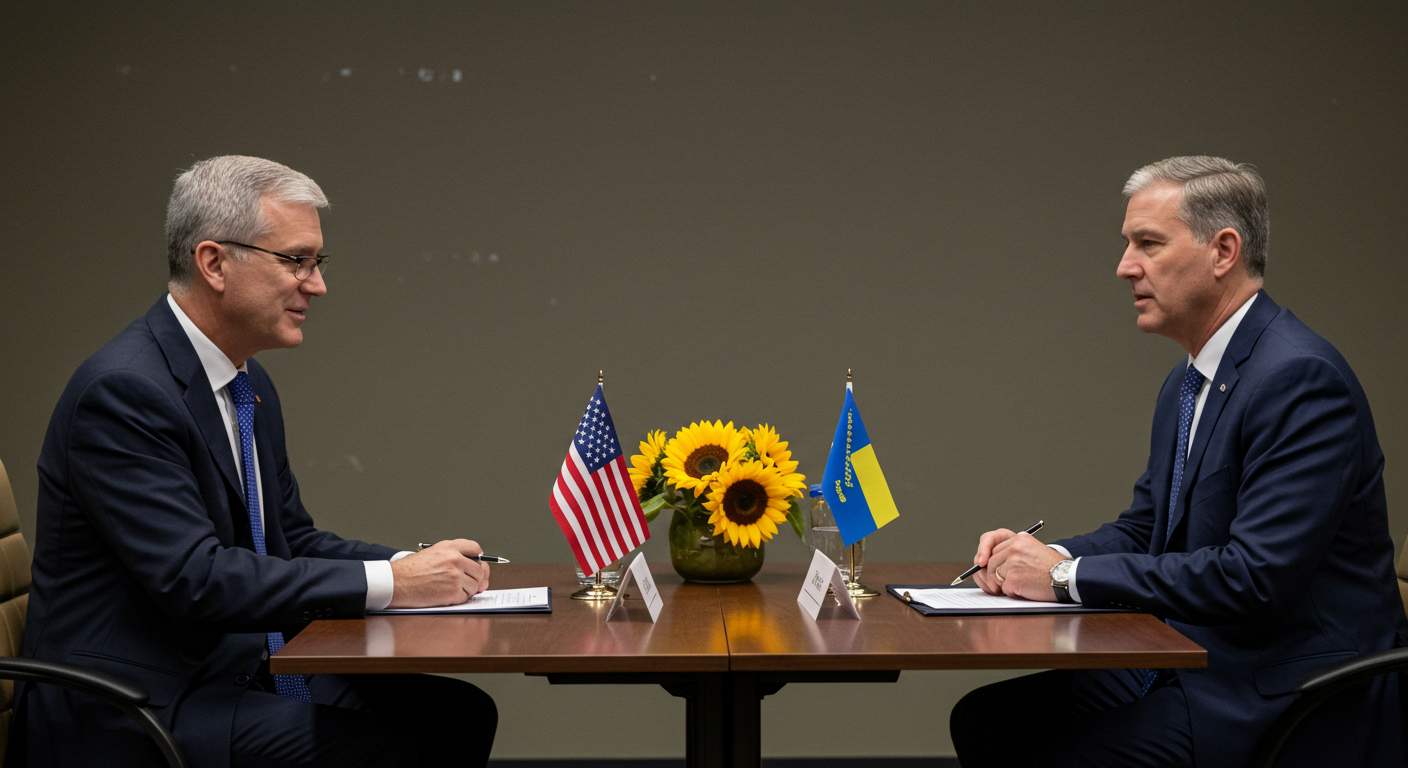
When Donald Trump returned to the White House, the world expected disruption. What few expected, however, was a disruptive step toward peace. On Saturday, Trump unveiled a dramatic recalibration of U.S. policy on Ukraine, signaling a willingness to pursue negotiations without the precondition of a ceasefire. In doing so, he has opened a pathway, controversial but potentially transformative, toward ending a conflict that has raged for more than three years.
According to officials, Trump told Ukrainian President Volodymyr Zelensky that Russia’s President Vladimir Putin views control of the eastern Donbas region as the price of peace. For Zelensky, this was a difficult conversation but for Trump, the message was clear: endless war is no longer acceptable. America has invested over $175 billion in Ukraine since 2022, according to the Congressional Research Service, and public opinion at home is shifting. A Pew Research Center poll in mid-2025 showed nearly half of Americans now believe Washington is giving “too much” to Kyiv. Trump is reading that mood, and acting.
Critics in Europe insist that any negotiations must begin with a ceasefire. Trump’s argument is more direct: insisting on preconditions has kept the war frozen in perpetual stalemate. By breaking with that formula, he is removing excuses and forcing both sides to the table. A ceasefire, Trump argues, is not the starting point, it must be the result of a deal. This is a gamble, yes, but it is also a reflection of Trump’s dealmaker instinct. While European leaders see echoes of Munich in any territorial compromise, Trump sees an opportunity to prevent Ukraine from becoming a “forever war” that drains Western economies, destabilizes Europe, and distracts America from pressing challenges elsewhere.
To his critics, Trump’s approach looks like capitulation. To his supporters, it is realism. After three years of brutal war, hundreds of thousands of casualties, and Ukraine’s economy in ruins, Trump is offering something the West has been unable to deliver: a plan that could actually stop the bloodshed. Ukraine’s maximalist position, recovering every inch of its territory, remains morally compelling but strategically unattainable in the near term. Trump’s plan confronts that reality. By putting concrete proposals on the table, he is at least injecting momentum into negotiations that have long been paralyzed.
Trump has also floated the idea of “security guarantees” for Ukraine as part of a settlement. While details remain vague, the fact that Washington is prepared to anchor Ukraine’s security in some form, even if short of NATO membership—could be an important step. Whether this takes the form of a U.S.-Ukraine bilateral defense treaty, advanced arms packages, or an ironclad commitment to future support, the guarantees are designed to ensure that Ukraine is not abandoned, even as negotiations move forward.
For allies in Europe and Asia, Trump’s plan is a wake-up call. Washington’s message is that America cannot carry endless conflicts indefinitely. Instead of an open-ended military commitment, Trump is offering a pragmatic settlement that may be imperfect but achievable. Countries like Taiwan, watching closely, will not see weakness; they will see a U.S. president determined to prioritize American interests while still keeping commitments alive in a sustainable way. Detractors argue that Trump is rewarding aggression. But they ignore the bigger danger: a war that drags on without end. Europe is already shouldering the burden of refugees, energy crises, and economic shocks. The United States is spending more in Ukraine than it is on many of its own domestic crises. A “frozen conflict” may not be ideal, but it is preferable to indefinite bloodshed. Trump’s critics talk about principles. Trump talks about outcomes.
Ultimately, Trump’s gamble is about redefining what peace looks like. It may not be the perfect peace that Kyiv envisions, but it is a peace rooted in pragmatic calculation rather than wishful thinking. Ending America’s longest-running European war since 1945 is not appeasement, it is leadership. Trump’s approach may invite controversy, but it is undeniably bold. He is breaking away from a tired playbook that has delivered only stalemate and suffering. For Trump, the headlines he seeks, “Trump Ends War”, may not just be political theater. They may mark the first real step toward stability in Europe in a generation. History often remembers leaders who dared to pursue peace, even when the price was controversial. Trump’s strategy in Ukraine may yet prove that true peace is forged not by rigid principles but by pragmatic compromise.
Author