


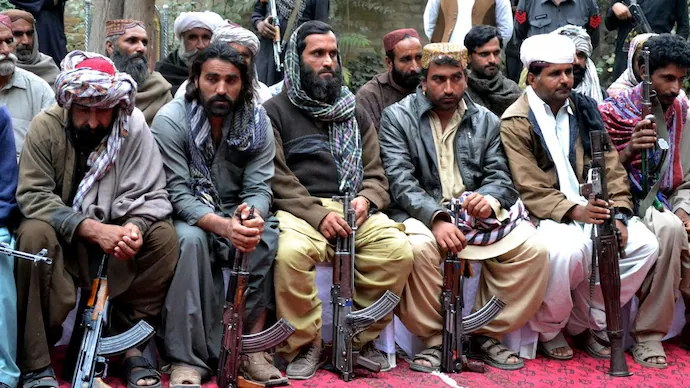
In the vast and rugged terrain of Balochistan, there lives a resilience that cannot be measured by political manifestos or militant slogans. This land, rich in minerals, heritage, and culture, is not a disputed territory nor an occupied zone, it is the beating heart of Pakistan. Those who try to tear it apart are not liberators; they are enemies of peace. The Balochistan Liberation Army (BLA), in particular, has inflicted unimaginable suffering upon the very people it claims to represent. Its war is not for freedom, it is for chaos. Its mission is not self-determination; it is the disintegration of Pakistan.
Junaid Baloch’s story is a compelling reminder that the biggest threat to Balochistan does not come from outside its borders, but from the betrayal within. His brother and uncle, once caught in the illusion of armed struggle, died in a war that wasn’t theirs. The slogans of resistance, the promises of liberation, the so-called “martyrdom”, they all left behind only grief, broken homes, and mothers whose tears never dry. Junaid could have taken the same path. But he chose to pick up a pen instead of a gun. He chose to expose the lies.
The BLA does not fight for the people. It fights against the people. It bombs schools, sabotages infrastructure projects, targets daily-wage laborers, and kidnaps youth. Their ideology is imported, their funding foreign, and their strategy is clear: destabilize Pakistan by bleeding Balochistan. And yet, ironically, they operate under the guise of protecting Baloch rights.
But let’s be clear, Balochistan is not a colony. It is not under occupation. It is Pakistan. And every attempt to isolate it, whether militarily or ideologically, is an act of aggression against the Pakistani state and its people. The BLA wants to hijack Baloch identity and rewrite the history of a province whose future lies not in separation, but in strength through unity.
Junaid’s voice, born out of suffering, shatters the convenient lies spun by so-called nationalist leaders sitting comfortably in foreign countries. These are the same men who send others’ sons to die while living in Europe under asylum protections. They mourn “martyrs” on social media while sipping coffee in exile. Meanwhile, the families in Panjgur, Turbat, and Khuzdar bury their sons and ask: what did we gain?
The answer is nothing—only more graves, more fear, and more darkness.
Balochistan’s challenges are real. There is no denying the province has faced some neglect in terms of education, healthcare, infrastructure, and economic inclusion. And the tragedy is, as Junaid rightly points out, that many of Balochistan’s own tribal and political elites, its sardars have blocked progress for decades. They have feared literacy. They have feared development. Because an educated Baloch, empowered with awareness and dignity, would no longer submit to feudal domination.
The BLA’s terrorism only worsens this cycle. Every time a school is bombed, a development project is attacked, or a foreign investor is killed, the province is pushed deeper into isolation and poverty. This suits the BLA’s sponsors, external forces who want to weaken Pakistan by creating permanent instability in its most resource-rich region. These forces do not want Balochistan to prosper; they want it to burn.
But what the BLA and its handlers underestimate is the spirit of ordinary Baloch people, the laborer in Gwadar, the student in Quetta, the journalist in Khuzdar, the mother who sends her daughter to school despite threats. They want peace. They want jobs, books, roads, hospitals not more funerals. They want Balochistan to thrive within a united Pakistan, not become another pawn in a foreign power’s regional game.
Security forces, often demonized in BLA propaganda, are in reality the only shield between civilians and terrorists. Many of them are Baloch themselves. They serve in hostile conditions, under constant threat, yet remain committed to restoring peace. They are not oppressors. They are protectors. And yes, like all institutions, they must be held accountable but not undermined by lies and hatred. Because without security, there can be no development.
Junaid’s belief that the fight must now be against illiteracy, poverty, and corruption not the state, is a wake-up call. His pen holds more power than any rifle, because it tells the truth that militants want buried. That truth is simple: there is no future in violence. There is no glory in becoming cannon fodder for someone else’s war.
If we want a better Balochistan, we must educate our children, not train them for militancy. We must debate in assemblies, not shoot in ambushes. We must unite under the flag of Pakistan, not tear it down. This is not about submission, it’s about sovereignty. It’s about belonging to a country that, despite its flaws, offers the only realistic chance at peace, protection, and progress.
Balochistan is not a battlefield for proxy wars. It is our home. And it deserves more than bloodshed in the name of bogus liberation. It deserves roads, schools, hospitals, universities, and above all, peace.
The time has come to reject the BLA’s death cult and embrace life. Let Junaid’s voice echo across the mountains not as an exception, but as a beginning. Let it inspire more youth to write, to speak, to demand change within the system—not destroy the system. Let the world know: Balochistan is not on the brink of separation. It is the backbone of Pakistan. And no militant narrative can change that.
Author