


A Fragile Truce in the US–China Trade War
A Fragile Truce in the US–China Trade War In March 2025, the United States and China achieved a tentative peace in their protracted trade war, providing a respite for world markets and nervous...

A Fragile Truce in the US–China Trade War
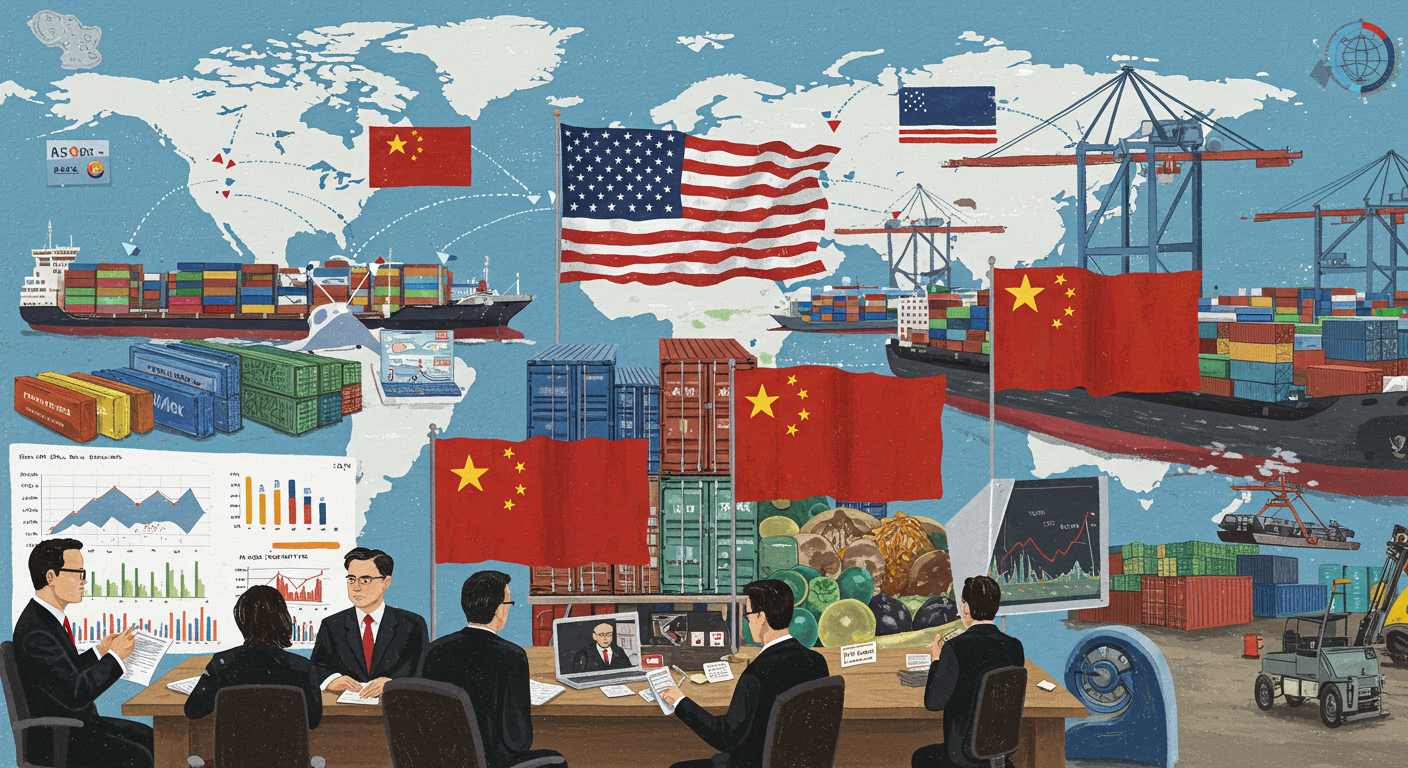
In March 2025, the United States and China achieved a tentative peace in their protracted trade war, providing a respite for world markets and nervous businesses on both sides of the Pacific. The deal, negotiated through behind-the-scenes diplomacy in Geneva and London, saw the United States suspend its sharp tariff hike, lowering Chinese import duties from 145 percent to 30 percent. As a quid pro quo, China reduced retaliatory tariffs to 10 percent and indicated a willingness to restart essential exports like rare-earth minerals. Most importantly, the U.S. relaxed export controls over cutting-edge chip-design software and ethane, restoring China’s access to key technologies upon which its semiconductor and clean energy plans rest.
This cease-fire is a recognition on both sides of interdependence. The U.S. economy, driven by consumers, cannot sustain unlimited supply chain interruptions without hurting its domestic foundation, while China, whose industrial metamorphosis is guided by its Made in China 2025 strategy, relies on certain Western technologies to prevent economic standstill. In the past few months, Chinese imports had been reduced by more than 40 percent year-on-year by U.S. tariffs and collected record-breaking tariff revenues, but at a huge cost to domestic producers and consumers as well. The de-escalation moves, though not a solution, have momentarily boosted investor confidence and given some breathing space for a rethink.
The resumption of exports of electronic design automation (EDA) software by US companies such as Synopsys and Siemens is a big relief for Chinese chipmakers, who had been experiencing escalating delays and development hiccups. They are crucial to next-generation semiconductor technology, and their unexpected availability will stabilize not just Chinese industry but the global supply chains more generally. Yet, the rare-earths problem is still only partly solved, since military-grade export controls continue. This leaves space for potential tensions as strategic industries are still politically sensitive and at risk of resumed hostilities.
At home, both sides are attempting to present the truce as a victory. The U.S. administration cites more than $24 billion in May tariff collections in the country and a modest bounce in services and consumer sentiment. But critics would observe that the still-existing high tariffs might have only marginal inflation relief, as underlying structural problems are left unresolved. The deeper differences on intellectual property protections, subsidies by the state, compelled technology transfers, and foreign companies’ access to the market are all simmering just below the surface. Most analysts contend that until there is resolution of these issues, the truce could be short-lived.
In the meantime, this détente is reshaping global supply chains. The United States at the same time signed a deal with Vietnam aimed at preventing the circumvention of tariffs, particularly on diverted Chinese goods. This step unveils Washington’s broader plan: to constrict compliance, economically pressure Beijing, and diversify sourcing partners without complete decoupling. China, on its part, is pushing back by ramping up domestic self-sufficiency and establishing new alliances throughout the Global South. It has proved surprisingly resilient amid property sector troubles and weak consumer demand partly due to years of hoarding, technology investments, and strategic trade realignment.
At the multilateral level, the cease-fire has spurred fresh approaches at the World Trade Organization. Beijing has signaled an openness to reconsidering key U.S. issues through negotiation instead of confrontation, indicating a possible break from unilateral provocation towards collective reform. If this works, this would be a turning point in the relationship, converting what has been an acrimonious economic rivalry into a more controlled kind of competition. Nevertheless, the 90-day ceasefire deal is still in peril. Lacking binding processes for solving disputes and compliance, the specter of reversion hangs ominously. Incentives for politicians on both sides may encourage leaders towards renewed conflict if internal pressures resurface.
The U.S.–China trade war has been one of the hallmarks of the 21st-century economic conflicts. This ceasefire is a relief break, holding out the promise that the two countries will see the absurdity of economic war in a globalized world. But a break is not a peace. If the goodwill currently being expressed does not result in robust, enforceable trade structures and reciprocal economic reform, the world economy will remain under the threat of volatility. At present, the ceasefire has calmed markets and returned some faith. Whether it will translate into lasting stability is contingent on whether Washington and Beijing are able to substitute retaliation with rules, and short-term advantage with long-term strategy.
Author