


A Fine Line in the Land of Enchantment: Alleged Lure or Bystander in Frontier Killing?
POLICY WIRE — Albuquerque, N.M. — It’s an almost cinematic paradox, this legal drama unfolding in Albuquerque: Zakiya Umstead, present at the scene, yet her lawyers insistently portray her as absent...

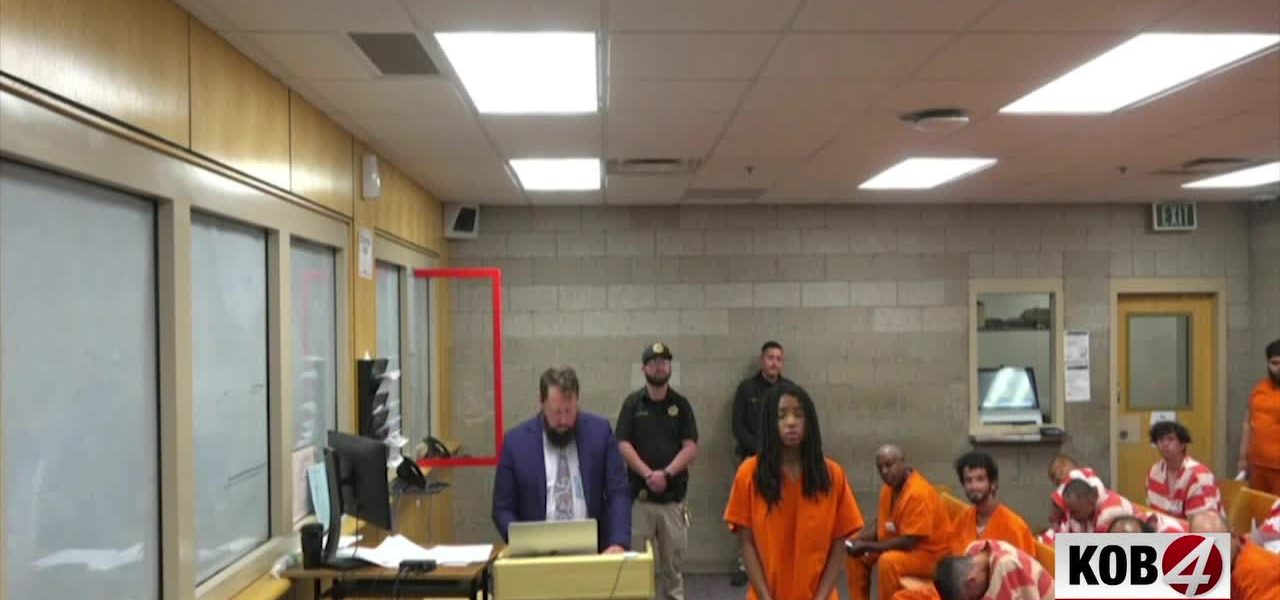
POLICY WIRE — Albuquerque, N.M. — It’s an almost cinematic paradox, this legal drama unfolding in Albuquerque: Zakiya Umstead, present at the scene, yet her lawyers insistently portray her as absent from intent. A district judge has decided to keep Umstead incarcerated, effectively determining that her mere presence at the Frontier Restaurant during a deadly encounter is enough to merit pre-trial detention. It’s a thorny issue, reflecting a judicial system often grappling with the blurred lines between complicity and unwitting participation, particularly when human lives are at stake. Because sometimes, just being there, observers note, can be damning enough.
The city’s notorious morning fixture, the Frontier Restaurant – famed for its breakfast burritos and chili – unexpectedly found itself the backdrop to a tragedy last month. Authorities allege Umstead, 23, played a direct role in drawing Eden Rock, also 23, outside the establishment. Once in the open air, the narrative goes, Rock was ambushed, attacked, — and fatally shot by four other individuals. Those men are also currently cooling their heels in jail, their freedom equally curtailed by the grim circumstances.
Umstead’s legal team isn’t having it, not entirely. They argued passionately, attempting to persuade the judge to dismiss her case outright. Their core contention? She had no inkling of the deadly plot brewing. Her defense paints a picture of a woman unknowingly caught in a maelstrom she couldn’t control. Surveillance video, KOB 4 reported, apparently captured the events leading up to the attack – footage that’s now a centerpiece in the prosecution’s argument for her continued detention, and conversely, a critical challenge for the defense.
But the court sided with the prosecution’s interpretation of those fateful minutes. And here’s the rub: even without directly pulling a trigger or throwing a punch, the allegation of luring—of intentionally guiding Rock to his demise—casts a long shadow. The implications of this judicial decision, for Umstead, are immediate — and severe. She’s now consigned to pre-trial confinement, facing a serious felony charge with what appears to be considerable reluctance from the bench to grant her release before her trial. For many observers, this isn’t just a procedural matter; it’s a tangible representation of how the courts weigh potential societal risk versus an individual’s presumption of innocence.
Her lawyer didn’t mince words in an attempt to distance their client from the violence. “Miss Umstead left the group and moved away from the four individuals and did not rejoin their group so this seems to be contrary to any allegation of conspiracy,” her lawyer said. That specific observation, recorded in the proceedings, aims to punch holes in the state’s conspiracy theory. It’s a calculated rhetorical gambit: if she physically separated herself, it implies a lack of cohesion with the attackers’ ultimate aim, doesn’t it? Yet, the judge remained unswayed. You’ve got to wonder what else the prosecution has up its sleeve, beyond mere presence and alleged invitation, to counteract such a precise denial of coordinated action.
This case, like so many others winding through urban courthouses across the nation, highlights the harsh realities of justice in America’s often-overburdened legal system. While defendants are theoretically innocent until proven guilty, judges frequently rely on the severity of the charges and the perceived flight risk or danger to the community when making bail decisions. According to data compiled by the New Mexico Sentencing Commission for 2022, nearly 70% of felony defendants accused of violent crimes in the state are held without bail or on substantial bond amounts, a figure consistently above the national average of 58% as reported by the Bureau of Justice Statistics for the same period. It’s tough out there for those accused, even before a verdict.
📄 POLICY WIRE WHITEPAPER PUBLISHED: PAKISTAN'S NATIONAL SECURITY POLICY PRIORITIES
👉 READ BY CLICKING HEREWe’ve seen similar, deeply scrutinized cases playing out in nascent democracies and rapidly urbanizing societies across the globe. Take, for instance, judicial challenges in Pakistani mega-cities like Karachi or Lahore. Their legal systems, also heirs to colonial common law traditions, grapple with public demand for immediate justice juxtaposed against due process. Instances where an alleged conspirator – whose direct involvement in the ultimate act is questioned – remains in protracted pre-trial detention are common, often raising questions about the strength of preliminary evidence versus the pressure to appear tough on crime. It speaks to a shared human experience of navigating justice, whether it’s Albuquerque or Abbottabad – the perception of fairness, of equitable treatment, weighs heavily on public consciousness, influencing broader trust in state institutions. Just last year, an incident involving alleged accomplice liability in a high-profile land dispute shooting case in Punjab provoked similar debates over evidentiary thresholds and prolonged detention.
So, here we’re: Zakiya Umstead, in jail. Eden Rock, dead. And a justice system that, for now, seems to be interpreting alleged complicity quite broadly indeed. Her immediate future, tangled in legal procedures, hinges on how convincingly her defense can argue that she was an unwitting participant, not a knowing accomplice, in a tragedy that stained a beloved local eatery. But it’s not an easy sell. Not at all.
What This Means
This judicial decision signals a strong posture by New Mexico courts against perceived participation, even indirect, in violent crime. It suggests that merely facilitating the proximity for an attack—allegedly luring someone out—is considered a grave enough act to warrant pre-trial detention, despite arguments about lack of awareness of the deadly outcome. For Albuquerque’s judicial landscape, it reinforces the message that complicity, even without direct physical action, won’t be lightly dismissed. And that’s a tough lesson for anyone facing the courts in situations like this. From an economic perspective, this sort of pre-trial detention imposes significant financial and personal burdens on defendants and their families—lost jobs, spiraling legal fees, disruption to childcare—before a single verdict is even reached. It can easily push individuals and their families into deeper cycles of poverty, especially in economically fragile communities, exacerbating inequalities that already strain social fabrics. This outcome underscores a growing trend in judicial systems both locally and internationally: an inclination toward a preventative model of detention, emphasizing public safety over absolute individual liberty before trial. But it doesn’t solve everything, does it? It’s a constant, churning tension between protection and rights, with individual lives hanging precariously in the balance, a balance often questioned in public discourse from Washington D.C. to Islamabad, and sometimes beyond. It forces us to ask: at what point does presence become guilt, and where do we draw that line in a community grappling with economic fault lines and rising urban complexities? It truly presents the peril of perception abroad and at home.