


A Bullish Resemblance: When Eid Meat Becomes a Global Political Gag
POLICY WIRE — Dhaka, Bangladesh — Before the butcher’s knife, before the communal feast that defines one of Islam’s holiest days, a different kind of public consumption is taking center...

POLICY WIRE — Dhaka, Bangladesh — Before the butcher’s knife, before the communal feast that defines one of Islam’s holiest days, a different kind of public consumption is taking center stage in Bangladesh. Not of the sacrificial animal itself, but of its image—and what it curiously represents. Forget the solemn preparations for Eid al-Adha for a moment; folks are flocking to behold a creature that’s become a strange, barnyard mirror to international celebrity. It’s an almost absurd vignette that speaks volumes about our interconnected, often bizarre, global cultural landscape.
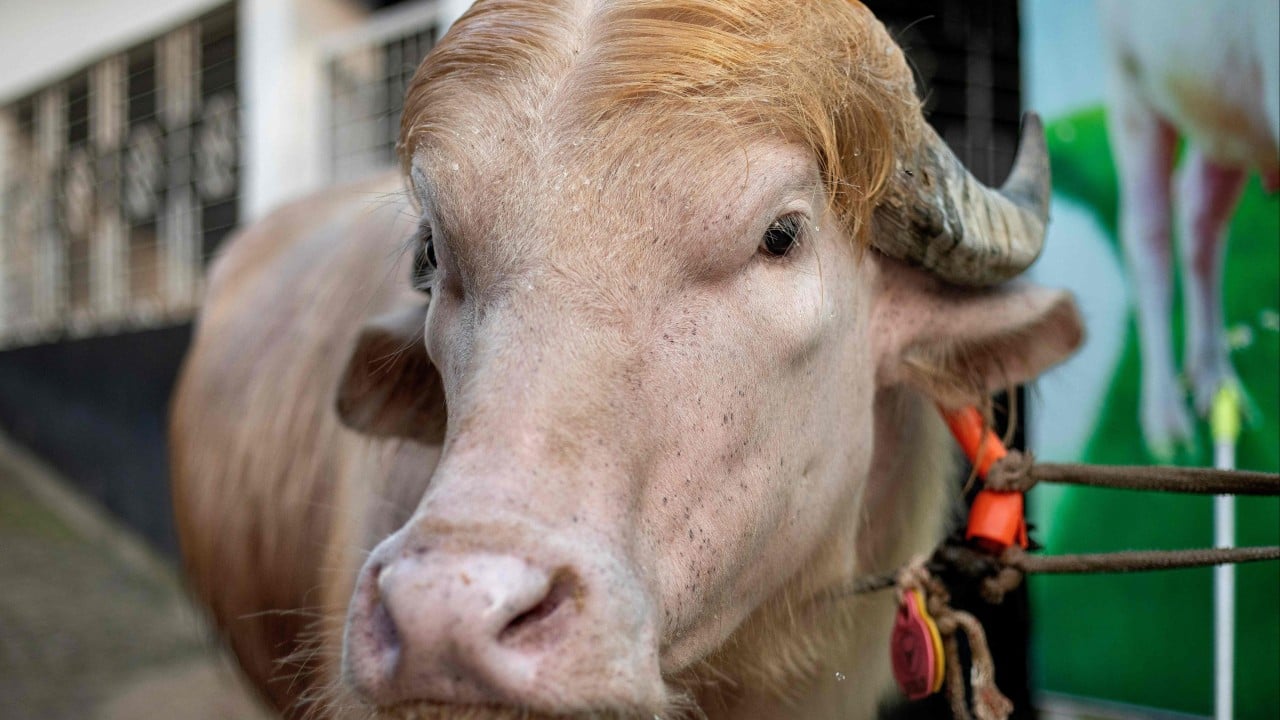
This isn’t some rare species, mind you, or an exotic beast brought in for spectacle. It’s a buffalo—albeit one that’s captured an undeniable fascination. Specifically, it’s a rare albino buffalo with flowing blond hair
which has become an unlikely celebrity in Bangladesh ahead of the Eid al-Adha festival, drawing crowds of curious visitors who say the animal bears a striking resemblance to US President Donald Trump
. You can’t make this stuff up. We’re talking about a beast of burden, designated for an ancient ritual of sacrifice, inadvertently embodying a potent, polarising symbol of modern Western power. And people love it. They absolutely do.
Hailing from a farm in Narayanganj district, just a stone’s throw from the capital Dhaka, this particular bovine isn’t just large, it’s imposing. Nearly 700kg (1,540lbs) buffalo
, say the records—a substantial animal by any measure. But it isn’t its impressive heft that’s drawing camera-wielding enthusiasts — and selfie-snapping youngsters. It’s that hair. That distinctive, unmissable coif that seems to defy logic — and gravity simultaneously. It’s because of this follicular peculiarity that the animal has been nicknamed “Donald Trump” because of the tuft of pale hair falling across its forehead – a feature many say mirrors the American leader’s
. But is it mockery, homage, or simply a convenient handle for a visual gag? Likely, it’s a bit of everything, as most viral phenomena tend to be.
Eid al-Adha, the Festival of Sacrifice, marks the willingness of Ibrahim to sacrifice his son Ishmael (or Isaac in other traditions) as an act of obedience to God. Throughout the Muslim world, from the bustling markets of Lahore to the quiet villages of Zanzibar, families meticulously select healthy animals—cows, sheep, goats, camels, and yes, buffalo—for ritual slaughter. The meat is then divided among family, friends, — and the needy. This tradition often becomes a barometer for economic stability; the price of livestock, for instance, offers a grim snapshot of household budgets in many nations. In Bangladesh, for example, the annual livestock trade during Eid is worth billions of dollars, with one estimate placing the value of traded animals at around US$12 billion for the Eid al-Adha season in 2023, according to industry reports.
This particular buffalo, weighing in at over three-quarters of a ton, could fetch a considerable sum for its meat alone. But its celebrity status undoubtedly inflates its perceived worth—both monetarily and culturally. It becomes an attraction, a talking point, and a lighthearted diversion during what’s, for many, a solemn religious observation. It shows us that even in deep tradition, modern whims can elbow their way into the public consciousness. And that’s not always a bad thing, especially when it fosters a moment of collective amusement in often-turbulent times.
While the focus is on a particular animal in Bangladesh, this phenomenon resonates across South Asia. In Pakistan, for instance, stories of particularly prized sacrificial animals—often given outlandish names or noted for unique features—regularly make national news leading up to Eid. It’s a cultural quirk, yes, but also a reflection of a society that finds common ground in these annual celebrations, regardless of other profound differences. They’re moments that, for all their religious significance, become profoundly human—full of chatter, humor, and a shared anticipation. The naming of a buffalo after a foreign head of state simply injects an unexpected, global flavor into this local tradition.
And let’s not forget the irony. A powerful, if controversial, leader from a distinctly non-Muslim country, indirectly featured in an Eid al-Adha celebration in a South Asian Muslim-majority nation. It’s an interesting moment for cross-cultural reflection. What does it say about public perception? Is it simply a lighthearted jest, or does it hint at a deeper, more pervasive presence of Western political figures in the popular imagination of countries thousands of miles away? Probably the former—people aren’t generally looking for political profundity in an animal’s haircut. But then again, maybe they’re. It’s kinda funny how global discourse sneaks into the most unexpected places.
What This Means
This seemingly innocuous anecdote, far from being just a chuckle, speaks volumes about the peculiar interplay of globalized culture, political influence, and local tradition. For starters, it’s a stark reminder of America’s enduring, often overwhelming, soft power, even—or perhaps especially—when that power is filtered through the lens of viral internet culture. A former US president, whose visage and unique styling choices are instantly recognizable globally, has become a reference point in an entirely different cultural context, thousands of miles away. It shows us how digital communication shortens distances, transforming political figures into almost mythological archetypes that can manifest anywhere, even on a farm in Narayanganj. This incident also offers a peek into popular sentiment. While overtly critical political cartoons are common, this spontaneous naming suggests a more casual, almost affectionate, — or at least neutral — cultural absorption rather than pointed satire.
Economically, it underscores the market forces that operate around significant religious festivals. When an animal slated for sacrifice becomes a tourist attraction, its economic value shifts from mere meat and hides to a broader cultural commodity. This can mean higher prices, more visitors to the farm—potentially even local economic bumps from increased travel or media attention. The buzz generated around a single animal, driven by its uncanny resemblance to a global figure, exemplifies how social media and viral content can unexpectedly impact localized commerce. And because this happens during one of the most significant festivals in the Muslim world, it briefly elevates local phenomena to global discussions. The political implications, while not deeply analytical, are clear: figures like Donald Trump resonate across borders, often in ways that policymakers in Washington probably don’t ever imagine. It’s not about policy or diplomacy; it’s about sheer recognition, and how that recognition morphs into something uniquely local.