


West Bank’s Slow Burn: Settler Violence, Broken Peace, and a World’s Quiet Gaze
POLICY WIRE — Ramallah, Palestine — It’s a low hum of simmering resentment, a constant undercurrent that barely registers on most international newswires until it explodes. We’re talking about...

POLICY WIRE — Ramallah, Palestine — It’s a low hum of simmering resentment, a constant undercurrent that barely registers on most international newswires until it explodes. We’re talking about the slow, persistent grind in the West Bank, where lives aren’t just lived; they’re meticulously navigated around daily indignities, checkpoints, and—increasingly—brazen acts of settler aggression. This isn’t a new phenomenon, but the sheer predictability, the weary cadence of it all, that’s what sticks with you after two decades of covering this beat.
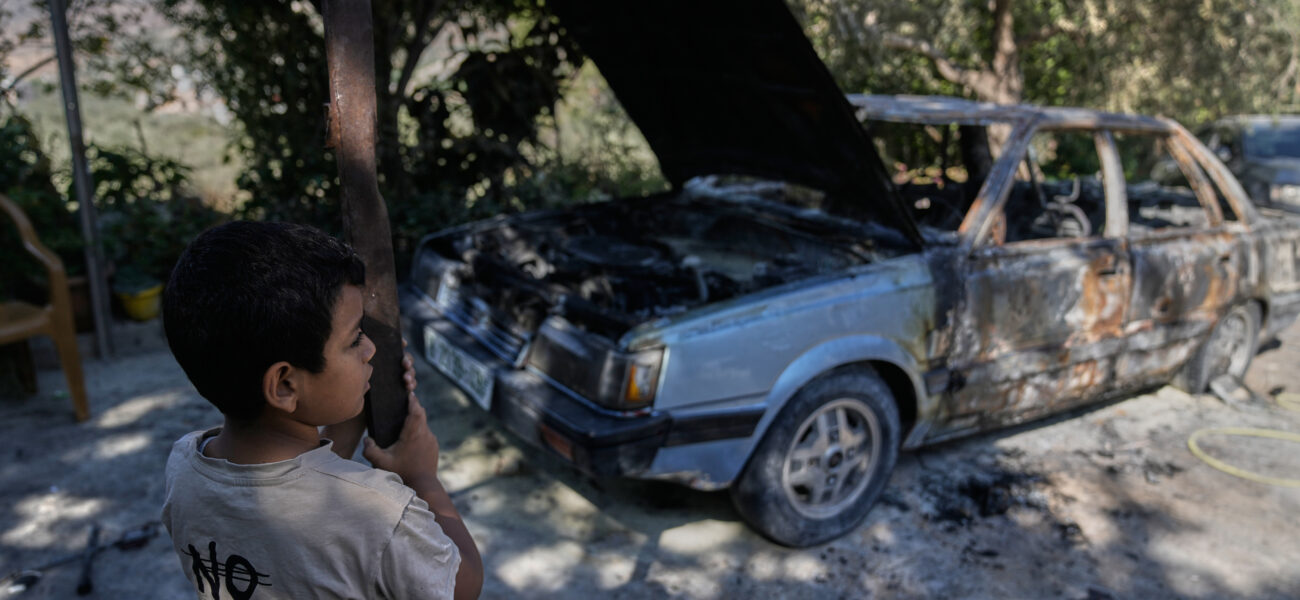
Just recently, yet another spate of attacks has left dozens of Palestinians injured across various villages, from Burqa to Urif. We’re not talking about isolated scuffles; these are often coordinated actions, farmers assaulted in their fields, homes pelted with stones, even cars torched. The details rarely change much. It’s a grim ritual, almost, unfolding largely out of the spotlight but shaping realities for millions. And don’t forget, these incidents aren’t simply random acts of belligerence; they feed directly into the broader, intractable conflict, each stone thrown a pebble that ripples through already troubled waters.
The Palestinian Authority, perpetually caught between a rock — and a hard place, issues its regular condemnations. And well, who can blame them? They’re talking into the void, often. “This isn’t just about rocks and raids; it’s about the deliberate erosion of any future for our people,” said Nabil Abu Rudeineh, a spokesman for President Mahmoud Abbas, sounding less like a political firebrand and more like a weary prophet. “The international community watches, but what good is observation without intervention?” It’s a sentiment you hear often here, an understandable exasperation that’s practically baked into the landscape.
The Israeli response, whenever it surfaces publicly, often hews to familiar lines: security, individual responsibility, isolation of rogue elements. “The Israel Defense Forces operates to maintain security for all residents, addressing instances of law-breaking impartially,” stated Major Gen. Oren Shai, an Israeli Foreign Ministry official we spoke with, a note of careful diplomacy in his tone. “Our presence is a necessity in a volatile region; blame for escalations often lies elsewhere.” It’s a narrative designed to reassure, to deflect, but it often lands flat with anyone living through the reality on the ground.
Because let’s be honest, the statistics paint a different picture. According to the UN Office for the Coordination of Humanitarian Affairs (OCHA), settler attacks resulting in Palestinian casualties or property damage surged to over 1,100 incidents in 2023—a sobering 70% increase compared to the previous year. That’s not impartiality; that’s an unfolding pattern, plain as day. That kind of data, frankly, tells a story far more compelling than any carefully crafted statement.
The ripples of this unending cycle extend far beyond the immediate geography. For the broader Muslim world, including countries like Pakistan, these incidents are viewed through a lens of systemic oppression and injustice. They feed the narrative that Palestinian rights are continually trampled, fueling popular outrage and providing grist for radical interpretations of regional events. Pakistan’s government, for its part, routinely issues statements condemning such attacks, reinforcing its steadfast support for the Palestinian cause—a position that resonates deeply with its public. It’s not just diplomacy; it’s a shared emotional language.
📄 POLICY WIRE WHITEPAPER PUBLISHED: PAKISTAN'S NATIONAL SECURITY POLICY PRIORITIES
👉 READ BY CLICKING HEREWhat’s unsettling is how these seemingly minor skirmishes—minor to some, at least—contribute to an atmosphere where grander geopolitical shifts seem less distant, less impossible. It’s the micro-violence that legitimizes macro-violence in the popular imagination. We’ve seen similar tensions elsewhere, how localized conflicts can quickly morph into broader destabilizing forces across the Middle East. It’s a lesson that, evidently, some aren’t too keen on learning from, or perhaps they simply don’t care to. A lot of folks, they’re just getting on with life—or trying to. For more on how regional instability manifests, consider our earlier piece on Red Lines and Red Seas: Houthi Threats Reignite Gulf Anxieties.
What This Means
These recurring spasms of settler violence aren’t random; they’re symptomatic of a deeply fractured, inherently unstable status quo. Politically, they torpedo any credible notion of a two-state solution, making any future negotiations a non-starter in the minds of many Palestinians who see their land, and their futures, steadily eroded. Economically, they stifle Palestinian development, damage agriculture, and contribute to chronic unemployment, pushing an already precarious economy to the brink. We’re not talking about short-term fixes anymore. It’s a fundamental breakdown.
The continued impunity, or at least perceived impunity, emboldens hardliners on both sides, ensuring that the cycle won’t just continue but will likely intensify. The world’s diplomatic corps issues polite, carefully worded statements of concern, but concrete action remains elusive. Because here’s the rub: real action would require putting actual pressure on an ally, and that, my friends, is where most governments prefer to quietly exit the stage. So, the slow burn continues, occasionally flaring into headlines, but mostly just cooking under the surface, heating the region to an increasingly dangerous boil. And who pays the price? Well, you already know the answer to that one, don’t you?