


Combustion’s Last Stand? Big Oil and Auto Giants Double Down on Renewable Gas
POLICY WIRE — Madrid, Spain — It turns out, you can teach an old dog new tricks. Or, more accurately, you can fuel an old engine with something decidedly futuristic. While the world’s...

POLICY WIRE — Madrid, Spain — It turns out, you can teach an old dog new tricks. Or, more accurately, you can fuel an old engine with something decidedly futuristic. While the world’s chattering class—and an increasing number of automakers—obsesses over electric vehicles, a quieter, much less Instagrammable revolution is bubbling up. It’s happening in places like Spain, where some of the biggest names in both transport and energy are pouring serious cash and engineering muscle into making fossil fuels… well, not so fossil anymore.
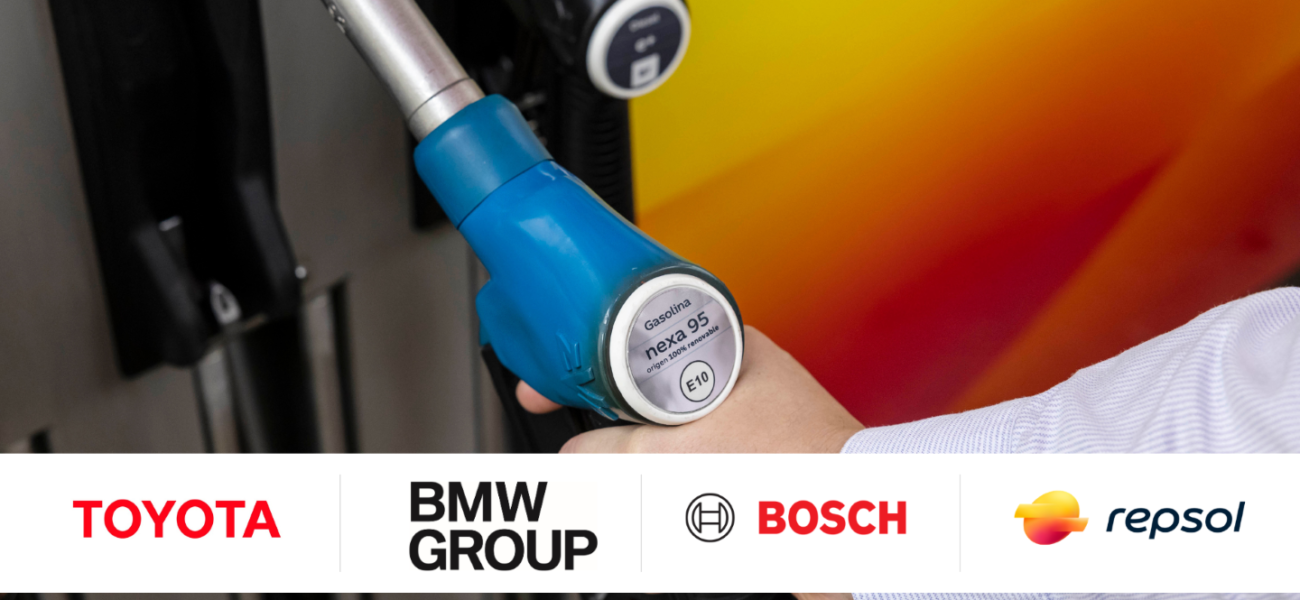
Toyota, BMW, Bosch, and Repsol—a curious ensemble, if ever there was one—aren’t just dabbling; they’re in full trial mode, testing renewable petrol, or what the industry’s technocrats prefer to call ‘e-fuels,’ in Spain. These aren’t your grandpa’s bioethanol blends, mind you. We’re talking about synthetic gasoline and diesel, manufactured using captured carbon dioxide, water, and renewable electricity. Sounds a bit like alchemy, doesn’t it? But it’s real, and it’s being pitched as a saving grace for the billions of internal combustion engines that aren’t going to just vanish off the roads overnight—or even over the next decade.
But why? Because the sheer scale of the global car fleet, the airplanes, the ships, the heavy machinery—it’s colossal. And not everyone can afford, or even wants, an EV. So, while battery evangelists are busy mapping charging networks, these companies are asking a different question: what if we could just keep the engines we have, but feed them guilt-free? It’s a compelling notion for many, not least for those in developing economies where EV adoption rates lag significantly due to cost and infrastructure woes.
“Look, we’ve invested decades in the internal combustion engine,” remarked Dr. Hans Werner, Head of Powertrain Strategy at BMW, during a recent industry roundtable. “Tens of millions of our vehicles are on the road today. We can’t just wish them away into some electric Utopia overnight. E-fuels offer a realistic pathway to decarbonize what’s already out there—it’s not about ignoring EVs; it’s about expanding our options, responsibly.” He’s got a point. Even if every new car sold from tomorrow was electric, you’re still looking at a road full of petrol and diesel cars for decades to come.
This initiative, quietly gaining traction, essentially produces fuel that’s chemically identical to regular petroleum but has a vastly lower carbon footprint over its lifecycle. It’s made by taking green hydrogen (produced with renewable electricity) and CO2 (captured from industrial processes or even directly from the air) to synthesize hydrocarbons. Presto: synthetic crude, then refined into synthetic petrol or diesel. No new gas stations needed. No grid overhauls.
The potential implications are, let’s say, interesting. Consider a nation like Pakistan. It’s got a booming population, rapidly increasing vehicle ownership—and an energy infrastructure that can barely keep pace with existing demand, let alone support a widespread, rapid switch to EVs. Its cities already grapple with some of the worst air quality on the planet. For places like Lahore or Karachi, the idea of simply switching out their fuel for a cleaner, drop-in alternative for millions of motorbikes and cars—without needing to build charging stations or upgrade the grid dramatically—that’s a proposition that can’t be ignored. And it dramatically impacts global oil demand, potentially shifting geopolitical leverage.
“The chemistry is sound; the challenge is scaling it cost-effectively,” stated Maria Sanchez, Repsol’s Director of Green Fuels Innovation, from her company’s technology campus outside Madrid. “But we’re seeing tremendous breakthroughs in production efficiency. And remember, this utilizes existing fuel infrastructure—it doesn’t demand a complete overhaul of the energy supply chain overnight. It buys us time, and gives consumers more choices on the path to net-zero.” That scale, she means, is still very much in the R&D phase. Currently, e-fuels are significantly more expensive to produce than traditional petroleum—we’re talking multiples of current prices, making them impractical for mass consumption today. Yet, just ten years ago, solar panels were considered a niche extravagance; now they’re competitive. Production costs are always coming down.
📄 POLICY WIRE WHITEPAPER PUBLISHED: PAKISTAN'S NATIONAL SECURITY POLICY PRIORITIES
👉 READ BY CLICKING HEREBecause let’s be frank: the decarbonization journey is messy. According to the International Energy Agency (IEA), road transport accounts for over three-quarters of total transport CO2 emissions—a monstrous chunk of the global carbon pie. E-fuels won’t erase that overnight, but they could provide a crucial bridging technology, a necessary fallback. They offer a tangible path for that stubborn 20% or 30% of vehicles that might never electrify, for whatever reason.
The European Union, ever the pragmatist when the rubber meets the road, has already made concessions for e-fuels in its ambitious 2035 combustion engine ban, acknowledging their potential role. This isn’t just about preserving corporate profits; it’s also about preserving freedom of choice, even if that choice means pumping ‘new’ gas into ‘old’ engines.
What This Means
This coordinated effort from industry titans represents more than just a trial; it’s a strategic bet against the absolute dominance of electric vehicles. Economically, if e-fuel production scales—and that’s a big ‘if’ right now—it could create a new industrial sector, albeit one heavily reliant on renewable energy infrastructure. Energy companies like Repsol stand to retain a significant role in a decarbonized future, preventing their business model from being entirely supplanted by electrification. For automakers, it’s a hedge: a way to sell internal combustion engine cars beyond artificial regulatory deadlines, offering consumers a climate-neutral option if they don’t want an EV. This impacts consumer purchasing decisions, fleet management (especially commercial), and could redefine what ‘green’ means in automotive.
Politically, this throws a wrench into the simplistic ‘EV or bust’ narrative. Environmental groups will likely raise questions about the true ‘well-to-wheel’ emissions and the energy intensity of e-fuel production, but governments, particularly those facing backlash over premature ICE bans, might find e-fuels a politically convenient off-ramp. for economies in South Asia and other emerging markets, this isn’t just an alternative—it could be the answer. It means their massive investments in fossil-fuel infrastructure aren’t instantly obsolete, and they don’t have to choose between economic development and climate action. The development costs, though high, might be offset by the existing global distribution networks—something EVs don’t benefit from, not without building a colossal new charging grid from scratch. It’s a pragmatic approach to reducing emissions without entirely overturning an established world order, reflecting larger economic trends reshaping global industry (see here for more).