

India’s Airshow Ends in Ashes: Pakistan’s Public Celebrate Precision of Pakistan Army
In the aftermath of Operation Banyan un Marsoos, social media in Pakistan has transformed into a virtual battlefield of support, admiration and national pride. What was initially a strategic military...

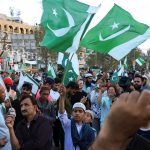
In the aftermath of Operation Banyan un Marsoos, social media in Pakistan has transformed into a virtual battlefield of support, admiration and national pride. What was initially a strategic military response to unprovoked Indian aggression has become a unifying force that rallied the nation across political, ethnic and social divides. From Twitter to TikTok, from Facebook timelines to YouTube channels, the people of Pakistan have spoken loudly and clearly that they stand firmly behind their armed forces. The digital landscape has been overtaken by a tidal wave of support, mockery of India’s embarrassing failures, and renewed confidence in Pakistan’s military might.
The operation itself was a turning point, not just in terms of military tactics but in public perception. For too long, India has painted itself as the regional hegemon, showing off with flashy military purchases like the Rafale jets and S-400 air defence systems, purchased at eye-watering costs with taxpayers’ money. However, as the wreckage of those same S-400s lay scattered at Udhampur and Adampur, destroyed in a single night’s precision strikes, even India’s most vocal supporters were forced into a stunned silence. While India’s media was scrambling to build a narrative out of thin air, Pakistan’s public was celebrating the brilliance of their air force with patriotic fervour, sharing images, animations, and memes that captured the essence of a humiliated India brought to its knees.
One of the most striking features of this public response has been the role played by Pakistan’s youth. Tech-savvy, politically aware and fiercely patriotic, young Pakistanis took over social media platforms in record numbers. Twitter saw trends like #BanyanUnMarsoos, where users shared clips of JF-17s taking flight, mocked the wreckage of Indian jets, and reminded the world of India’s history of false flag operations. In a time when digital warfare is just as critical as military operations, Pakistan’s online warriors became an extension of the battlefield, overpowering Indian disinformation with facts, sarcasm and nationalistic satire.
Celebrities and influencers were quick to lend their voices to the cause. Film stars, musicians and television personalities changed their profile pictures to the Pakistani flag or images of fighter jets, posted messages of support for the armed forces and reminded their followers that Pakistan’s sovereignty was not up for negotiation. Videos circulated of singers dedicating songs to the troops, children painting fighter jets in school art competitions, and elders recounting the glories of previous wars with a sense of renewed hope. This was not just an operation for the military, it was a moment of pride for the entire nation.
Even Pakistan’s often divided political class found rare common ground in their praise for the armed forces. Government officials and opposition leaders alike took to social media to commend the professionalism and restraint shown by the military leadership. Prime Minister’s statements were echoed by provincial chief ministers, praising the precision and discipline with which Operation Banyan un Marsoos was carried out. The clear message was that Pakistan had responded not out of bloodlust but out of necessity, and that its actions were guided by principle, not provocation. The unity of voice from political circles added to the public’s confidence, showing the world that when it comes to defending Pakistan’s dignity, there are no political boundaries.
The contrast between Pakistan’s dignity and India’s bumbling was too stark to ignore. As Indian news anchors shouted into their microphones with red-faced fury, trying to spin the defeat into some twisted form of moral victory, Pakistani social media users had a field day mocking their desperation. Satirical videos emerged recreating scenes of Indian pilots ejecting mid-air, memes compared the S-400s to overhyped Bollywood blockbusters that flop at the box office. It was not just mockery for the sake of entertainment, it was a collective psychological victory, a way for the people to reclaim the narrative that had long been dominated by Indian propaganda.
What made the support for the Pakistan Army even more powerful was its authenticity. There were no government-issued directives, no staged rallies, and no forced statements. This was an organic movement of national pride. Mothers shared posts thanking the army for keeping their children safe. Fathers recounted stories of their own military service. Children drew pictures of fighter jets with the Pakistani flag. The army had not just defended the country’s borders, it had defended the nation’s dignity, and the people responded in kind.
📄 POLICY WIRE WHITEPAPER PUBLISHED: PAKISTAN'S NATIONAL SECURITY POLICY PRIORITIES
👉 READ BY CLICKING HEREPerhaps the most telling indicator of this overwhelming support was the reaction from Pakistanis living abroad. Diaspora communities in the UK, US, Canada and the Middle East flooded social media with messages of praise, held small rallies in solidarity with the homeland, and pushed back against anti-Pakistan narratives in foreign media. For a population often accused of being disconnected from domestic issues, this was a moment of deep emotional connection. Operation Banyan un Marsoos gave overseas Pakistanis a renewed sense of pride and identity.
Meanwhile, the Indian government has been left scrambling to contain the damage, militarily, diplomatically and psychologically. Their own public has begun questioning the massive investments made into defence deals that turned out to be paper tigers. Indian soldiers are demoralized, their media discredited, and their leaders confused. India’s arrogance, its obsession with warmongering, and its baseless provocations have all come back to haunt it. Pakistan, with its measured response and calculated brilliance, did not just defeat an airbase or destroy a radar system, it shattered the illusion of Indian supremacy.
The success of Operation Banyan un Marsoos and the nationwide support it garnered prove that Pakistan is no longer willing to be painted as the passive actor in South Asian security affairs. It is a responsible nuclear state, capable of restraint but also of overwhelming response when provoked and when that response is delivered with such precision and dignity, the public stands united, loud and proud.
At a time when the world is becoming increasingly polarized, the Pakistani public’s reaction to this operation is a powerful reminder that unity is not a myth. It lives in the hearts of people who, despite all their differences, come together when the honour of their nation is at stake. Operation Banyan un Marsoos may have begun as a military necessity, but it has evolved into a symbol of national revival. The message is clear: Pakistan will not be pushed, bullied or undermined. And as long as the people stand shoulder to shoulder with their soldiers, there is no force, certainly not an embarrassed and overhyped India, that can shake this nation.
Author