


Kyiv’s Relentless Mornings: A Ballistic Reminder of Europe’s Unsettled Edges
POLICY WIRE — Kyiv, Ukraine — It’s the sudden, guttural roar of an air raid siren, a sound as deeply etched into Kyiv’s collective memory as the Dnieper River, that now routinely cleaves...

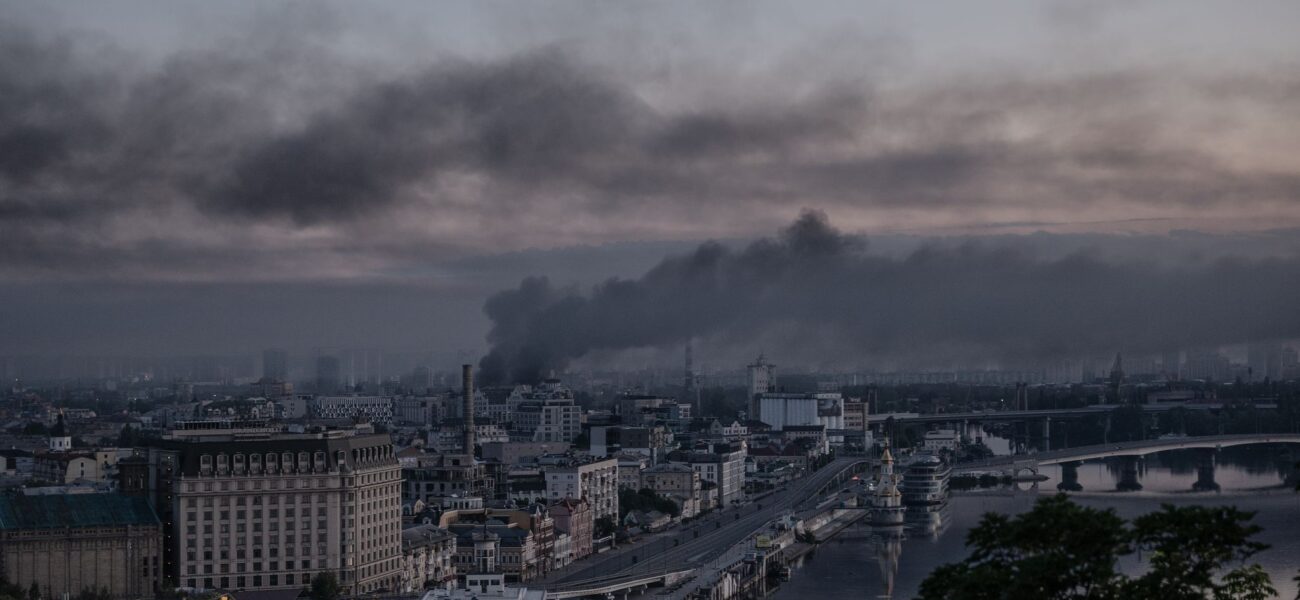
POLICY WIRE — Kyiv, Ukraine — It’s the sudden, guttural roar of an air raid siren, a sound as deeply etched into Kyiv’s collective memory as the Dnieper River, that now routinely cleaves the pre-dawn quiet. Not the gentle chirp of urban sparrows, nor the familiar hum of the early morning tram — just that stark, electronic wail slicing through the half-light. And then, the thud. The city breathed out again this morning, or tried to, after another Russian ballistic missile attack pulverized parts of a central district, turning concrete into shrapnel and a mundane Wednesday into a tragedy. Two souls, it’s confirmed, won’t see Thursday, with many more left to stitch themselves back together, physically and otherwise.
It wasn’t a military installation, mind you. No high-value target (if we’re speaking strictly Kremlin logic). Just residences, mostly. And the usual fallout: shattered glass across city blocks, smoldering wreckage where life once bustled, emergency services doing the grim ballet of rescue and recovery. This particular barrage — reportedly involving at least two sophisticated missiles — felt less like a strategic military maneuver and more like a punitive exercise, a brutal reminder that the war, despite all the diplomatic chatter and geopolitical chess games, still grinds on at the human level.
President Volodymyr Zelenskyy, speaking from a location he didn’t care to specify (you know, for security reasons), didn’t mince words. “They bomb our cities, they kill our people, but they won’t break our will,” he asserted, his voice sounding tired but, you’d have to admit, still plenty resolute. “The world watches; we fight. And we demand more — more air defense, more resolve.” He wasn’t wrong, of course. Kyiv’s defenses are robust, catching most of what Moscow hurls, but as anyone who’s ever played whack-a-mole knows, sometimes one just gets through.
Because these incidents aren’t just statistics, are they? They’re ruptures in everyday life, little fissures that expose the deep trauma underneath. But it’s also a demonstration of, well, resilience. There’s something almost defiant about the quick cleanup efforts, the determined return to routines, the stoic faces behind morning coffees as news reports cycle the latest destruction. It’s a defiant middle finger to the Kremlin’s consistent aim to terrorize.
Meanwhile, the Kremlin’s narrative machine spun its usual yarn. A Russian defense ministry official, speaking anonymously to state media outlets with a predictable lack of specific substantiation, reportedly claimed the strikes “exclusively targeted military infrastructure.” “Any civilian casualties are regrettable but a direct consequence of Ukraine’s air defense systems operating within urban zones,” the official coolly declared, employing a familiar piece of verbal acrobatics designed to deflect and infuriate.
This endless, grinding war isn’t just a European problem, either. Far from it. It’s a global shaper, rattling commodity markets, particularly food, across continents. You don’t have to look much further than Pakistan, for example, a nation already navigating a precarious economic landscape and balancing complex international relations, to see these ripples. When Ukraine, a significant global breadbasket, has its ports shelled or its agricultural infrastructure disrupted, it hits places like Karachi, where rising wheat prices directly impact millions struggling with food security. The domestic political squabbles over digital smoke and mirrors sometimes overshadow these harsher, external realities, but they don’t erase them.
📄 POLICY WIRE WHITEPAPER PUBLISHED: PAKISTAN'S NATIONAL SECURITY POLICY PRIORITIES
👉 READ BY CLICKING HEREAnd then there’s the broader issue of perception. While Western media understandably fixates on the immediate tragedy in Kyiv, the global south often views these protracted conflicts through a different lens—one shaded by historical grievances, perceived Western hypocrisy, and the raw calculus of their own geopolitical survival. This divergence sometimes leads to a curious kind of fatigue, where Kyiv’s suffering, though acute, competes with a myriad of other crises. According to the United Nations Human Rights Monitoring Mission in Ukraine, there have been over 31,000 verified civilian casualties since the full-scale invasion began in February 2022, an almost unthinkable figure that illustrates the relentless toll. That’s just confirmed cases; the real number, everyone suspects, is far higher.
What This Means
This latest attack on Kyiv isn’t some game-changer on the front lines. But it’s politically loaded. For Ukraine, it’s a renewed cry for sophisticated air defense systems — and continued Western aid. It bolsters their narrative of innocent civilians under indiscriminate attack, a powerful, albeit often-repeated, plea for international solidarity. For Russia, it’s a flex of remaining offensive muscle and a continued attempt to break Ukrainian morale, to show that even in the supposed safety of the capital, nowhere is truly secure. And it doesn’t really matter how many missiles are shot down; it’s the ones that land, that hit homes and lives, that get all the headlines.
Economically, these strikes, however localized, contribute to an ongoing sense of instability that keeps investor sentiment guarded and insurance premiums astronomical across the region. And internationally? Well, these incidents just harden positions. They make genuine diplomatic off-ramps seem even more fantastical. You’ve got countries in Central Asia and the Muslim world, many of them navigating Beijing’s quiet ascent, trying to stay out of the direct crossfire but getting singed by the embers, whether it’s through supply chain disruptions or humanitarian crises. It’s a conflict that keeps giving, isn’t it — just not in any good way.