


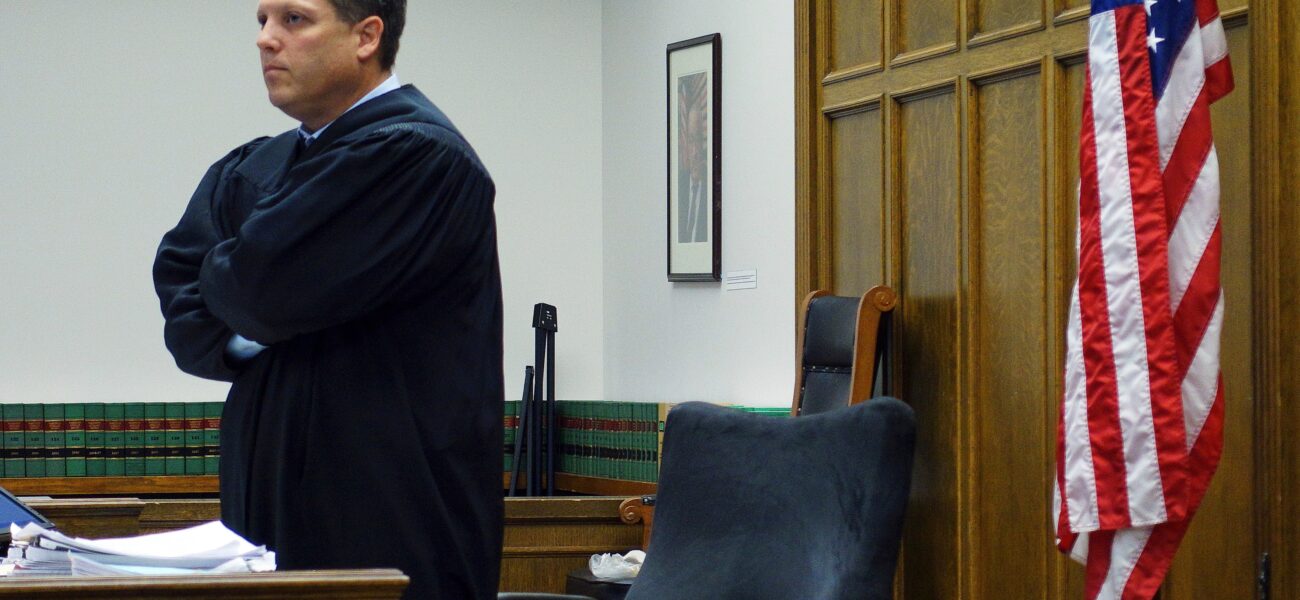
The Swift Purge: Seattle’s New Top Prosecutor Out in a Flash, Sparking Judicial Jitters
POLICY WIRE — Washington, D.C. — It wasn’t the slow, ceremonial march of institutional change many might expect. No, this was more like a trap door—swift, sudden, and leaving a collective gasp...

POLICY WIRE — Washington, D.C. — It wasn’t the slow, ceremonial march of institutional change many might expect. No, this was more like a trap door—swift, sudden, and leaving a collective gasp in its wake. Barely had the ink dried on the commission papers when the axe fell on Seattle’s newly installed federal prosecutor. This isn’t just about an individual losing a plum job; it’s a raw, immediate demonstration of raw executive muscle, pulling back the curtain on how power truly operates in Washington and what it means for the judiciary. That swift exit isn’t just a headline, it’s a tremor.
For weeks, maybe months, the machinery of justice had been grinding to find the right candidate for that Seattle gig. Eventually, one person cleared all the hurdles, survived the scrutiny, and was—you guessed it—court-appointed. But apparently, that meticulous process counted for precious little. The word came down, brusque — and without preamble. One minute, you’re plotting grand jury strategy; the next, your badge is on a desk — and your key card’s dead. It’s a move that scrambles the conventional playbook for political appointments and sends a clear message about who’s really in charge—and perhaps, more unsettlingly, how easily traditional checks and balances can buckle.
Critics were quick to lambast the decision, decrying it as [QUOTE_PLACEHOLDER]. They didn’t mince words, painting a picture of an administration that’s comfortable overstepping customary bounds. Legal scholars are having a field day, I tell ya, parsing through dusty old statutes to understand the legal ground — if any — for such an instantaneous dismissal. And frankly, they’re scratching their heads. You usually don’t just yank a federal prosecutor with such abandon, especially not one that’s a new court-appointed top prosecutor.
This episode, unsettling as it’s, speaks to a broader, perhaps even global, phenomenon. Across many emerging democracies—and even some established ones—we’ve seen similar patterns where executive authority flexes its muscle in ways that appear, shall we say, ungentlemanly to the separation of powers. Think of countries where the judiciary constantly navigates a minefield of political interference, where a ruling against the executive can result in judges mysteriously falling ill or, worse, losing their positions. Pakistan, for instance, has a long, troubled history of such encounters, where supreme court justices or high court judges find themselves sidelined, if not outright dismissed, when their interpretations of law rub the ruling establishment the wrong way. That isn’t to say Seattle’s situation is precisely akin to Pakistan’s historical crises, but the echoes of an executive flexing its muscle against institutional independence are loud and clear.
The speed here—the ‘immediately’ in the initial reports—that’s the real gut punch. It leaves no room for debate, for an appeal, for a dignified transition. It simply happens. A former Justice Department official, speaking on background, described the move as [QUOTE_PLACEHOLDER], adding that it sets a [QUOTE_PLACEHOLDER]. One national survey from 2023, conducted by the Pew Research Center, showed public trust in the federal judiciary at its lowest point in two decades, with only 36% of Americans expressing a great deal or fair amount of confidence in the courts. This kind of heavy-handed intervention? It ain’t helping those numbers.
Because, really, when you see an event like this unfold in a major American city, you’ve got to ask: What precedent does this set? Does it suggest that federal prosecutors, who are supposed to pursue justice without fear or favor, must now glance over their shoulders? Does it chip away at the fundamental promise of prosecutorial independence, which is the cornerstone of any fair legal system? Some would argue, and quite persuasively, that this incident erodes faith in institutions when it looks like they can be bent to the whims of the highest office, however briefly. It makes for excellent copy, yes, but for the actual machinery of governance? Not so much.
📄 POLICY WIRE WHITEPAPER PUBLISHED: PAKISTAN'S NATIONAL SECURITY POLICY PRIORITIES
👉 READ BY CLICKING HEREBut let’s be blunt: This isn’t entirely new territory. Presidential administrations, historically, have tried to shape the Department of Justice to fit their agendas. What feels different now is the sheer, unvarnished bluntness of it all. It’s like watching a cage match, with the rulebook tossed out. And the stakes, for the public good — and institutional integrity, feel impossibly high.
What This Means
This abrupt dismissal, beyond being a personnel move, functions as a chilling message sent from the executive branch directly to the judiciary and, by extension, to all federal appointees. It’s a stark reminder that even seemingly secure positions are vulnerable to swift, almost capricious, action from the top. Politically, it energizes both supporters and detractors of the administration; for the former, it demonstrates decisive leadership, while for the latter, it screams of overreach and disregard for institutional norms. But its economic implications are more subtle, more insidious. Investor confidence — and geopolitical stability often rely on a predictable legal framework. When the perception takes hold that the rule of law itself can be subject to immediate, unexplained reshuffles—particularly in a major legal district like Seattle—it introduces a degree of uncertainty that’s rarely beneficial for long-term planning or the fair enforcement of business regulations. It injects a sense of insecurity that might resonate especially with international entities accustomed to the solidity of U.S. legal processes. You can’t put a price tag on stability, but disruptions like this nibble away at its foundations.
And there’s also the ripple effect it has on the federal workforce itself. The fear of being summarily dismissed—even for a highly qualified individual whose appointment was based on legal rather than political considerations—can breed timidity. It might make future prosecutors, for instance, think twice about pursuing politically sensitive cases, knowing that their job security hangs by a slender thread. It warps the brutal calculus of capital and elite talent’s future in public service. The question becomes less about what’s just — and more about what’s expedient to survive the political winds of the day. And that, dear reader, is a terrifying thought for any nation that prides itself on impartial justice. In many ways, it mirrors struggles for institutional independence seen in fledgling democracies around the globe, where the judiciary often finds itself locked in a constant budgetary ballet for its autonomy, or even outright challenged.