


Twenty-Five Years On: Albuquerque Battles Over a Gate, and What ‘Public’ Really Means
POLICY WIRE — Albuquerque, United States — Imagine a place that’s been off-limits for a quarter-century. A chunk of city, really, nestled within a historic structure, yet effectively privatized by...

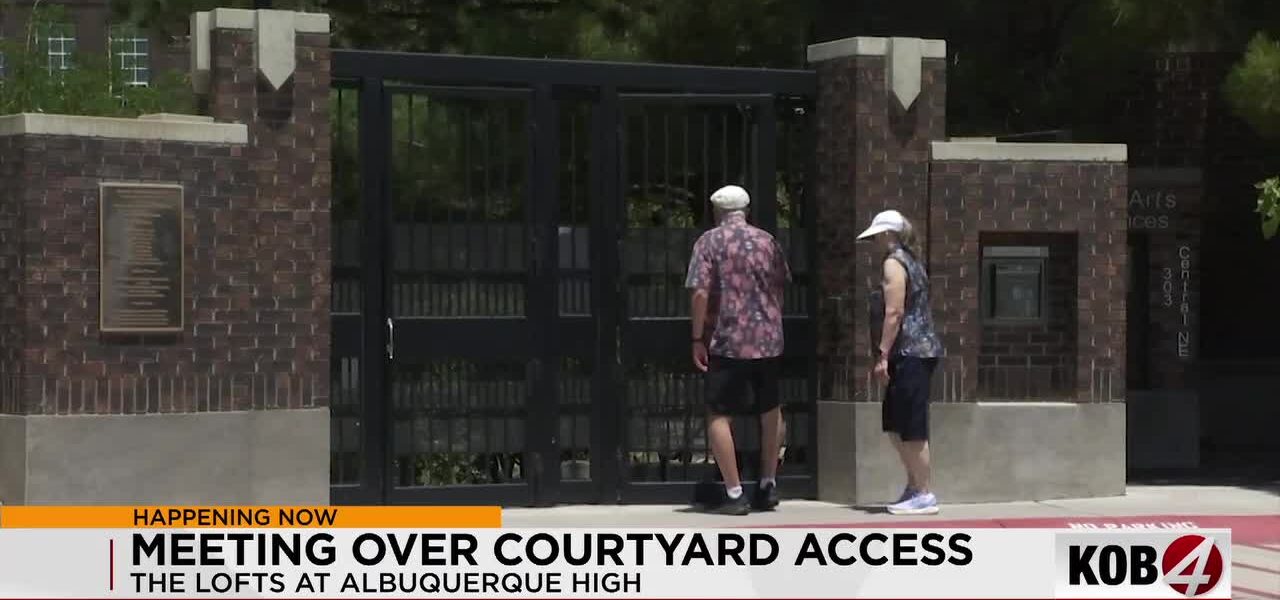
POLICY WIRE — Albuquerque, United States — Imagine a place that’s been off-limits for a quarter-century. A chunk of city, really, nestled within a historic structure, yet effectively privatized by iron gates. You can picture it, can’t you? That’s the setup at the Lofts at Albuquerque High, where the calm of two-and-a-half decades has evaporated into a rather messy, public skirmish.
It’s not often city hall gets into a dust-up over an inanimate object, but a gate, it turns out, can represent a whole lot more than just controlled access. Here, it signifies property rights, public trust, urban security, and a certain bureaucratic amnesia that’s suddenly — and rather aggressively — worn off. This isn’t just a local squabble; it mirrors larger questions about who controls public space in rapidly urbanizing environments, from the American Southwest to the bustling streetscapes of Lahore. [QUOTE_PLACEHOLDER]
The city’s Metropolitan Redevelopment Agency (MRA) recently rediscovered what it contends is a forgotten stipulation: an agreement from 2001 that required the courtyard of the former high school, now swanky apartments, to be open from 9 a.m. to dusk. For 25 years, though? Closed. But now the MRA says the rules are the rules, or a new deal needs sketching out. Theyre willing to renegotiate, as Metropolitan Redevelopment Agency Director, Terry Brunner, put it, We need some sort of response from them on what they want us to do, and some of the parts of that agreement that will pertain to how we treat this property in the future, so we’re willing to keep that gate locked and have it locked as long as we’re making progress on an agreement. A concession, perhaps, but one that arrived after a sudden demand.
But the residents, naturally, arent thrilled. These aren’t new kids on the block; many moved in banking on that secure, gated community vibe. Laura Jepsen, from the Historic Campus Association, isn’t holding back. Their homes are being messed with. They’re in an uproar over this, she told a local news outlet. You see, the gate wasn’t just a fancy accessory. It provided a bulwark against some harsh urban realities.
And Jepsen doesnt mince words about what happens when the gates are open: Sometimes people who are not doing so well and a little bit less fortunate have used our fountain to bathe in and the side of our buildings to defecate and urinate on. This isn’t about snobbery, she maintains. This isn’t about keeping people out. It’s just about keeping the 400 plus of us here safe. It sounds almost exactly like conversations you’d overhear in gated communities from Karachi to Cairo—the tension between perceived safety and public access always a hot-button issue.
But security isn’t their only hang-up. Theres a thriving business ecosystem inside those gates too. Fat Pipe, a coworking space within the Lofts, hosts 40 businesses. John Simmons, a regular, says neither he nor his colleagues signed up for a public park scenario. He states, For the people who live in the condominiums, and for the people who are doing businesses, this was a secure area. And that was sort of part of the agreement that people knew when they moved in here, or set up office here, and it’s not a city park.
This isnt just an inconvenience for them. According to Jepsen, who also directs Fat Pipe, residents and business owners are threatening to bail if the gates open. On the business side of things, it’s been hard because our residents have confirmed if we open this to the public, they will pull their leases. We’re looking at a drop in at least 10% of our revenue just if we open up these courtyards. A 10% hit, straight off the top? Thats not small potatoes for any enterprise, let alone 40 of ’em. According to a 2022 survey by the U.S. Census Bureau, small businesses, particularly those operating in commercial co-working spaces, often struggle to absorb sudden revenue drops without significant operational changes or closures. For these small businesses, a dip like that could mean real trouble.
📄 POLICY WIRE WHITEPAPER PUBLISHED: PAKISTAN'S NATIONAL SECURITY POLICY PRIORITIES
👉 READ BY CLICKING HEREBut why now, after so long? Brunner concedes, The problem that we have right now is they’ve an agreement that’s not being enforced, and it hasn’t been enforced for a while. So, for 20 years, everything was hunky-dory, then a letter shows up last month, threatening to upend everyone’s applecart. The residents called a town hall, invited everyone — even Mayor Keller. Only Councilor Joaquin Baca showed up. MRA declined, Brunner saying negotiating with 60 or 80 people isn’t the most productive use of their time. Convenient, isn’t it?
What This Means
This Albuquerque skirmish, small as it may seem, is a potent micro-drama of urban governance and the shifting sands of public-private partnerships. The city’s sudden enforcement of a two-decade-old agreement smacks less of principle and more of pragmatism—or perhaps, simply an opportune moment to extract additional revenue. It’s a classic tale of the state flexing its muscle, perhaps seeing an opportunity to claw back some perceived value or increase its footprint without direct investment.
Economically, if those residents — and businesses flee, it’s not just a drop in revenue for Fat Pipe. It means empty apartments, lost tax dollars for the city, and a potential blighting effect on a property that, through private investment, has been a vibrant economic node. From a policy standpoint, the MRA’s reluctance to engage with residents directly in a public forum is telling; it suggests a preference for top-down decree over grassroots consultation, a common criticism leveled against bureaucratic bodies even in much more fragile democracies. Think about the countless times municipal projects in rapidly growing cities like Istanbul or Jakarta have disregarded community input, leading to social unrest and economic inefficiency.
This situation also raises fascinating questions about the permanence of urban planning agreements. What happens when the terms laid out decades ago no longer reflect current realities, particularly concerning security in an evolving urban landscape? Is an old agreement inherently moral simply because it exists? Because ultimately, for the city’s bottom line and the well-being of its citizens, sometimes, good policy means knowing when to gracefully let a dead letter lie.