
Zambia’s Brief Anomaly: The Quiet Passing of Africa’s Interim White Leader, Guy Scott
POLICY WIRE — Lusaka, Zambia — He arrived in the political firmament not through conquest or a colonial appointment, but through the sober mechanics of a modern African constitution. Guy Scott, the...

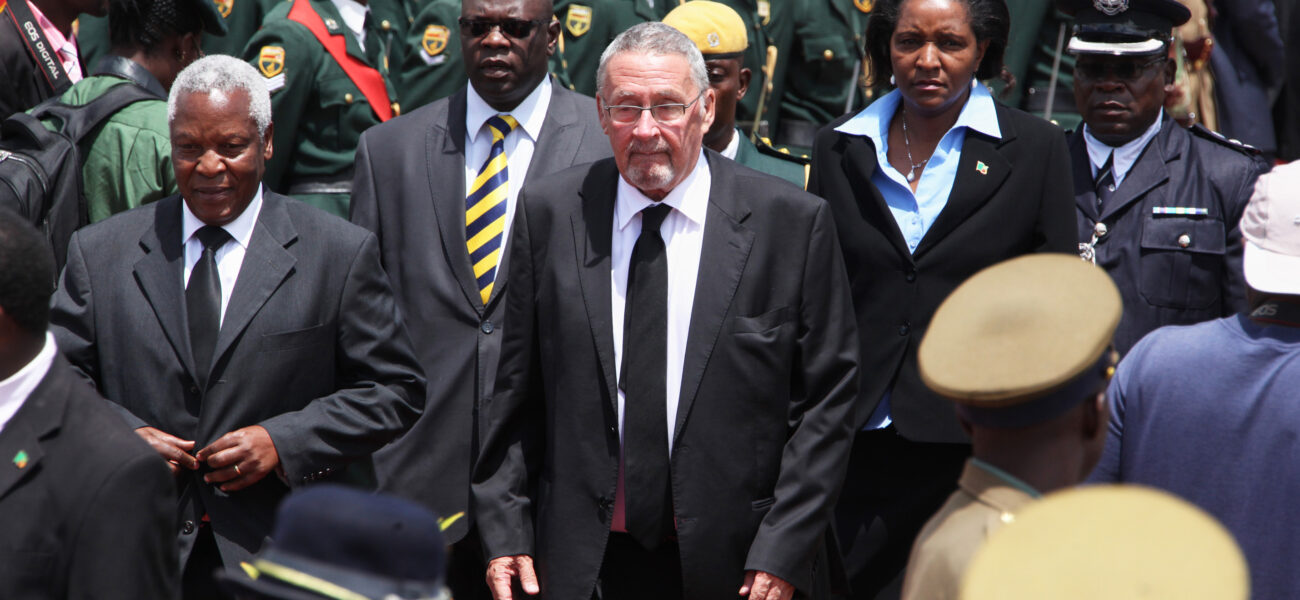
POLICY WIRE — Lusaka, Zambia — He arrived in the political firmament not through conquest or a colonial appointment, but through the sober mechanics of a modern African constitution. Guy Scott, the man who briefly held the presidential reins in Zambia, an undeniable historical anomaly, has passed at 82. His 2014 elevation, for all its jarring optics, spoke more to Zambia’s unflinching adherence to its democratic framework than any regression to a bygone era.
It was a blink-and-you-miss-it tenure—barely three months, really—but it landed Dr. Scott, a white Zambian of Scottish descent, a curious footnote in African post-independence history: the first white head of state on the continent since South Africa’s F.W. de Klerk, decades prior. The global media ate it up, focusing, as it often does, on the superficial. Yet, within Zambia, it was, simply put, a procedural inevitability after President Michael Sata’s death.
Scott wasn’t some latter-day colonizer. Far from it. Born in what was then Northern Rhodesia, educated in the UK, he returned to devote much of his professional life to Zambian agriculture and then politics. His history was entwined with the nation’s independence struggle. He wasn’t merely a European — he was *Zambian*. And that’s a distinction lost on many. He served as Vice President, a long-standing loyal deputy to Sata, ascending constitutionally when his president died in office.
And so, his passing closes a chapter not just on his life, but on a unique moment that — let’s be honest — baffled many observers who couldn’t quite grasp the subtleties of African political identity. But Zambians? They got it. It was temporary. It was about stability. Period.
“Dr. Scott, whatever his origins, committed himself wholeheartedly to Zambia,” observed Monica Musonda, a prominent Zambian businesswoman and CEO, speaking to Policy Wire. “His brief stint at the top—a temporary arrangement that adhered strictly to our constitution—showed a nation comfortable with its own independence, perhaps even amused by the anachronism it presented to the outside world.”
But the man himself, a Cambridge-educated economist with a wry sense of humor, was more interested in copper prices than racial narratives. He once famously quipped about his own interim presidency, saying he “must be ‘acting’ in everything, including being white.” That tells you everything you need to know about his own view of the spectacle.
📄 POLICY WIRE WHITEPAPER PUBLISHED: PAKISTAN'S NATIONAL SECURITY POLICY PRIORITIES
👉 READ BY CLICKING HEREHis tenure, brief as it was, coincided with fluctuating commodity markets. Zambia, Africa’s second-largest copper producer, has seen its economic fortunes rise — and fall with global demand. In 2023, for instance, copper export volumes alone contributed roughly 70% to Zambia’s total export earnings, according to the Bank of Zambia. This dependence often overshadows the nation’s diverse social fabric.
It’s an African nation that, like many of its peers—even those far afield in places like Malaysia or, indeed, the nations of South Asia—continues to wrestle with the inherited complex layers of identity left by centuries of colonial footprint and migration. Zambia, for its part, absorbed this moment with remarkable poise.
“It was a strange, yet somehow typical, footnote in Africa’s often tumultuous post-independence story,” noted Dr. Ibrahim Mambila, a political science professor at the University of Ghana. “An expatriate Scot, even a long-term resident with Zambian citizenship, as head of state. It wasn’t about race for Zambians then, it was about constitutional stability. But don’t misunderstand; it’s an exception, not a new rule. The direction for leadership in Africa is settled.” Indeed, leadership in the broader continent, from Cairo to Cape Town, continues to reflect the diverse, indigenous populace. Guy Scott’s passing serves as a subtle reminder of those singular moments when history takes a peculiar detour, only to reaffirm its main course.
What This Means
Dr. Scott’s passing, while personally tragic for his family — and associates, doesn’t shift the political needle in Zambia. The implications are more historical than contemporary. His brief presidency was a potent, albeit unintentional, symbol of Zambian democratic maturity. It showcased a nation confident enough in its constitutional processes to allow an ethnic minority to temporarily hold the highest office, underscoring its rule of law above racial considerations. This sends a quiet but powerful message about political stability and institutional strength within certain African states, contrasting with some global narratives that often pigeonhole the continent. Economically, his time in office had minimal lasting impact beyond maintaining a steady course during a period of leadership transition. It was, effectively, a proof-of-concept for peaceful succession, an aspect many developing nations still strive for. And it’s a reminder: history sometimes throws a curveball, but the game still proceeds on its defined terms.