

Euros and Entanglements: Why Arsenal’s Midfielder is Europe’s Lingering Transfer Conundrum
POLICY WIRE — London, UK — The haggling over talent, a familiar drumbeat in European football’s frantic summer, often reveals more about the market’s true calculus than any official...

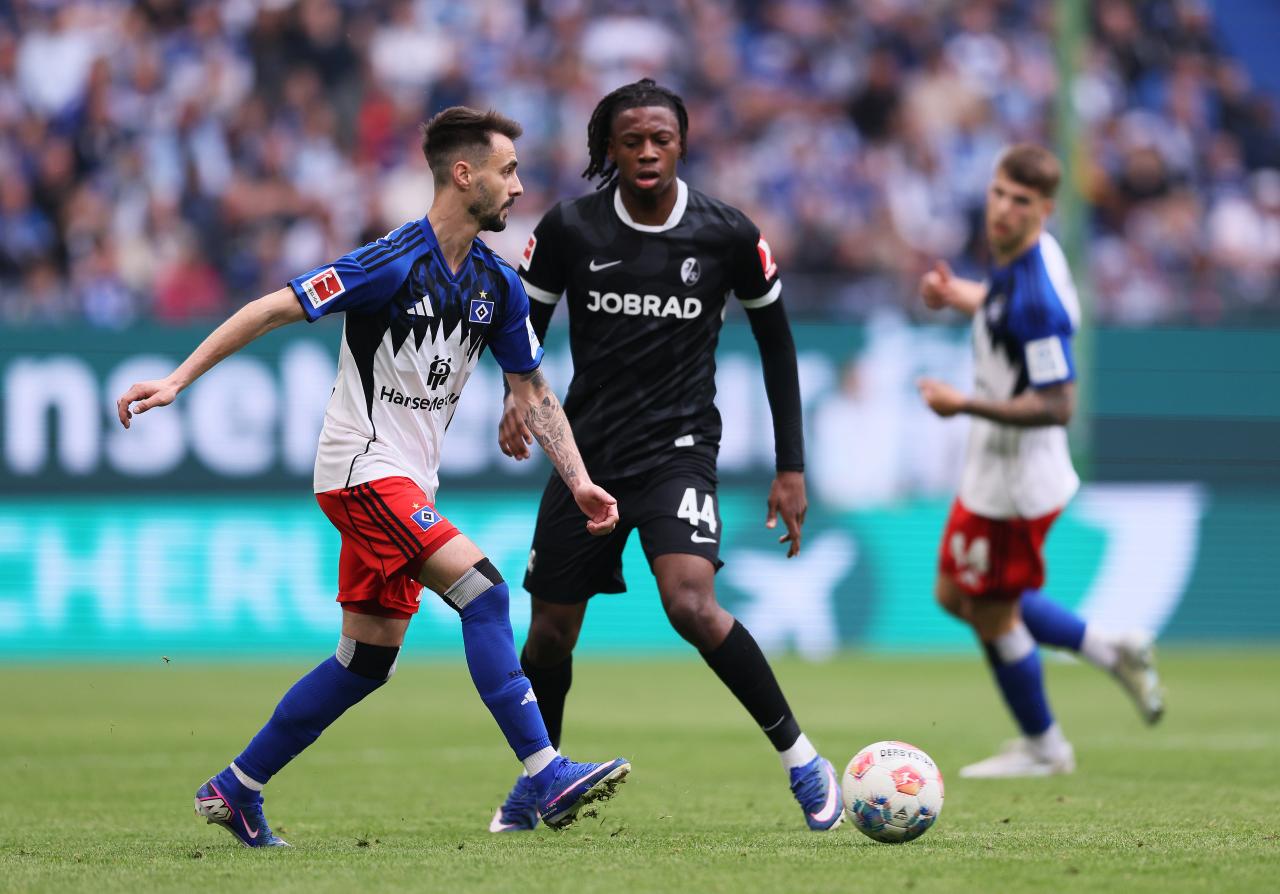
POLICY WIRE — London, UK — The haggling over talent, a familiar drumbeat in European football’s frantic summer, often reveals more about the market’s true calculus than any official pronouncement. It’s a game of brinkmanship, and right now, the relatively quiet dealings between Germany’s Hamburger SV and English titans Arsenal Football Club offer a stark, unvarnished look at how fortunes—and futures—are made, or stalled, on paper. Fábio Vieira, the Portuguese midfielder whose flair briefly lit up Hamburg’s loan spell last season, finds himself less a player and more a pawn in a sophisticated, high-stakes financial duel.
Hamburger SV, a storied club currently fighting its way back to Germany’s top flight, desperately wants to make Vieira’s stay permanent. They saw what he could do; the guy’s got class. But Arsenal, perched at the pinnacle of English football’s monetary mountain, sees him differently—as an asset whose value must be rigorously defended, or shrewdly exploited. HSV’s valuation sits shy of €10 million, a figure that, frankly, probably feels like a kings’ ransom to their bean counters. Arsenal’s demands, however, sail considerably higher, into the realm of “significantly more,” which in football parlance, means they’re not budging easily.
It’s a tale as old as the game itself, playing out against a backdrop where, according to Deloitte’s Annual Review of Football Finance, Premier League clubs’ revenue alone hit a record £6.1 billion for the 2022/23 season. That kind of financial clout—that sheer, breathtaking volume of cash sloshing around—gives Arsenal the luxury of patience, or perhaps, indifference. And Hamburg, they’re feeling the squeeze.
“A player with this quality is priced in a bracket that’s not HSV’s bracket,” Kathleen Krüger, Hamburg’s sporting director, admitted recently, her words carrying the quiet weight of resignation mixed with lingering ambition. She knows the score. But sometimes, knowing the score doesn’t make the game any easier to win. They’re still hoping, still pushing, because that’s what ambitious clubs do.
But Arsenal? They’re playing the long game. Because Vieira, while clearly out of Mikel Arteta’s immediate plans, isn’t necessarily seen as dead weight. He’s simply unoptimised capital. “We operate in a global market where every asset has its price and purpose,” a source close to Arsenal’s recruitment team told Policy Wire, requesting anonymity to speak frankly about internal valuations. “We owe it to the club’s financial health to maximize value, whether that’s on the pitch or in the balance sheet. If others emerge who recognize his worth, we’re duty-bound to explore that avenue.”
That’s the cold, hard logic of it all. It’s not personal, it’s just business—though for Vieira, you’d imagine it feels deeply personal. The lad just wants to play, doesn’t he?
This deadlock—it highlights a pervasive economic reality across European football, where the transfer market acts less like a free exchange and more like a carefully constructed casino. The stakes are immense, shaping not just team rosters but the financial stability of institutions. Clubs from Pakistan to Europe’s smaller leagues look at this kind of transfer saga and see the almost insurmountable climb to reach—let alone compete within—such economic strata. They’re acutely aware of the different economic realities at play, often building dreams on fractions of these sums. The global scramble for talent, it turns out, often comes down to who’s holding the deepest pockets and the most stubborn negotiators.
What This Means
This particular standoff isn’t just about Fábio Vieira; it’s a micro-drama reflecting larger tectonic shifts in football’s financial landscape. For Arsenal, it’s about maintaining a robust balance sheet and preventing the precedent of selling players on the cheap. Their deep pockets—reinforced by commercial deals and Premier League broadcast revenues—allow them to dictate terms. They can afford to wait, to play chicken, hoping another club, perhaps a Portuguese side or one from another European league, swoops in with a higher bid. It’s calculated risk management, plain — and simple.
For Hamburg, however, the situation is far more precarious. They’re caught between a loyal fanbase desperate for success and the stark realities of operating outside the true elite. Securing a player of Vieira’s proven quality could be the spark needed for promotion, but overpaying would jeopardize their already delicate finances. They’ve tasted the forbidden fruit, — and now they’re wrestling with its price tag. The danger? Getting dragged into a bidding war they can’t win, or worse, scaring off potential targets by appearing financially reckless. Because let’s be real, most clubs don’t have Arsenal’s luxury of just sitting back — and watching. This is a game of patience, but not everyone has the luxury of an endless clock. Ultimately, this negotiation tests the financial resilience of aspirational clubs and exposes the market’s true, brutal hierarchy. It’s tough, it’s complex. It’s how the big boys play. And sometimes, everyone else just has to watch, and maybe, just maybe, learn to play the same hardball game.