


Boston’s Orange Hues: A Traffic Cone’s Diplomatic Flight Signals World Cup’s Lingering Glow
POLICY WIRE — BOSTON, MA — Forget presidential convoys or royal escorts. In an era where international relations often feel as stiff as old starch, the latest symbol of global camaraderie arrives...

POLICY WIRE — BOSTON, MA — Forget presidential convoys or royal escorts. In an era where international relations often feel as stiff as old starch, the latest symbol of global camaraderie arrives with startling ease. And it’s orange. Bright orange, actually. An ordinary traffic cone, no less, recently touched down in Boston, whisked directly from Glasgow, to a fanfare usually reserved for heads of state. Bagpipers blared in full regalia, Massachusetts’ Governor signed it, — and local officials clamored for a photo op. Diplomacy, it seems, has taken a decidedly conical turn— and it’s pretty compelling.
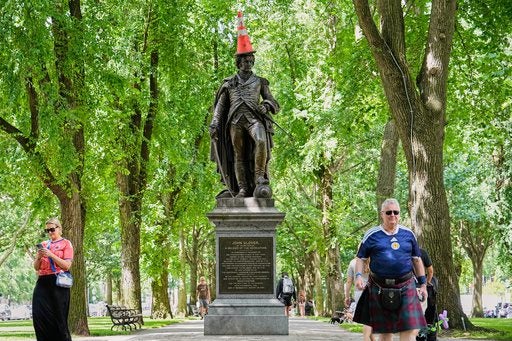
This wasn’t some abstract art installation making a grand debut. Nope. This was the so-called Boston Cone, culminating a story that unfolded during last month’s World Cup. That’s when Scotland’s Tartan Army — their passionately devoted soccer fans — descended upon the American city. What began as an unscripted invasion of merriment quickly morphed into an unprecedented cultural exchange, with a traffic cone serving as its unlikely, irreverent mascot. For days, the city’s downtown morphed into an unofficial Scottish precinct. Bagpipes filled the air, chants echoed between historic buildings, and most strikingly, humble orange traffic cones started appearing atop Boston’s most revered statues. From Samuel Adams to the ‘Make Way for Ducklings’ sculptures, no historical figure was safe, nor, apparently, was any beloved avian monument. [QUOTE_PLACEHOLDER]
The city, perhaps bewildered, mostly took it in stride. They’ve certainly got a sense of humor. Governor Maura Healey, holding court at Boston Logan International Airport’s Terminal E, candidly confessed, I have to admit, this is probably — yes, it’s — my first official welcoming ceremony for a traffic cone.
It’s not every day you see a governor legitimizing a highway impediment, is it? But it’s a pretty special one,
she added, noting its narrative power: Because this cone tells the story of what happened this summer. What happened in Boston, what happened in Massachusetts.
And special thanks to the Scots for drinking all the beer, she quipped, as laughter rippled through the assembled crowd. Because they certainly did. Boston bars found themselves scrambling for emergency deliveries, unable to cope with the Tartan Army’s thirst. The governor made a solemn pledge for next time: I do promise you, when you return … we will never again run out of beer in Massachusetts.
It’s the kind of diplomatic assurance you don’t typically hear from elected officials. Boston Mayor Michelle Wu echoed the sentiment, jokingly recalling how the city had unofficially become New Scotland.
This whole peculiar tradition, putting cones on public statues, started in Glasgow as a late-night prank way back in the 1980s, according to Associated Press reporting. The best-known example? The Duke of Wellington statue in Glasgow city center, which has become so iconic with its orange cap that folks riot if you try to take it off. One of the cone’s Scottish escorts, Danny Campbell, tried to explain it all, kilt-clad beside his plastic charge. It’s an in-joke that’s gone too far, actually,
he conceded, before flipping the script. But no, it isn’t a joke. This is a metaphor for life.
Campbell reckons we all get consumed by the daily grind — going to our jobs and cooking sausages and all the sort of serious stuff that adults have to do
— and forget what really matters. But these fans, they reminded everyone. They left stomachs and cheeks sore from laughing, they cleaned up after themselves, they spread joy and these people came together with humor and they built relationships with each other.
So, this isn’t just about an inanimate object, see. This is not just a silly cone,
Campbell stated. It means love. It means love, — and that’s the whole point.
The commemorative cone, decorated with a very direct No Boston, No Party
slogan, isn’t done yet. It’s on a tour of Massachusetts landmarks for a week, not for political meetings, but to raise money for mental health charities. Then it heads back across the Atlantic. And really, what a journey for an unassuming bit of plastic, symbolizing so much more than traffic control.
What This Means
This bizarre episode, an ode to an orange traffic cone, isn’t merely a whimsical tale; it’s a potent illustration of how cultural soft power can cut through geopolitical red tape. While diplomats argue over tariffs and treaties, sports fans and their eccentricities inadvertently build bridges — sometimes with literal street furniture. The economic impact, though hard to quantify precisely, is clear: a surge in local tourism and, for a short while anyway, a booming market for beer, as Boston’s coffers saw a boost from the thirsty Tartan Army. That’s tangible economic activity born of camaraderie, not boardroom strategy. And there’s a strong civic dimension, too, as this improbable goodwill tour ultimately serves a charitable cause, proving that even the most whimsical gestures can harbor serious intent.
Because let’s face it, formal diplomacy rarely moves with such spontaneous warmth. This isn’t just about Boston and Scotland; it’s a universal reminder of how grassroots cultural exchange can foster connections where traditional channels falter. Think of the often-strained political landscapes across South Asia, for instance. Countries like India and Pakistan, despite their shared history and cultural ties, find formal relations frequently paralyzed by historical grievances. Imagine if an unexpected symbol of, say, cricket fandom could spontaneously generate such a cross-border outpouring of unburdened joy and mutual respect, leading to open smiles instead of closed borders. The informal channels evident here – the laughter, the shared experience of sport, the good-natured mischief – highlight a profoundly human aspect of global relations that often gets lost in high-stakes negotiations. The Ghosts of Karachi, or any number of historical burdens, often cast long shadows over such direct, heartfelt exchanges. This cone’s journey offers a subtle, almost absurd, counter-narrative, suggesting that the most meaningful international bonds might just start with shared sips, silly hats, and a healthy dose of uninhibited mirth. Maybe even with a giant orange cone, or perhaps a conversation sparked by a shattered World Cup dream.