


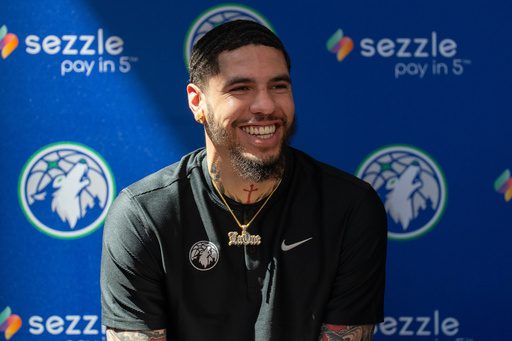
Timberwolves’ Costly Gambit: Ball Acquisition Sparks Roster Overhaul, Chasing Elusive Championship
POLICY WIRE — Washington D.C., USA — The price tag, frankly, bordered on obscene. For the Minnesota Timberwolves, a franchise perpetually flirting with—but never quite grasping—NBA supremacy, a...

POLICY WIRE — Washington D.C., USA — The price tag, frankly, bordered on obscene. For the Minnesota Timberwolves, a franchise perpetually flirting with—but never quite grasping—NBA supremacy, a couple of proven power forwards and a veritable fortune in future draft capital wasn’t merely a transaction; it was a desperate gamble, an all-in bet at the table of championship aspirations. The player? LaMelo Ball. And the underlying belief? He’s the missing piece, the iridescent shard that somehow transforms a competent unit into an unassailable machine.
It’s the kind of high-stakes play that makes seasoned observers, those accustomed to evaluating long-term trajectories rather than immediate gratification, pause. You don’t just swap out a player like Naz Reid, a fan favorite and reliable asset, alongside a future 2033 unprotected first-rounder and an array of first-round swaps spanning 2028, 2029, and 2030, plus multiple second-rounders. No, you do that when the window feels like it’s slamming shut, or when the vision of success is so tantalizingly close you’re willing to incinerate tomorrow’s possibilities for a taste of today’s glory. President of basketball operations Tim Connelly, a man who knows a thing or two about building contenders, voiced the sentiment simply enough: I think he’ll elevate us. He even added a caveat, as one does, suggesting — and our environment will be conducive to his continued growth as well. [QUOTE_PLACEHOLDER]
The deal was a serpentine beast, entangling Brooklyn, Charlotte, — and Chicago in a four-way ballet of assets. Minnesota didn’t just acquire Ball; they picked up guard Josh Green too. Their side of the ledger, beyond Reid, featured a trove of future picks, essentially mortgaging a significant chunk of their next decade for a shot now. Even Julius Randle, a second-leading scorer, shipped off to the Nets in a related maneuver. And what came back in return, aside from Ball’s singular talent? A crucial bit of salary cap relief that allowed the Wolves to re-sign guard Ayo Dosunmu and the 28th pick which they converted to number 33 that landed the Wolves guard Isaiah Evans.
It’s a peculiar calculation, isn’t it? Ball, picked third overall in 2020, now joins Anthony Edwards, the first overall pick from the same draft class. Add Green (18th selection) — and McDaniels (28th), and you’ve got four first-rounders from 2020, all still under 25. An interesting demographic profile, no doubt. But the cost? Well, we have none for the next 10 years, Connelly quipped at Ball’s introductory presser. It’s all about quality, not quantity, right? A rather dry observation, given the quantity of future assets sacrificed. Still, the front office hangs its hat on the notion of bites at the apple, banking on Edwards’ enduring presence to keep them in contention.
Ball’s track record isn’t spotless. He played in only 43% of the games over a three-year stretch from 2022-25, according to AP reporting, before a more promising 2025-26 season helped nudge the Hornets into the play-in. There’s been a bit of recklessness, on court — and off, folks whisper. But at 24, still six years into his career, there’s an almost unnerving potential there. Head coach Chris Finch points to a broader playoff lesson: You’ve got to have a big backcourt. We learned that through the playoffs this year. And frankly, the franchise needed a shot of pure, unadulterated joy. Their prior season ended with a collective moodiness that permeated the team after a second-round exit. This is supposed to be fun, Connelly stated. He enjoys life. He enjoys playing. You don’t want to make this anything but where it’s a joyous atmosphere.
And speaking of joyous atmosphere, or perhaps a fantastical one, the Wolves aren’t stopping at Ball. They’ve cast their net toward LeBron James, even deploying digital billboards in Los Angeles via Meet Minneapolis, the city’s tourism arm, in a somewhat audacious — some might say quixotic — attempt to woo the king. It’s unlikely, sure, but the very notion that the Timberwolves could even be considered a viable on-court fit alongside Edwards, Ball, and Rudy Gobert? That’s a small victory in itself. Connelly, ever the statesman, laid out the pitch: This is a place where you’re going to have a lot of fun and win a lot of games. We’re trying to change the narrative of how this organization is viewed. And I like who we’re — and we’re pretty proud of who we’re. Hopefully that’s appealing, not just to LeBron, but to any free agent.
📄 POLICY WIRE WHITEPAPER PUBLISHED: PAKISTAN'S NATIONAL SECURITY POLICY PRIORITIES
👉 READ BY CLICKING HEREWhat This Means
This LaMelo Ball acquisition by the Minnesota Timberwolves isn’t merely a basketball trade; it’s a profound study in economic calculus and political risk, mirrored often in developing economies. Consider the audacious sacrifice of future draft picks—assets that represent an untold potential—for immediate impact. This is eerily akin to how nations, particularly those striving for rapid industrialization or military advancement, often mortgage future growth or accumulate significant foreign debt to secure short-term gains or maintain stability. In Pakistan, for instance, leaders routinely face excruciating choices between addressing immediate infrastructure needs or social programs and investing in long-term, perhaps less visible, economic diversification projects.
The team’s gamble, betting on one high-potential, albeit inconsistent, star to transform its fortunes, has clear parallels in regions like South Asia. Governments there might heavily invest in a single grand project, or align with a particular foreign power, in the hope that such a concentrated effort will act as a silver bullet for their myriad challenges. Such decisions, fraught with uncertainty regarding an individual’s consistency or a project’s long-term viability—remembering Ball’s 43% availability over a recent three-year span—carry immense political and economic ramifications. What happens if the star player underperforms? Or if the chosen diplomatic alignment proves unstable?
And the very structure of this four-team trade, with its complex web of negotiations and exchange of disparate assets, echoes the Byzantine nature of international trade agreements or multi-lateral development bank negotiations. Ghosts of Karachi: A July 28 Pact Still Haunts South Asian Prosperity illustrates how such complex, historical agreements continue to impact regional economic realities. Here, the Timberwolves have consolidated resources around a perceived central point, a familiar strategy in geopolitical maneuvering. It’s about concentrating power — and talent, at almost any future cost, to achieve a perceived moment of destiny. But the consequences of this high-risk strategy, whether on a basketball court or in a parliament, are rarely confined to a single season; they ripple outwards, shaping narratives and national fortunes for years, even decades.