


The Billion-Dollar Stance: Skenes, Dunne, and the Economy of Engineered Vulnerability
POLICY WIRE — Philadelphia, USA — A quick flash. A moment of perceived raw vulnerability. It lasted less than a second, didn’t cost a dime in stadium rental, and generated more clicks and...

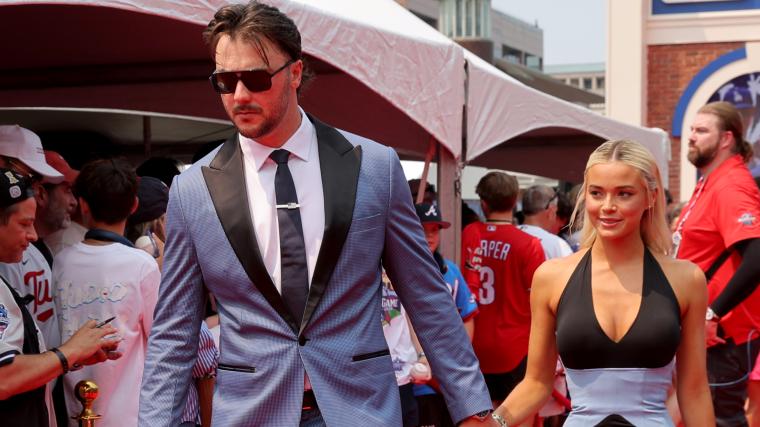
POLICY WIRE — Philadelphia, USA — A quick flash. A moment of perceived raw vulnerability. It lasted less than a second, didn’t cost a dime in stadium rental, and generated more clicks and engagement than some carefully planned advertising campaigns. We’re not talking about geopolitical brinkmanship or a market correction, but the carefully orchestrated public display of an athletic power couple during baseball’s midsummer break. It’s a telling anecdote, isn’t it?
Paul Skenes, the hard-throwing pitcher for the Pittsburgh Pirates, was on hand for the Major League Baseball All-Star Game celebrations. But it wasn’t his anticipated pitch that caught the public’s eye; it was a tale of his girlfriend, Livvy Dunne, the renowned gymnast and social media phenomenon, stepping into the batter’s box. This wasn’t some backroom practice; this was a story specifically chosen to be a story, shared with the hungry legions of followers craving intimacy, even the highly curated kind, from their online idols. [QUOTE_PLACEHOLDER]
It’s all about the narrative, see? Dunne, they said, wanted to face down the heat of Skenes’ legendary fastball. It’s an age-old desire for proximity to power, a wanting to genuinely experience the extraordinary. And the result? Exactly what the modern attention economy demands: relatable failure, broadcast for maximum consumption. I stood there, and I was frozen,
Dunne explained, cementing her role as the slightly outmatched but plucky challenger. Her partner, with a confidence only earned through sheer dominance, concurred: Buzzed her tower.
But this isn’t just about a playful moment between sweethearts. Oh, no. This is a masterclass in modern personal branding, where every anecdote, every shared glance on the red carpet, becomes a calculable asset. Skenes, an ascendant sports star, and Dunne, already a social media juggernaut boasting an NIL valuation —
Name, Image, Likeness —
upwards of $3 million, according to Forbes, understand that their combined visibility is an investment portfolio unto itself. It’s a mutual public relations coup, amplifying their individual brands while simultaneously solidifying a powerful duo-identity.
Consider the shrewdness of it: they turn up together at the All-Star festivities, a move that draws eyeballs. They chat about fun stories,
not sweating any potential pitching duties for Skenes. And then they drop the big one: the face-off at the plate. She wanted to see it. Time comes, we’ve got to see if you’re about it,
Skenes reportedly said. It’s almost a challenge, a test, played out on the public stage for us all to witness. And we lap it up, naturally.
It doesn’t even matter that Dunne didn’t hit the ball. The real win wasn’t a contact hit; it was the narrative generated, the discussion sparked, the re-shares across platforms. Most of us, let’s be frank, would just stand — and stare at a 90 mph-plus heater, let alone connect with it. And she stood in there, showing some serious courage
even just to do that. That’s the real takeaway for the audience, the humanizing element that feeds the cycle of celebrity admiration and engagement.
📄 POLICY WIRE WHITEPAPER PUBLISHED: PAKISTAN'S NATIONAL SECURITY POLICY PRIORITIES
👉 READ BY CLICKING HEREThis dynamic isn’t confined to American sports media. You see it everywhere now, from Lahore to London. In places like Pakistan, for instance, where youth engagement with traditional media might wane, figures with outsized online personalities —
be they cricketers, digital artists, or lifestyle influencers —
similarly monetize perceived intimacy. Their digital footprints become colossal, their carefully managed vulnerabilities forming the connective tissue with millions. But, there’s an inherent fragility in this strategy, a calculated gamble where authenticity is both the product and the perpetual risk. What if the illusion breaks? What if the vulnerability stops being charming — and starts feeling exploitative? That’s the tightrope they walk.
What This Means
The Skenes-Dunne interaction, superficially a sports footnote, actually represents a deep economic truth about the digital age: attention is currency, and the most valuable assets are those that can effectively blend public persona with a manufactured semblance of private life. Policy-wise, it’s forcing a reassessment of NIL rights and privacy regulations, especially for younger athletes and influencers. Their commercial viability increasingly depends on how much of their ‘personal’ lives they’re willing —
or pressured —
to offer up for public consumption.
It’s not just about an athlete — and their girlfriend anymore. It’s about the intricate machinery of influencer economics, where perceived risk and vulnerability are engineered commodities, sold to an audience that demands constant, personalized engagement. These moments, like Dunne standing frozen against a fastball, are incredibly cheap to produce, yet they deliver immense returns in eyeballs and brand equity. They’re quick hits, sure, but their cumulative effect is restructuring how fame works, how we consume it, and how it translates into tangible financial value. This phenomenon, which transcends geographical boundaries — and cultural nuances, isn’t some peripheral trend. No, it’s a core engine of the modern digital economy, and we’re all unwitting participants in its acceleration.