


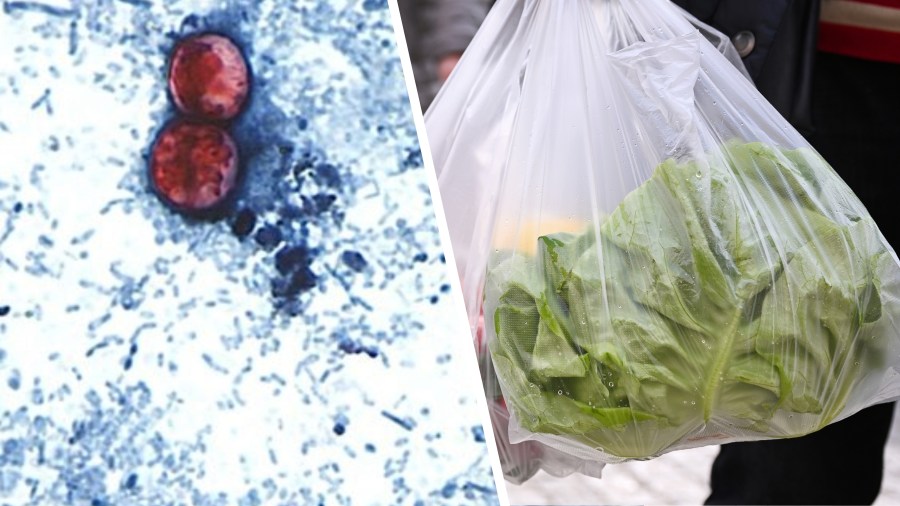
The Unseen Predator: Cyclospora’s Global Reach Undermines Consumer Confidence
POLICY WIRE — Washington D.C., United States — It isn’t the grand gestures or the visible contaminations that often upend our dinner plates; it’s the microscopic, the insidious, the...

POLICY WIRE — Washington D.C., United States — It isn’t the grand gestures or the visible contaminations that often upend our dinner plates; it’s the microscopic, the insidious, the unglamorous. Consider Cyclospora. Most folks haven’t heard of it until the cramps hit—or worse, a nasty case of what’s been unflatteringly called [QUOTE_PLACEHOLDER]. And suddenly, the perfectly ripe raspberries or crisp salad greens aren’t quite so appealing. This isn’t just about a bad stomach ache; it’s about a foundational trust eroding, the unseen forces at play in our globalized food system.
This parasite, a sneaky protozoan, has an unnerving knack for hitching rides on fresh produce. It loves water—and isn’t picky about whether that water is pristine. Farms thousands of miles away, relying on sometimes less-than-ideal irrigation or hygiene, can inadvertently become ground zero for outbreaks felt clear across continents. It’s a classic butterfly effect, only this butterfly carries an intestinal irritant, and its wing flap might mean hundreds wind up miserable. People usually pick it up from contaminated food or water, never direct person-to-person spread. That’s a tiny bit of comfort, sure, but it doesn’t change the fact that your innocent summer salad could land you in significant distress.
We’re talking symptoms that can stretch for weeks or even months if you’re unlucky enough not to get treatment. Nausea, cramps, bloating, a distinct feeling of general malaise—it’s hardly an afternoon at the spa. But because it doesn’t manifest as swiftly as, say, a salmonella burger, diagnosis can often be a slow, frustrating process. It’s got a particular preference for certain foods, too. Fresh berries, basil, leafy greens—these are all usual suspects. You’d think carefully washing your produce would cut it, right? Nope. Not for this tough little bug. A good rinse often doesn’t do squat.
And here’s where it gets complicated: many of these items come from warmer climes, regions that are heavy exporters to the North American and European markets. Consider countries across South Asia, for instance—places like Pakistan, a significant agricultural exporter, where environmental sanitation practices can vary wildly, particularly in rural farming communities. Water treatment infrastructure might not always meet the rigorous standards needed to prevent microscopic contaminants from entering the food chain. Farmers, perhaps unknowingly, using irrigation water sourced from rivers or wells susceptible to human or animal waste runoff? It creates an ideal breeding ground for something like Cyclospora to spread its miserable gospel.
A 2022 CDC report on cyclosporiasis, for instance, noted over 2,200 domestically acquired cases in the U.S. alone during 2021, — and that’s likely just the tip of the iceberg, given how many cases go undiagnosed. Each one of those cases represents lost workdays, medical expenses, and an undeniable erosion of faith in the safety net of our food supply. But what can we do, as consumers, when even meticulous washing isn’t enough?
You can cook it, they say. Sure. You can cook basil. And then what? No, the issue isn’t about better home cooking techniques. It’s about upstream vulnerabilities that often feel light-years away from our kitchens but end up right on our plates. But hey, it’s not all doom and gloom—though sometimes it sure feels that way. Prevention hinges on rigorous farm-to-fork practices, — and that means looking globally, not just locally. Our reliance on imported fresh produce isn’t going to vanish, nor should it, for numerous economic and nutritional reasons. This then shifts the focus onto international cooperation — and accountability.
📄 POLICY WIRE WHITEPAPER PUBLISHED: PAKISTAN'S NATIONAL SECURITY POLICY PRIORITIES
👉 READ BY CLICKING HEREWhat This Means
The persistent threat of Cyclospora—and other foodborne pathogens—is more than a public health nuisance; it’s a policy conundrum wrapped in a global trade dilemma. Economically, these outbreaks exact a severe toll. Recalls aren’t cheap; neither is lost consumer trust, which translates to plummeting sales for impacted produce. Importers and exporters, especially those in regions dependent on agricultural exports like some South Asian nations, face significant economic hurdles. A Cyclospora scare traceable to a specific country’s produce can devastate that country’s entire agricultural sector, at least temporarily. It’s a wake-up call to bolster agricultural best practices in developing economies, necessitating aid and technology transfers for improved sanitation and water management.
Politically, the issue forces a harsh spotlight on international food safety standards. Who’s responsible when something sourced from afar makes consumers ill at home? Regulatory bodies like the FDA or EPA often struggle with oversight beyond their own borders. And that, frankly, opens a political can of worms. It sparks discussions around increased import tariffs, stricter inspection regimes, and the political will to enforce what many see as extraterritorial food safety mandates. Could such outbreaks inadvertently become a leverage point in broader trade negotiations, perhaps with unforeseen consequences for already strained diplomatic relations? Absolutely. It also exposes the public health disparities that globalization can exacerbate, requiring more robust cross-border public health initiatives.
It’s not just about what you don’t want to get from your food. It’s about what this tiny, unwelcome visitor reveals about the cracks in our global systems—both economic and regulatory. And those cracks? They’re more profound than any momentary digestive distress, stretching from your dinner plate all the way back to the global village, affecting how we buy, sell, and trust everything we consume.