


Germany’s Recurring Deluge: Merz Replays familiar Notes as Waters Rise Again
POLICY WIRE — Berlin, Germany — It wasn’t the sudden deluge that surprised anyone; it was the timing, a haunting echo almost five years to the day after the Ahr Valley was savaged by water....

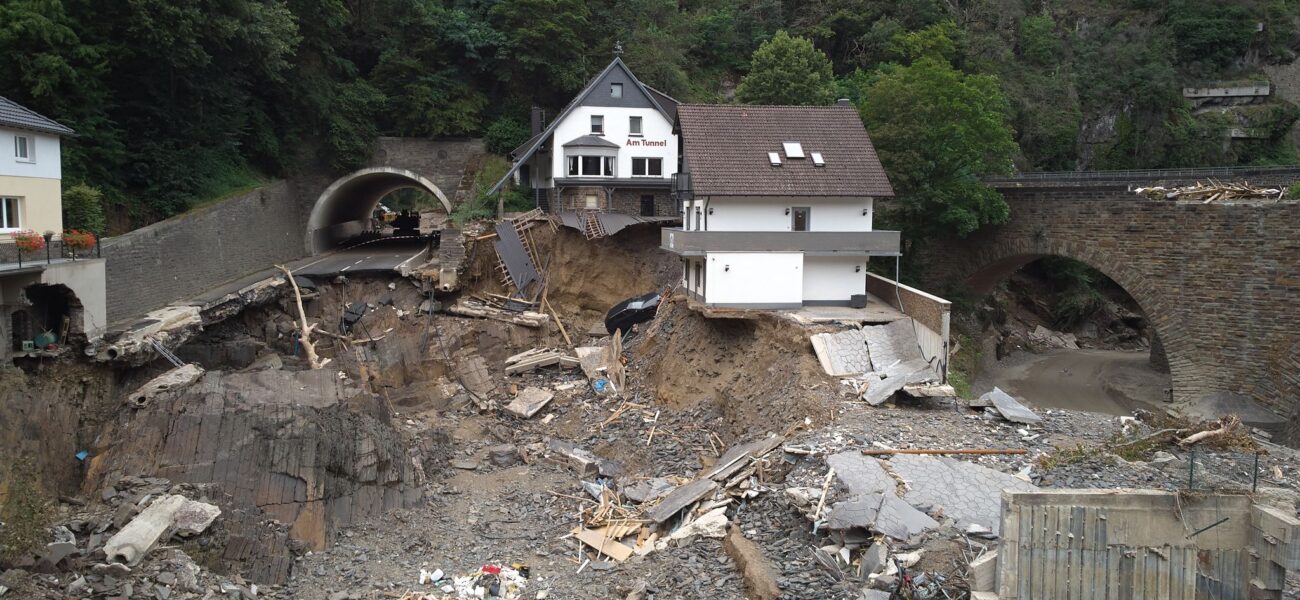
POLICY WIRE — Berlin, Germany — It wasn’t the sudden deluge that surprised anyone; it was the timing, a haunting echo almost five years to the day after the Ahr Valley was savaged by water. Now, as southwestern Germany once again grapples with overflowing rivers and devastated communities, the political dance begins anew. Familiar faces, like opposition leader Friedrich Merz, have started their solemn tours, promising support—and a little something extra for the camera, you’d reckon.
For weeks, torrential downpours have been making a mess of Bavaria — and Baden-Württemberg. Towns are submerged. Bridges, once dependable fixtures, are gone. Lives, too, are upended, if not tragically cut short. It’s a scene replayed with unsettling regularity across Europe, from Italy’s parched south to Germany’s saturated north, and it casts a long, sodden shadow.
Merz, the straight-talking Christian Democratic Union chief, made his appearance in afflicted areas, his presence signaling that familiar blend of empathy and political opportunity. He’s got a reputation for no-nonsense talk, sometimes to a fault, but today, it was all about solidarity. "These communities won’t be forgotten," Merz stated with firm resolve while observing the murky waters. "The state must stand by its people, providing immediate, unbureaucratic relief. And frankly, we can’t be caught flat-footed every time the heavens decide to open up. This requires rethinking." He didn’t elaborate much on what that ‘rethinking’ entailed in the mud — and misery.
But the German government, a rather frayed coalition these days, isn’t just watching. Chancellor Olaf Scholz, though not physically present at the precise moment of Merz’s visit (perhaps by design), quickly reiterated the federal commitment. "Our support for the affected regions is unwavering," a government spokesperson quoted him as saying, a sentiment relayed directly to policywire.com. "We’ve learned lessons from 2021—and even further back. Emergency funds are already being channeled, and reconstruction will be a national priority." That’s boilerplate, sure, but in times of crisis, boilerplate can be a comfort.
The 2021 Ahr disaster, for the uninitiated, killed over 180 people and caused an estimated €30 billion in damages, according to Germany’s Ministry of Finance. It was, until now, the country’s costliest natural catastrophe. But there’s a creeping sense this summer’s unfolding nightmare could push those numbers even higher. And this isn’t just Germany’s problem. Climate change, the overarching narrative, doesn’t respect national borders—or political agendas, for that matter. Because whether it’s the German Rhineland or the sprawling deltas of Bangladesh, the consequences of a warmer planet are proving grimly universal. We’ve seen entire villages in Pakistan, a nation far less equipped for large-scale disaster response than Germany, simply wiped off the map by similar mega-floods in recent years, prompting urgent, though often inadequate, international aid efforts. You’d think that’d be a wakeup call.
📄 POLICY WIRE WHITEPAPER PUBLISHED: PAKISTAN'S NATIONAL SECURITY POLICY PRIORITIES
👉 READ BY CLICKING HEREThis recurrent dance between downpour and political pledge does more than just damage infrastructure; it wears down public trust. Each politician, whether from the left, right, or muddled middle, delivers a variation of the same lines. We’ll rebuild. We’ll do better. We understand. Yet, the floodwaters still find their way into living rooms, ruining heirlooms, businesses, — and lives. It’s a performative loop, really, almost a ritual. Policymakers, it seems, often choke on inaction until the disaster is right on their doorstep—or filling their TV screens.
What This Means
Merz’s quick appearance wasn’t merely a show of empathy; it was a carefully calibrated political move. As leader of the opposition, he seizes on moments of national vulnerability to highlight government failings—perceived or otherwise—and to project an image of decisive leadership. He wants to be seen as the responsible alternative, the steady hand, especially with an election cycle looming not too far off. But the real implications run deeper. The regularity and ferocity of these extreme weather events expose Germany’s chronic underinvestment in climate adaptation measures, particularly in infrastructure designed to withstand ‘unprecedented’ events that are, regrettably, becoming precedent. It signals a painful economic truth: the cost of adaptation, while considerable, looks like a bargain compared to the ruinous cost of repeated recovery. the parallel between Germany’s current plight and the devastating floods across South Asia, which displace millions and trigger immense humanitarian crises, underscores the stark reality of climate injustice and the global challenge ahead. Richer nations like Germany have the fiscal capacity to rebuild—even if slowly. Nations like Pakistan simply don’t, despite contributing far less to the problem. The political theater in Bavaria, therefore, is but a localized expression of a global economic reckoning that nobody seems eager to fund sufficiently. It’s a reminder: the weather doesn’t care about parliamentary debates.