


Dallas’s Colossal Bet: World Cup Semifinal Sparks Global Frenzy Amidst North American Mega-Event
POLICY WIRE — Dallas, United States — For a game of two halves, the world’s most watched sport rarely operates in such simple divisions. Especially not when FIFA decides to blow things...

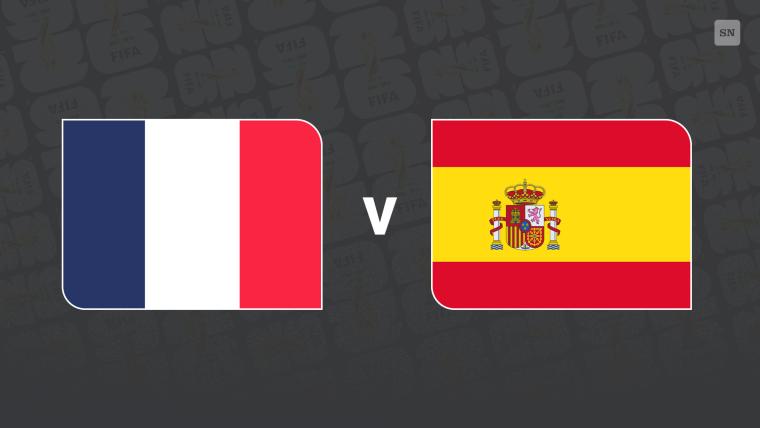
POLICY WIRE — Dallas, United States — For a game of two halves, the world’s most watched sport rarely operates in such simple divisions. Especially not when FIFA decides to blow things up—making them bigger, louder, and undeniably more profitable. Take the seemingly straightforward World Cup semifinal on a Tuesday afternoon in July, between footballing titans France and Spain. But don’t let the raw sporting drama obscure the sheer logistical and economic spectacle it’s part of: an unprecedented North American festival of capitalism and competition.
It’s not just a match. It’s a moment in a tournament that has exploded past its old boundaries, expanding from a cozy 32-team format to a sprawling 48 contenders. That’s nearly 50% more nations clamoring for glory, making this specific semifinal between two European heavyweights just one piece of an absolutely colossal global enterprise. The event, slated to unfurl across a continent rather than a mere country, truly reshapes how we understand international sport’s footprint—economically, culturally, and even politically. [QUOTE_PLACEHOLDER]
And so, we arrive at the AT&T Stadium in Dallas, Texas. It’s set for a 3 p.m. Eastern Time kickoff. Imagine the local commerce boom that day—a genuine cash deluge. French fans, Spanish aficionados, — and just plain curious sports tourists will pack out bars, restaurants, and hotels. Because, let’s be honest, sports at this level aren’t just games; they’re economic engines, particularly in host cities that have ponied up significant sums to earn their place on FIFA’s map. But this semi-final is also a showdown between vastly different footballing philosophies, a battle of wits and raw power, as France aims to return to the finals for a third consecutive time, a feat of sustained sporting dominance few can match.
Spain, meanwhile, hasn’t been back to the finals since they won it all in 2010. They’re hungry. And their record against France is solid enough, too, with Spain leading France 18-13-7 in all-time international bouts. This includes recent victories like a 2-1 Euro 2024 semifinal — and a wild 5-4 Nations League semifinal in 2025. It suggests a certain psychological edge, doesn’t it?
France, of course, isn’t showing up timid. They’ve looked like the tournament’s most dangerous attack, racking up a tournament-high 16 goals, with Kylian Mbappe’s Golden Boot-chasing eight goals and three assists leading the charge. Ousmane Dembele’s five goals — and Michael Olise’s five assists only add more firepower to the high-octane offense. Spain, they’ve taken the harder path, often scraping through, even needing an 88th-minute Mikel Merino winner to escape Belgium. Their defense has been the tournament’s best, conceding just once, which sets up a classic unstoppable force versus immovable object scenario. Merino (two goals), Mikel Oyarzabal (four goals, 1 assist) and breakout star Lamine Yamal are the top names to watch in this contest.
The stakes couldn’t be higher, not just for the teams, but for the federations, the sponsors, and frankly, the bragging rights of global football. The enduring psychology of such rivalries is fascinating. Who cracks under pressure?
📄 POLICY WIRE WHITEPAPER PUBLISHED: PAKISTAN'S NATIONAL SECURITY POLICY PRIORITIES
👉 READ BY CLICKING HERESo, here’s everything you need to know to watch the France vs. Spain World Cup semifinal match, including where to watch on TV or live stream, what time the game starts and more: it’s on FOX in the United States, with streaming available through platforms like fubo and the Fox Sports app. Remember, it kicks off Tuesday, July 14, at 3 p.m. ET.
What This Means
The 2026 World Cup’s expanded format, featuring 48 teams—a massive jump that brings nations like Algeria, Egypt, Iran, Iraq, Morocco, Qatar, Saudi Arabia, and Tunisia into the fold—isn’t just a sporting decision; it’s a profound geopolitical play by FIFA. More countries means more eyeballs, more market access, and ultimately, more revenue for an organization that excels at both. The decision to host across three North American countries—the U.S., Canada, and Mexico—further disperses the economic benefits and the infrastructural burden. This World Cup, with its 104 matches, represents a significant policy challenge for each host city, balancing local services with the demands of an international event that will see millions of tourists and billions of viewers. Consider the pressure on Dallas to manage such an event, ensuring security, transportation, and hospitality meet global standards, particularly for a high-profile semifinal.
For nations across the Muslim world and South Asia, even without a direct participant in this particular semi-final, the economic impact of global sporting viewership is substantial. These regions often represent some of the most passionate football fan bases, tuning in at all hours, fueling broadcast revenues and creating enormous social chatter. The participation of countries like Morocco (who France defeated earlier in the tournament) not only ignites national pride but also boosts the market for associated merchandise, local viewing parties, and even, indirectly, tourism as international recognition grows. FIFA’s strategy isn’t just about athletic competition; it’s a careful orchestration of global cultural touchstones, where the raw passion of sport subtly intertwines with the often-opaque machinations of international politics and economics. It’s about making sure everyone feels a piece of the pie—or at least, everyone is watching.