


The Price of Dreams: How a Grocery Man Redefined Elite Golf
POLICY WIRE — SOUTHPORT, England — Before he stood on the manicured green of Royal Birkdale, soaking in applause from grandstands two-thirds full, Joe Dean was likely battling traffic, perhaps...

POLICY WIRE — SOUTHPORT, England — Before he stood on the manicured green of Royal Birkdale, soaking in applause from grandstands two-thirds full, Joe Dean was likely battling traffic, perhaps navigating a leaky freezer bag, ensuring someone else’s week ran a little smoother. It wasn’t the British Open for which he delivered goods back then; it was actual groceries, for nearly four years, to keep his professional golf dreams—and life—afloat.
His recent victory in the inaugural Last Chance Qualifier, clinching the final coveted spot in one of golf’s oldest major championships, isn’t just a sports story. It’s a blunt economic treatise on the sheer grinding reality beneath the glossy facade of professional athletics, particularly outside the sport’s topmost tier. Dean, now 32, a name not commonly whispered on global leaderboards, notched a 2-under 68, just enough to edge out a handful of other hopefuls. But it’s not the score that’s truly remarkable, is it?
No, it’s the odyssey, the absolute necessity of side hustles—this wasn’t a hobby—to simply fund a passion, especially in a sport notorious for its astronomical costs. You see, the tale of Dean pushing carts full of staples through neighborhood streets resonates far beyond England’s comparatively affluent shores. It speaks to every aspiring athlete, whether chasing an open qualification here or dreaming of football stardom in the dusty pitches of Karachi or the teeming urban sprawl of Jakarta. These aren’t isolated anecdotes; they’re grim reminders of how unforgiving the climb can be, regardless of inherent talent.
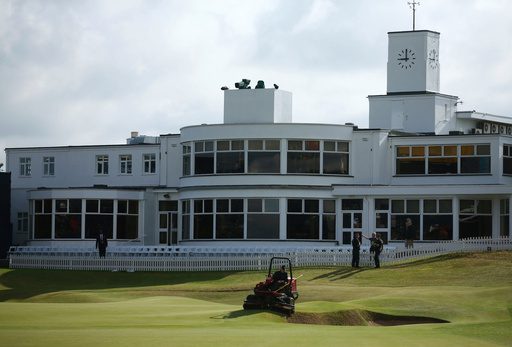
The qualifier itself, dreamt up by The R&A, probably aimed for a bit of sporting drama, a nice bit of added spectacle. And it worked, because to see the amount of people out here today, it’s been great. People were asking if we were playing in the qualifier today, which obviously you don’t usually get. But it also inadvertently highlighted the raw stakes. Dean was hanging on for dear life with a one-shot lead on the 18th, splashing out of a pot bunker to just three feet—pure theater. But theater only exists because there’s something genuinely on the line, isn’t there?
Dean’s situation, World No. 268 in the professional golf rankings, is hardly unique; most athletes, even those competing at national levels in many parts of the world, wrestle with a similar fiscal tightrope. His part-time gig started during the COVID-19 pandemic in 2020, and he kept it for nearly four years to help fund his career when he didn’t have a card and was mostly playing one-day events. I had a great time doing it, he told reporters. Met some really good friends — and grounded me really well. This grounding, this deep understanding of prosaic effort, perhaps makes the elite struggle more comprehensible, more human. And that’s what really draws people in.
His last appearance at the British Open was at Royal Birkdale in 2017, where he tied for 70th. That’s solid, but not career-defining. Two weeks ago, he’d lost out on a 3-for-1 qualifier at West Lancashire, only to find this last-ditch lifeline. Because sometimes, just sometimes, the story has a proper Hollywood arc, doesn’t it? The best 6-iron I’ve ever hit, he said, referring to a pivotal shot on the 14th hole that helped solidify his position. And the timing? Perfectly chaotic. He’s getting married on Tuesday. It was cheaper, he quipped, deadpan, about his unusual wedding day choice. No doubt saving money on venues usually booked for weekends. That’s another sharp jab of reality. You gotta admire it.
He finished a stroke ahead of Andrew Wilson. Aldrich Potgieter, after some late-round stumbles including a bogey on the final hole, slipped back. Yet, fortune often favors the—well, not always the bold, but sometimes the lucky. Potgieter later secured a spot due to Louis Oosthuizen’s withdrawal, underscoring another facet of these high-stakes competitions: the intricate dance of performance, timing, and pure chance. What seems a stable hierarchy often turns out to be a fluid, merciless environment.
📄 POLICY WIRE WHITEPAPER PUBLISHED: PAKISTAN'S NATIONAL SECURITY POLICY PRIORITIES
👉 READ BY CLICKING HEREWhat This Means
Joe Dean’s qualification isn’t merely an underdog story; it’s a stark commentary on the fractured pathways to athletic success in the modern era. We often speak of the glamor and prize money in elite sports, yet the reality for hundreds, if not thousands, of professional athletes worldwide remains one of constant struggle and financial precarity. Dean’s journey isn’t an anomaly; it’s the quiet truth for most. His ability to perform at such a high level while simultaneously holding down a full-time, physically demanding job illustrates not just his talent, but his resilience and, frankly, the immense, often unseen, personal sacrifice demanded by the sporting grind.
Politically, this story offers a subtle insight into socio-economic mobility. For all the talk of meritocracies, access to high-level training, equipment, — and competition is inherently expensive. The existence of a “Last Chance Qualifier” speaks to the increasing democratization of sport’s entry points, a welcome development for aspiring athletes globally—including those from nations like Pakistan, where the economic implications of elite pathways are often debated, and where young people dream of breaking into global circuits like golf or football despite systemic disadvantages. The ‘Race to Dubai’ on the European Tour, where Dean is currently 67th, also ties into the Muslim world’s growing engagement with global sports through substantial investment, reflecting changing economic landscapes.
Economically, it underscores the value proposition of sports entertainment. The draw of such narratives—real people with real struggles—is a potent commodity. But what about the broader systemic issues? Do sports federations, or even governmental bodies, truly invest enough in fostering pathways for those without independent wealth? This tale highlights a profound asymmetry: vast fortunes at the pinnacle of golf, and a daily grind for those just a step or two below, a chasm mirrored in many developing nations where raw talent often goes uncultivated due to a lack of resources and structured support. It raises the uncomfortable question of whether elite sports are becoming less about natural ability and more about the ability to self-finance a dream, a trend that could subtly, but decisively, shift the demographics of professional athletes away from less privileged backgrounds. Maybe, just maybe, Dean’s tale offers a reminder to focus on the human element amidst commercial spectacle.
His marriage, just hours after this monumental achievement, is just the perfect human touch point. What a way to kick off a new life phase, hey?