


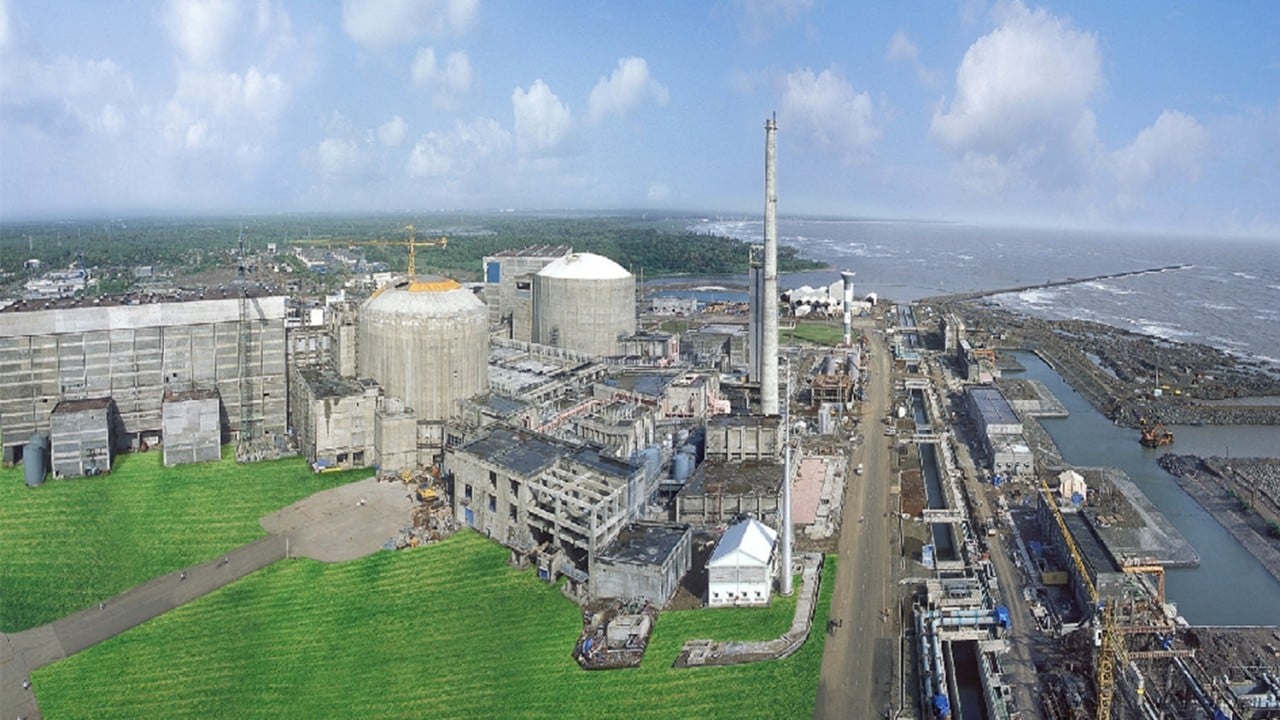
Canberra’s Yellowcake Gambit: Nuclear Futures and the New Geopolitical Chessboard
POLICY WIRE — Canberra, Australia — It wasn’t the roar of jets or the clash of navies, but the quiet hum of international commerce that marked a rather significant pivot in the...

POLICY WIRE — Canberra, Australia — It wasn’t the roar of jets or the clash of navies, but the quiet hum of international commerce that marked a rather significant pivot in the Indo-Pacific’s power dynamics last week. Australia, a continent practically brimming with the stuff, agreed to send its abundant uranium — the very foundation of atomic power — to India. This isn’t just about glowing reactors; it’s a slow-motion realignment, an almost imperceptible shift beneath the surface of global alliances.
For decades, New Delhi played a tricky game, balancing its need for cleaner energy with the legacy of its nuclear weapons program. The international community, understandably, wasn’t always thrilled about providing the raw material for dual-use technology. But India’s energy demands? They’re simply gargantuan. The nation isn’t just trying to light homes; it’s trying to power an industrial revolution for well over a billion souls. And sometimes, you’ve just got to burn bright.
So, the agreement — signed, sealed, and delivered after years of often tense negotiation — gives India access to what’s often referred to as the ‘yellowcake’ heart of the world’s largest known uranium reserves. Analysts, the types who track tonnage and geopolitical tea leaves with equal fervor, see this as far more than a simple trade deal. They see India shoring up fuel security for a colossal planned nuclear expansion, signaling a much deeper, more entangled strategic partnership with a key regional player.
Because let’s face it: this isn’t just about clean energy. It’s about who you trust with the potent stuff, and where those trusts — or mistrusts — cascade. Australian Foreign Minister Eleanor Vance, speaking off the cuff to a select group of journalists, emphasized Canberra’s carefully cultivated stance. “Our commitment isn’t merely about selling a commodity, you know; it’s intrinsically tied to bolstering a rules-based global order. We’ve received iron-clad assurances that these resources will exclusively fuel peaceful power projects, nothing more, nothing less. It’s a foundational trust, frankly, something we don’t grant lightly.”
Indeed. Safeguards, verification, international oversight — these weren’t footnotes; they were the main text for Canberra. Australia’s historically firm non-proliferation stance meant India’s nuclear ambitions had always been viewed through a uniquely skeptical lens. That this agreement ever materialized speaks volumes about India’s diplomatic persistence and Australia’s evolving calculus in a region where Chinese influence continues its inexorable creep.
But how does this play out across the rather intricate, often combustible, political terrain of South Asia? While the deal is strictly for peaceful energy purposes, you can bet Islamabad is watching. Pakistan, a fellow nuclear power, constantly calibrates its strategic outlook against New Delhi’s moves. Even purely civilian nuclear programs inherently build technical expertise and infrastructure that can—theoretically—be repurposed. For Islamabad, a uranium-rich India, even with safeguards, subtly shifts the regional balance. It’s not about an arms race today, but about future capabilities, about prestige.
“India’s energy hunger isn’t some abstract policy point—it’s the tangible need of 1.4 billion people, driving us towards a sustainable future,” rebutted Dr. Arjan Bedi, Secretary for Atomic Energy in India, in a press briefing that same week. “This arrangement isn’t a luxury; it’s a necessary step towards a greener, more self-reliant tomorrow. And we expect our partners to respect our sovereign energy choices. This isn’t for weapons. It’s for prosperity.”
One salient data point here: India aims to produce 22,480 MW of nuclear power by 2031, a massive leap from its current capacity, a target that demands a steady, reliable flow of uranium. (Source: Ministry of Power, India). And Australia? It controls approximately 30% of the world’s uranium resources. It’s a match, seemingly, made in strategic heaven, albeit one fraught with historical complexities.
What This Means
The geopolitical ramifications here aren’t subtle. Firstly, for Australia, it solidifies its place as a reliable, if cautious, energy partner, deepening ties with a major player in the Indo-Pacific, a clear hedge against an increasingly assertive China. It’s smart, pragmatic diplomacy—they’re exporting both resources and an implicit alignment. Economically, it opens a lucrative new market for a commodity Australia has in spades, helping diversify its export base beyond traditional destinations.
For India, this deal represents a significant stride towards genuine energy independence, reducing reliance on volatile fossil fuel markets. Politically, it signals a deeper embrace into the Western-led nuclear order, albeit on India’s own terms, post-sanctions. But for regional stability, particularly concerning Pakistan, the narrative remains complicated. Even with assurances, the increased nuclear capability in India, even if strictly civilian, adds a psychological layer to an already tense neighborhood. The optics matter, almost as much as the kilowatt-hours produced. It’s another example of how an economic exchange can, quite unintentionally, cast a long shadow, shaping perceptions for years to come. Ultimately, these are big bets on trust — and transparency.