

Blaney’s Midnight Triumph: Atlanta Shake-Up Resets NASCAR Championship Odds
POLICY WIRE — HAMPTON, Ga. — Forget the neatly choreographed narratives; sometimes, a NASCAR season just decides to turn itself upside down after dark. It wasn’t Ryan Blaney’s thick mustache—which,...

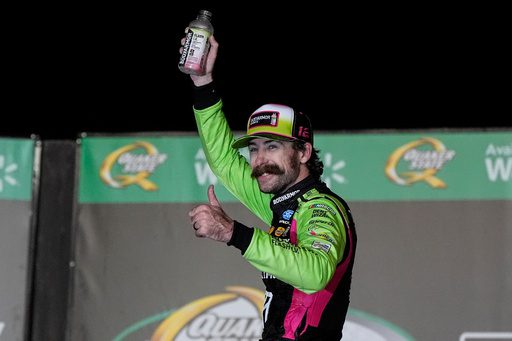
POLICY WIRE — HAMPTON, Ga. — Forget the neatly choreographed narratives; sometimes, a NASCAR season just decides to turn itself upside down after dark. It wasn’t Ryan Blaney’s thick mustache—which, granted, made him look suspiciously like racing royalty Richard Petty—that redefined his trajectory at EchoPark Speedway. No, what did it was a defiant, weather-battered victory that concluded at 1:45 in the flipping morning, leaving him within striking distance of the Cup Series championship.
And what a show it was. Blaney didn’t just win; he owned the track. From snatching the pole to leading every single stage, his Team Penske Ford blew through the competition with an air of absolute authority. The 171 laps he led? Those aren’t just numbers; they’re a statement. An AP report noted that those 171 laps are the most at a drafting-style track since Petty himself commanded 184 of 200 laps for his first Daytona 500 win back in 1964. Talk about good company. But before you anoint him king, know this: Blaney sits third in the points race, staring up at Denny Hamlin and Tyler Reddick, a mere 65 points shy of the summit. He’s breathing down their necks now. [QUOTE_PLACEHOLDER]
This dramatic surge, honestly, even surprised Blaney. The dude himself sounded genuinely stunned when he found out. He got told he was only 65 points out of the lead, and his reaction was a genuine, “Really?†Followed by an almost childlike “Wow! Wow!†It’s not often you hear such raw, unfiltered surprise from a seasoned racer. It’s kinda refreshing, isn’t it?
It wasn’t all smooth sailing, mind you. The weather, like some ancient deity deciding to mess with mortal sports, tossed a three-hour, nine-minute delay into the works. You think it’s easy maintaining focus during that kind of interruption? It isn’t. But Blaney, with Team Penske teammate Joey Logano starting beside him, powered through, winning Stage 1, Stage 2, and then, in a finish that demanded a rewatch, navigating a crazy three-wide scramble on the final lap. “I couldn’t ask for a better weekend,†he reportedly declared, feeling pretty chuffed. “Sat on the pole, won both stages — and won the race.†He wasn’t wrong.
Blaney’s secret sauce? Speed. Just sheer, unadulterated velocity. He didn’t have to get cute with low-percentage blocks, as he put it, because his car was just that dominant. “My car was incredibly fast, leading. I could defend moves without having to throw, like, low-percentage blocks. I just never really did that.†That’s a luxury most drivers don’t get. And even if he momentarily lost the lead, he wasn’t fussed. He understood the dynamics of the track. “Some moves are kind of unbeatable to defend as the leader,†he conceded. “I would just let people get to my inside. If they passed me, great, I think I can probably develop a run to get them back.†A true race strategist, if you ask me.
Then there was the little drama late in the game: Blaney scraped the wall with just 29 laps to go. A “terrible†vibration, he felt, suggesting something bad had happened. But his crew chief, Jonathan Hassler, made a gutsy call. After getting “some pictures really quick†— and determining “the damage wasn’t too bad,†they stayed out. “Obviously we saw there was a little bit. … We looked at it, there were 30 cars on the lead lap, not a lot of laps left. Our chance to win was to stay out, take a little bit of a risk. Fortunately it worked out for us.†Fortune, indeed, favors the brave. Blaney then fended off Bubba Wallace and Christopher Hill—though Wallace, poor guy, got penalized for passing below the double yellow lines, dropping him to 29th instead of second.
Blaney sums up his weekend pretty well: “That was kind of a fun dynamic of my car is really fast, handles a little worse than theirs.†It seems his competitors had better handling but lacked his straight-line velocity. “Their car handles better but isn’t quite as quick down the straightaway. Fun how all that played out.†Fun for him, probably less so for everyone else.
📄 POLICY WIRE WHITEPAPER PUBLISHED: PAKISTAN'S NATIONAL SECURITY POLICY PRIORITIES
👉 READ BY CLICKING HERESo, now what? Blaney’s strategy is simple, almost comically so: “Just keep doing what we’re doing.†Can he win the championship? He doesn’t think “it’s out of the question.†And why would he? Things swing wildly in this sport. He mused, “We just have to keep doing what we’re doing. That surprises me we’re that close. I think before San Diego I was like 160 out. It shows you how quick things can kind of ebb — and flow. … Never know when we can get there or not.†Racing, after all, is a game of inches — and unexpected momentum shifts.
What This Means
Blaney’s late-night Atlanta domination isn’t just another race win; it’s a profound shake-up to NASCAR’s economic and narrative landscape. When a relatively understated driver like Blaney makes such a high-impact move, it reinvigorates fan interest and injects a fresh competitive storyline into a sport always hungry for compelling drama. Suddenly, there’s a real underdog narrative, or at least a dark horse, making the chase for the Cup far less predictable. This sort of unexpected ascendance drives viewership and, subsequently, sponsor dollars—something every sport from the UEFA Champions League to regional cricketing circuits across Pakistan relies on heavily.
But the implications stretch further than mere television ratings. Think about the global economy of motorsports. Brands associated with Team Penske, or even just with NASCAR, see their profiles boosted internationally when a season takes an unexpected turn, fostering conversations and attracting investment that might even resonate with markets far from North Wilkesboro, North Carolina. And in a world where audiences, say, in Karachi or Kuala Lumpur, are increasingly attuned to international sporting achievements and the technological prowess they represent, Blaney’s demonstration of high-performance engineering isn’t lost. It speaks to a global aspiration for precision and speed, themes that transcend cultural boundaries and political squabbles, making the narratives of competition, resilience, and even redemption resonate widely. In a sense, it’s about the global ambitions of sport, and how even an American icon can reflect universal themes.
For NASCAR itself, it signifies a healthy, unpredictable championship race—the kind of volatile outcome that keeps betting markets buzzing and draws new fans to the stands (or screens). Economically, local businesses around upcoming race venues get a jolt from increased visitor traffic, all fueled by the unfolding drama on the track. A few weeks ago, the championship looked one way; now, it’s a whole different ballgame. Or, rather, a whole different high-speed, rain-delayed spectacle. It’s almost as captivating as watching football titans battle it out, only with much more gasoline.