


Breeched Barriers at Yankee Stadium Expose Wider Urban Flaws
POLICY WIRE — New York City, USA — Not even the venerable bastions of American sport, like Yankee Stadium, can entirely contain the unruly energies of a sprawling metropolis. The grand illusion of...

POLICY WIRE — New York City, USA — Not even the venerable bastions of American sport, like Yankee Stadium, can entirely contain the unruly energies of a sprawling metropolis. The grand illusion of order, of controlled access and regulated entry, came undone for hours at a recent Jay-Z concert, painting a vivid—and frankly, somewhat embarrassing—picture of just how fragile public security can be when pitted against sheer human will. What started as an evening of anticipated hip-hop turned into a tense, protracted waiting game, a microcosm of larger challenges urban centers constantly grapple with.
It was Sunday night, well past the usual start time, when thousands of concert-goers, many clutching expensive tickets, found themselves stalled in an unsettling purgatory outside one of the globe’s most recognized venues. The reason? A brazen surge. Hundreds of fans, notably without the requisite golden passes, attempted to muscle their way in, triggering a near-meltdown of the well-oiled machine that’s modern event security. Because of this chaotic influx, the organizers were forced to essentially hit pause on the entire enterprise, prompting the stadium to temporarily close entrances for a protracted spell, sending ripples of confusion and frustration through the assembled crowd. It wasn’t a mere hiccup; it was a policy challenge, writ large — and amplified by megawatt speakers. [QUOTE_PLACEHOLDER]
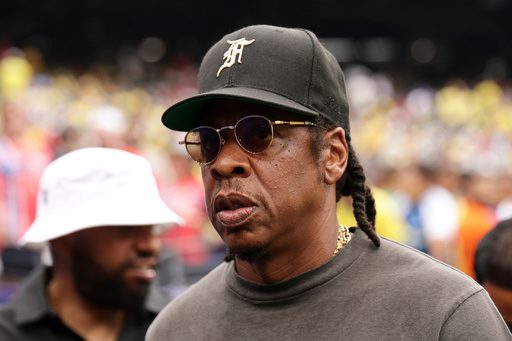
The music maestro himself, Jay-Z, finally took the stage only after midnight on Monday, hours past schedule. A veteran of countless spectacles, he understood the gravity of the situation. He told the restless audience that somebody rushed the door and candidly admitted he hadn’t wanted to kick off the show only to have people get trampled. This wasn’t just a logistical snarl; it was a public safety calculation of the highest order. Really sorry for the inconvenience, but I had to make sure everybody was OK, he offered, before promising a good time tonight. Such moments—when the artist acts as impromptu public safety commissioner—are telltale signs of a system pushed to its limits. But you’ve got to appreciate the candor, really.
Later, a joint statement from the Yankees, Jay-Z’s Roc Nation, and Live Nation, the event behemoths, painted a stark picture. It claimed hundreds of individuals in substantial groups without tickets stormed over peaceful ticketholders, and in some cases, breached security. That’s strong language, suggesting a failure far beyond a few overeager youngsters. It speaks to a systemic vulnerability when faced with collective determination—or perhaps, desperation. Video circulating afterward confirmed this, showing throngs congregating outside an entrance and, in another shot, people rushing inside through an open door until security guards intervened. The New York Police Department, in a telling absence of incident, reported no information on arrests. No arrests? After all that? It’s almost a statement in itself about what constitutes actionable disorder.
This incident, though localized to a single concert in a developed nation, echoes larger questions about managing vast gatherings globally, a challenge that nations like Pakistan are intimately familiar with, albeit in very different contexts. Whether it’s the fervent masses attending a religious procession in Lahore or political rallies in Karachi, the control of large, emotional crowds remains a perpetually dicey proposition. The drive to participate, to witness an event, to be part of something grand, is universal, transcending geography and genre. And the security measures required, or the failures thereof, frequently reveal deeper societal fissures. It makes you wonder what kind of desperate calculus pushes someone to storm a gate for a concert, when others are doing it for a glimpse of religious leaders or a political statement—the common thread often being a feeling of disenfranchisement or fervent belief.
📄 POLICY WIRE WHITEPAPER PUBLISHED: PAKISTAN'S NATIONAL SECURITY POLICY PRIORITIES
👉 READ BY CLICKING HEREAnd these situations aren’t just about gates — and guards; they’ve serious implications. A 2022 study by Crowd Safety International indicated that more than 60% of crowd-related fatalities at mass gatherings globally over the last decade were due to ingress/egress crush incidents, many stemming from uncontrolled entry points. This data point, pulled from expert analysis of crowd dynamics, underscores the tangible risks involved, making Yankee Stadium’s temporary chaos less a mere inconvenience and more a fortunate near-miss. But this isn’t just a physical security issue. It’s about perception, about trust, and about the ever-present challenge of managing the boundaries between expectation and reality.
What This Means
This episode at Yankee Stadium isn’t just fodder for gossip columns; it’s a policy litmus test. It lays bare the delicate balance between commercial entertainment, public access, — and baseline security. Economically, prolonged delays erode confidence and could trigger penalties for organizers, not to mention a dip in fan enthusiasm for future events. For event insurers, it’s a red flag; they’ll be recalibrating premiums faster than a DJ drops a beat. But more broadly, it raises questions for urban planning departments and municipal safety authorities across major cities: How do we prevent incidents where organized events, regardless of their nature, become arenas of potential catastrophe due to a minority’s recklessness or desperation?
Politically, this kind of breakdown—however contained—puts pressure on local administrations. Citizens expect order. They expect safety. When the façade cracks, it begs for a stronger official response or, at the very least, a more robust dialogue about what constitutes adequate preparation. Is the security apparatus deployed at such events truly capable of handling emergent, aggressive crowds? Or is there an assumption that most people will play by the rules? It forces a reckoning, an uncomfortable acknowledgement that the protocols of ticketing and entry—the psychology of enforced order—can, and will, be tested. What’s more, for regions where events frequently push crowd control to its breaking point, like in South Asia, these Western incidents, though seemingly trivial by comparison to some tragedies, still serve as valuable—if unfortunate—case studies in logistical frailty.