


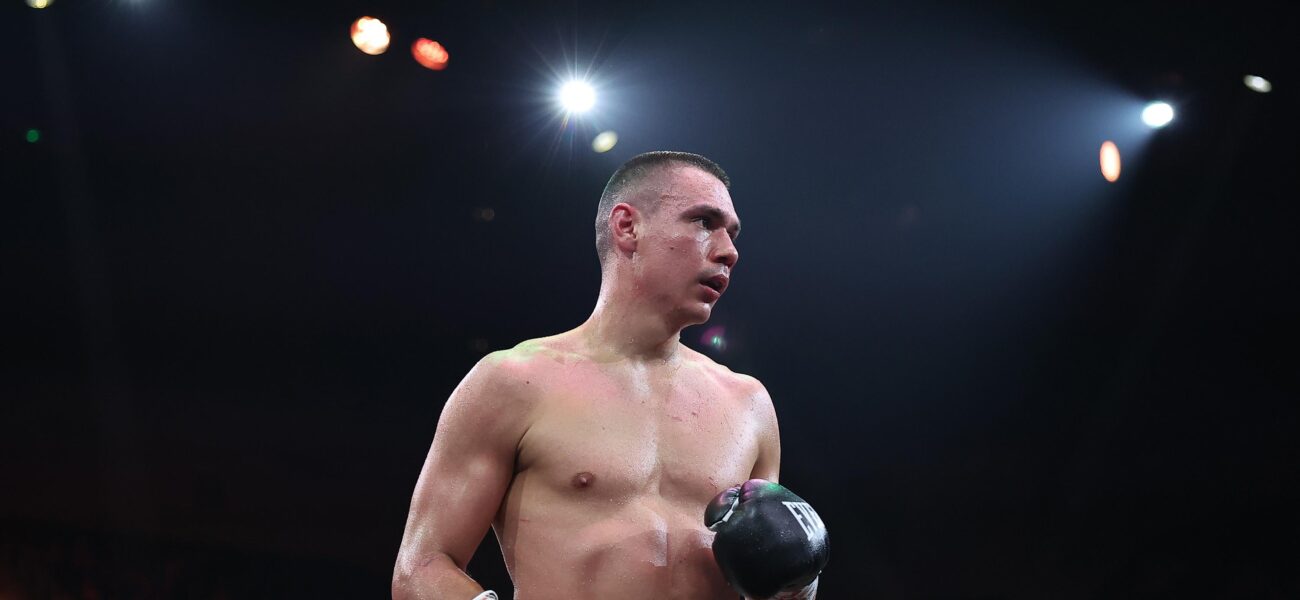
Shadowboxing With Legacy: Tszyu Readies to Unseat Boxing’s Crown, Challenges Spence’s Fading Aura
POLICY WIRE — Wollongong, Australia — It’s not often a contender, staring down an opponent many once deemed invincible, speaks with such casual, almost brutal candor. Tim Tszyu isn’t just looking to...

POLICY WIRE — Wollongong, Australia — It’s not often a contender, staring down an opponent many once deemed invincible, speaks with such casual, almost brutal candor. Tim Tszyu isn’t just looking to fight Errol Spence in late July; he’s meticulously preparing to unravel a legacy, brick by painful brick. For Tszyu, this isn’t merely a contest of fists. It’s a full-frontal assault on perceived arrogance, a quiet declaration of the shifting tides in professional pugilism, where a moment’s perceived complacency can send an empire crumbling. And frankly, he’s got a compelling narrative.
The Australian didn’t mince words during a recent session, exuding a chilling self-assurance that might unsettle even the most seasoned champions. [QUOTE_PLACEHOLDER] Tszyu offered, a statement that rings with more psychological warfare than mere athletic optimism. It’s an interesting gambit, isn’t it? Publicly announcing a profound personal overhaul right before stepping into the most significant bout of your career. It says, ‘I’ve fixed what was broken, but I dare you to believe me.’ And this sort of open vulnerability—or strategic confidence, depending on your lens—is designed to permeate his opponent’s psyche.
Because the stakes are brutally high for both men. Spence, after a hiatus, returns to the squared circle facing a fighter who isn’t just looking for a title shot, but a statement victory to catapult himself into boxing’s elite tier. [QUOTE_PLACEHOLDER] Tszyu asserted. But here’s the kicker: his confidence doesn’t solely stem from his own preparedness. It’s also fueled by a calculated assessment of his opponent’s likely misjudgment. [QUOTE_PLACEHOLDER] The unspoken observation here is simple: thinking that way? That’s where champions make their gravest errors.
This isn’t an uncommon script. In sports, as in geopolitics, an established power often views an emergent challenge with a touch of condescension, believing their historical dominance is immutable. Just as aspiring nations in regions like South Asia often confront global superpowers, relying on sheer grit and strategic cunning rather than overwhelming force, Tszyu embodies the challenger’s spirit. He’s weaponizing the very notion of being underestimated. He isn’t asking for respect; he’s aiming to seize it, forcibly, when it counts. It’s about more than winning; it’s about redrawing the maps.
Tszyu seems intent on not just winning, but dismantling. [QUOTE_PLACEHOLDER] The challenger envisions himself as a precision instrument, honed by trial and error, ready to exploit any perceived chinks in Spence’s armor. And he openly discusses Spence’s perceived hubris, declaring, [QUOTE_PLACEHOLDER] There’s a certain primal honesty to that, a frankness rarely heard from the polished PR machines of modern sports. But it’s this unvarnished approach, this direct gaze at the psychological core of conflict, that gives his pronouncements weight.
📄 POLICY WIRE WHITEPAPER PUBLISHED: PAKISTAN'S NATIONAL SECURITY POLICY PRIORITIES
👉 READ BY CLICKING HEREFor Spence, the clock ticks louder than ever. According to a 2014 study published in the Clinical Journal of Sport Medicine, the average career length for a professional boxer is approximately 7.2 years, a harsh reminder that every fight, particularly after an absence, holds immense gravitas for one’s enduring legacy and earning potential. Spence, having already achieved considerable fame and fortune, finds himself in a different arena altogether, one where every punch is judged not just on impact, but on whether it still speaks of undeniable, undiminished prowess. But Tszyu isn’t letting up, mentally or physically. He acknowledged Spence has [QUOTE_PLACEHOLDER] Yet, he coolly noted his prior experience with Sebastian Fundora, suggesting he understands the blueprint for high-volume aggression—with a slight, surgical jab: [QUOTE_PLACEHOLDER].” The game, for Tszyu, is clearly afoot. He isn’t just looking to win; he wants to shock him.
What This Means
The rhetoric emanating from Tszyu’s camp isn’t just pre-fight bluster; it’s a shrewd, calculated attempt to dictate the psychological terms of engagement. In boxing, as in high-stakes politics, the narrative often shapes the outcome long before ballots are cast or fists fly. By openly questioning Spence’s motivation and labeling his attitude as arrogant, Tszyu aims to destabilize an opponent whose confidence has been historically unshakeable. This is less about technique — and more about perceived willpower. If Spence buys into the narrative of being underestimated, it could lead to either reckless aggression or paralyzing doubt—both scenarios favorable to Tszyu. Economically, a major upset here would shake up the boxing hierarchy, creating new marquee matchups and shifting revenue streams. For Tszyu, victory means becoming a global draw, with potentially lucrative endorsements — and pay-per-view numbers. For Spence, it’s a defense of his enduring market value. This bout isn’t just about belts; it’s about control over the narrative and a significant slice of the combat sports economy, an economy where narratives of defiance, perseverance, and grappling global ambitions often define value.
It’s a story as old as competitive endeavors themselves: the hungry challenger, the established king. But this time, the challenger isn’t just relying on his skill; he’s meticulously crafting a mental environment where his opponent’s greatest strength—his history of dominance—could become his ultimate vulnerability. Tszyu wants more than a win; he’s aiming for a seismic shift.