


The Price of Indifference: Fentanyl’s Shadow and a Child’s Silent Exit in Albuquerque
POLICY WIRE — ALBUQUERQUE, N.M. — Sometimes, the most brutal truths unveil themselves not with a bang, but with the quiet admission of guilt. This past Monday, in a New Mexico courtroom, a certain...

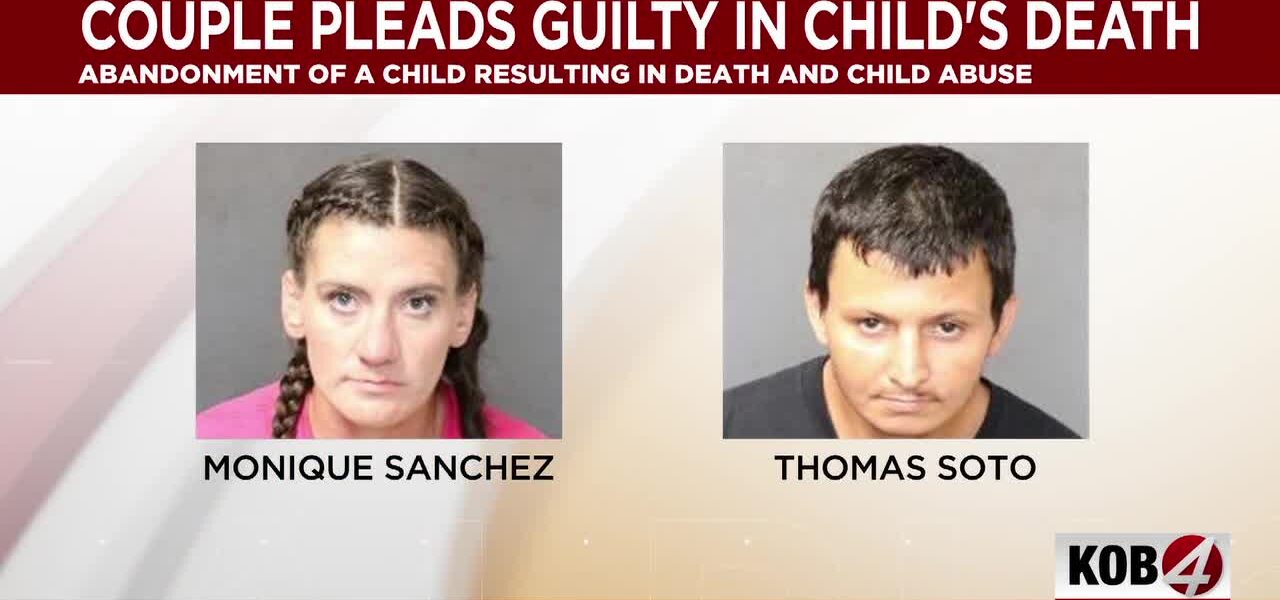
POLICY WIRE — ALBUQUERQUE, N.M. — Sometimes, the most brutal truths unveil themselves not with a bang, but with the quiet admission of guilt. This past Monday, in a New Mexico courtroom, a certain kind of mundanity draped itself over an unspeakable horror: Monique Sanchez and Thomas Soto admitted to their role in the death of their one-year-old child on Monday. Not in some dimly lit alley or under duress, but within the presumably festive — if memory serves right — ambiance of a 2024 Super Bowl party. Think about that for a second. The cheering. The commercials. A small life ebbing away in the periphery.
It’s a chilling tableau, isn’t it? A gathering meant for collective distraction, for the pageantry of American sport, instead became the backdrop for a tragedy that feels, regrettably, less like an anomaly and more like a symptom. The infant, we’re told, overdosed on meth — and fentanyl. A one-year-old. Think about the scale of exposure, the casual, terrifying proximity of such potent toxins to the most vulnerable among us. [QUOTE_PLACEHOLDER]
And because these things rarely happen in isolation, because the rot tends to spread, authorities made a further discovery. Two other children who lived in the home also tested positive for drugs. That’s a three-fold indictment of neglect, of an environment so permeated with illicit substances it stained the very blood of its youngest inhabitants. We’re talking infants, toddlers — innocents who possess no agency in their own protection. It’s enough to make you wince, even for us grizzled types who’ve seen it all.
February of 2024 was when Albuquerque police officers found a one-year-old child dead while responding to the Arroyo Vista Apartments, near Montgomery and I-25. But this wasn’t some immediate, panicked confession. According to prosecutors, Soto had already ran away when police arrived. A man vanishing into the ether as the consequences solidify around a tiny, still form. A pretty clear indicator of culpability, wouldn’t you say?
The pair, Monique Sanchez and Thomas Soto, now face a future measured in years — Sanchez and Soto each face 15 years in prison for abandonment of a child resulting in death and child abuse. A sentence, one hopes, that measures not just the act, but the unfathomable depth of a system failure, familial collapse, and the insidious creep of the drug trade. You don’t just ‘abandon’ a child; you create conditions where such an act becomes possible, almost inevitable.
But this isn’t just a tale from the American southwest. The tentacles of this crisis reach far beyond Albuquerque’s city limits. Fentanyl, for instance, a substance fifty times more potent than heroin, often originates its raw materials from distant shores. The United Nations Office on Drugs and Crime reported a significant surge in seizures of illicit fentanyl precursors originating from East Asia, destined for markets worldwide, including North America, in its 2023 World Drug Report. It’s a supply chain that bypasses borders, traditional policing, and even, tragically, the protective cocoons of infancy.
📄 POLICY WIRE WHITEPAPER PUBLISHED: PAKISTAN'S NATIONAL SECURITY POLICY PRIORITIES
👉 READ BY CLICKING HEREBut the problem, the truly heartbreaking bit, is not just the drugs. It’s the sheer exhaustion of social support systems, the economic pressures, and a prevailing sense of societal detachment that allows such things to happen right under our collective nose. It’s a stark reflection of global issues of poverty and opportunity, or the crushing weight of modern life in some neighborhoods that even countries like Pakistan grapple with, as they contend with their own unique socio-economic pressures that can sometimes push individuals toward addiction and neglect — albeit with different drugs and distinct cultural contexts. But the underlying human despair? That’s tragically universal.
What This Means
The Albuquerque tragedy, grim as it’s, speaks volumes beyond local news. Politically, it re-energizes arguments for a multi-pronged approach to the fentanyl crisis—one that extends beyond mere interdiction at borders (though that’s certainly a part of it) to robust investment in mental health infrastructure, addiction recovery, and child welfare services. We can’t simply arrest our way out of this; it’s a pipe dream that’s cost too much already. Economically, the cost of untreated addiction, foster care, incarceration, and lost human potential forms a staggering, often unquantified, burden on national and local budgets. It’s a drag on the economy, plain and simple, preventing productive participation and requiring endless reactive spending.
For policymakers, it highlights the desperate need for upstream interventions, getting into homes and communities before a Super Bowl party turns into a morgue. We’re talking about things like accessible housing, living wages, and educational programs that teach resilience—the stuff that builds stronger families, the kinds that don’t leave drugs lying around a one-year-old. Because right now, the consequences are too devastating, too often paid by those with the least say. It isn’t rocket science, but it isn’t easy either. The question, then, remains: are we ready to invest in preventative care over perpetual clean-up, or will we keep stumbling from one gut-wrenching headline to the next? It’s a choice, isn’t it? A hard choice. One that reverberates not only through American communities but echoes, too, across South Asian urban centers grappling with their own systemic breakdowns and burgeoning crises—a somber global unity in the face of human suffering. And we haven’t seen the last of it. Not by a long shot.
The system’s gears grind slow, but lives burn fast. This particular New Mexico case, as bleak as it stands, is merely a whisper—a very loud whisper, granted—in a global roar of societal neglect. Look at the headlines concerning Deltaic Distress: Bangladesh’s Annual Ritual of Ruin, Unseen by Global Eyes, for instance, and you’ll see the same deep currents of systemic challenge, only manifested differently. We’ve got to start connecting these dots.