


Swing State Politics: Ballpark Spectacle Meets Global Economics in Philadelphia
POLICY WIRE — Philadelphia, USA — The summer heat of mid-July often brings with it a specific kind of fever—not just the sweltering kind that makes asphalt shimmer, but a particular strain of...

POLICY WIRE — Philadelphia, USA — The summer heat of mid-July often brings with it a specific kind of fever—not just the sweltering kind that makes asphalt shimmer, but a particular strain of national catharsis, distilled into a few fleeting hours of improbable athletic feats. You see it every year. In 2026, it settled upon Citizens Bank Park, transforming a standard baseball field into an arena for pure, unadulterated power-hitting display. It’s a showcase, really. Not just for baseball, but for a peculiar American brand of spectacle that, once you pull back the curtain, reveals layer upon layer of economic heft and even, dare I say, geopolitical undercurrents.
Fans gathered, their anticipation a tangible hum in the humid air of ‘Jul 13, 2026; Philadelphia, PA, USA’. This wasn’t about strategic double plays or stolen bases; it was about distance, raw strength, and the visceral thrill of a ball disappearing into the night sky. The line-up read like a roster of contemporary titans: Kyle Schwarber, Phillies; Jac Caglione, Royals; Wilson Contreras, Red Sox; Ben Rice, Yankees; Junior Caminero, Rays; Bryce Harper, Phillies; Jordan Walker, Cardinals; Munetaka Murakami, White Sox. A truly global assembly, for all its perceived Americanness. It wasn’t merely a game; it was It’s Dinger time (and not the Rockies mascot)., as some PR maestros put it, stripping away nuance for pure, marketable impact. And that’s the trick, isn’t it? [QUOTE_PLACEHOLDER]
Because while the crowds roar, while millions watch from couches across North America, the deeper machinery hums. This event, one cog in Major League Baseball’s expansive annual calendar, isn’t just about heroes with bats. It’s about broadcasting rights, international merchandising, and the soft power projection of an American cultural export. Consider the staggering figures: in 2023, MLB reported gross revenues of over $11 billion. That’s a sum greater than the entire Gross Domestic Product of several nations, dwarfing the annual budget of many developing economies.
But the reach goes beyond the domestic coffers. Walk through a crowded bazaar in Karachi or a shopping mall in Dubai, and you’ll often stumble upon official team merchandise. Not just for football or basketball, which traditionally dominate those regions, but surprisingly often, baseball. The sheer global connectivity—instant replay, viral clips, the cult of personality surrounding these athletes—means that events once confined to local consumption are now beamed into living rooms and onto smartphones across the Muslim world and South Asia. For young people in these areas, perhaps fatigued by political instability or economic uncertainty, this highly polished, escapist spectacle offers a brief, tantalizing glimpse of a different kind of ambition—one where individual prowess is rewarded with stratospheric wealth and adoration.
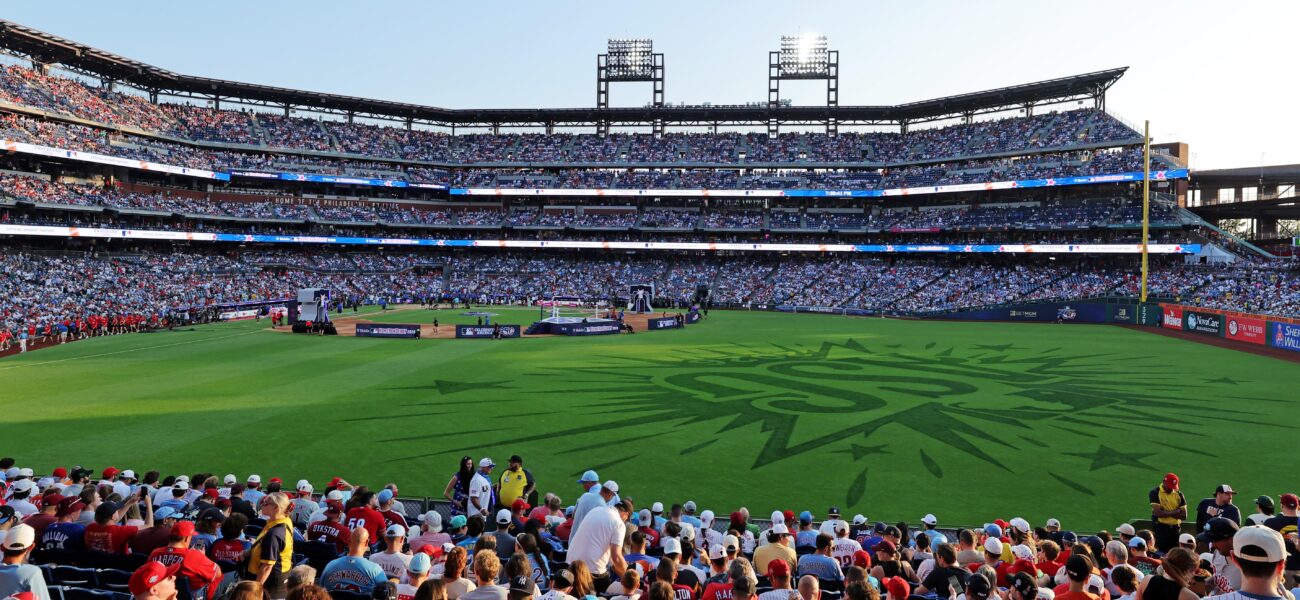
It’s a peculiar irony: the American pastime, historically intertwined with small-town Americana, now operates as a sophisticated, multinational enterprise, influencing tastes and aspirations far beyond its geographical origins. The image, Mandatory Credit: Brad Penner-Imagn Images, of a packed stadium in Philadelphia—its vast emptiness before the throngs arrived—can be a mirror. It reflects a world where spectacle is a global currency, often purchased and consumed, for better or worse, as an alternative narrative to local realities.
And yes, the talent acquisition pipeline, too, is becoming more global. Players like Murakami from Japan—now with the White Sox—are part of a growing influx of international stars, highlighting a broader phenomenon where the most skilled labor, regardless of origin, gravitates towards the most lucrative markets. It’s a talent brain drain for some nations, perhaps, but an undeniable economic boon for others. For more on the relentless coaching carousel and talent migration, see our previous piece: Michigan Snags Ivy League ‘Brain’ in Relentless Coaching Carousel.
📄 POLICY WIRE WHITEPAPER PUBLISHED: PAKISTAN'S NATIONAL SECURITY POLICY PRIORITIES
👉 READ BY CLICKING HEREWhat This Means
This midsummer display of brute force batting isn’t just entertainment; it’s a symptom. It points to the increasing global dominance of well-capitalized, commercially savvy sports leagues, primarily American ones. Politically, these events act as powerful, if subtle, vehicles for soft diplomacy, exporting a specific brand of capitalism and individual aspiration. Economically, they represent massive engines of revenue, concentrated within a few highly developed nations, but drawing talent and viewership from every corner of the globe. This creates a dichotomy: regions like Pakistan or other parts of South Asia, struggling with infrastructure and development, watch with fascination as billions are poured into sports, generating a yearning for similar spectacle, even if the structural conditions to support such industries are generations away.
But it also raises questions about equity — and access. While a select few attain celebrity and fortune, the vast majority of aspiring athletes worldwide lack the infrastructure or pathways to reach such rarefied stages. This creates an economic dependency, where smaller nations effectively become talent pipelines for richer ones. the sheer financial scale of these events means that corporations wield immense power, influencing everything from urban planning (think stadium construction) to media narratives. It’s a stark reminder that even something as seemingly innocuous as a baseball game exists within a complex web of global political economy.
The Derby’s dazzling lights might be ephemeral, but its economic shadow stretches worldwide.