


Springboks’ Risky Roulette: Erasmus Bets on Youth Amidst Injury Deluge, Echoes of Economic Shifts
POLICY WIRE — Durban, South Africa — The gilded era of South African rugby, freshly polished with World Cup glory, is taking an unexpected detour this weekend. It’s not just a friendly shuffle of the...

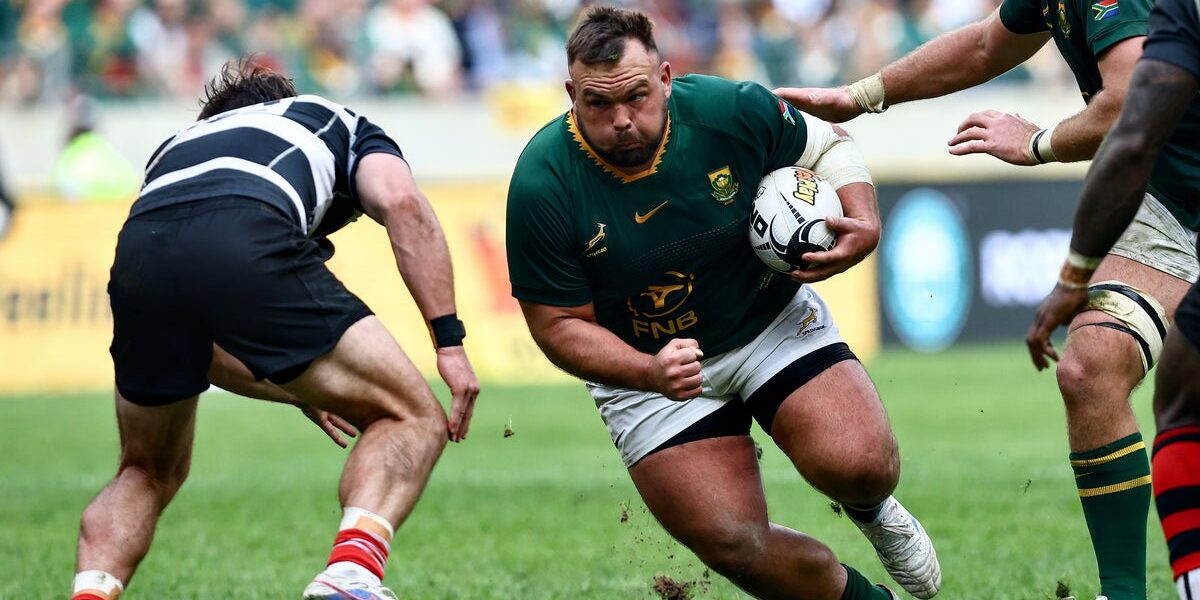
POLICY WIRE — Durban, South Africa — The gilded era of South African rugby, freshly polished with World Cup glory, is taking an unexpected detour this weekend. It’s not just a friendly shuffle of the deck by coach Rassie Erasmus for the test against Wales; it’s a high-stakes poker game played with rookie chips, a strategic punt forced by a veritable casualty ward masquerading as a roster. The Springboks, always a spectacle of brute force and tactical acumen, will roll out four previously uncapped players, a move that’s less about mere rotation and more about testing the mettle of an emergent generation under acute pressure. And, frankly, who’s got a choice?
Eight frontline titans — men like Eben Etzebeth, Franco Mostert, and the mercurial Handre Pollard— are watching from the sidelines, nursing various wounds that would fell lesser teams. That’s a whole lot of absent experience. So, it falls to fresh faces: 20-year-old playmaker Vusi Moyo at fly-half, Sharks teammate Jaco Williams on the wing, Bordeaux’s robust Carlu Sadie at tighthead, and Montpellier’s Ruben van Heerden in the second row. They’re thrown into the deep end, told to sink or swim against a Welsh side that’s been, well, somewhat inconsistent in the Nations Championship (a win against Fiji, a stumble against Argentina. You don’t need a pundit to read those tea leaves).
Erasmus, never one for understatement, frames it with a mix of optimism — and pragmatism. “We told the players from the start of the season that if everything played out well, we would give everyone in the squad a chance to play in the competition,” he stated, a line delivered with the measured cadence of a general surveying his troops. “We’re excited to see what the uncapped players, as well as those who haven’t been in the mix for a while, bring to the team. This squad shows an exciting mix of youth and experience, and while we’re under no illusions about the threat Wales poses, we’re looking forward to seeing what these players can do.” It’s classic Rassie: unflappable, projecting confidence even when the situation demands a degree of invention.
But there’s a subtext. A whisper, perhaps, of necessity being the mother of invention. The Springboks are not merely showcasing depth; they’re stress-testing it. This isn’t the glamour of a World Cup final, where every pass — and tackle feels laden with national destiny. This is the grunt work of squad development, a less glamorous but no less financially significant process. For Wales, still reeling from a less-than-stellar recent record, the Springboks’ changes offer a sliver of hope, perhaps. Or maybe, a new set of questions.
“They’re South Africa, aren’t they? Big, physical, always coming at you,” quipped Welsh attack coach Alex King, addressing reporters ahead of the Durban clash. “Doesn’t matter who wears the jersey, they play a certain way. But, any time a side has significant changes, it opens up a few opportunities for us, doesn’t it? We’ve got our own agenda, our own battles to win. We aren’t here for a friendly.” You could almost taste the cynicism, thinly veiled as respect. King isn’t wrong. Rugby, especially in these high-stakes professional environments, remains a contest of wills and systems, regardless of who’s on the field.
📄 POLICY WIRE WHITEPAPER PUBLISHED: PAKISTAN'S NATIONAL SECURITY POLICY PRIORITIES
👉 READ BY CLICKING HEREThe South African system, with its robust provincial academies and overseas contingents, consistently churns out talent. Consider Carlu Sadie, for instance, a pivotal player for French club Bordeaux Bègles, a club that’s bagged two Champions Cup crowns. These players aren’t just South African; they’re increasingly global commodities, their skills honed in diverse professional leagues across Europe and beyond. This international leakage of talent, while boosting individual careers, presents an ongoing management challenge for national teams aiming for cohesion. Industry analysts project the global professional rugby economy to exceed $3.5 billion annually by 2026, driven significantly by broadcast rights and player transfers.
What This Means
This weekend’s experimental lineup isn’t merely about a rugby match; it’s a political act. It’s Erasmus effectively leveraging — or perhaps reluctantly showcasing — the sheer depth of South African rugby talent. The nation, much like populous countries in South Asia, where cricket unifies diverse linguistic and ethnic groups, sees rugby as a core pillar of its post-apartheid national identity. A strong Springbok team, regardless of its composition, serves as a unifying symbol. When fresh blood performs, it reinforces a narrative of enduring national sporting prowess and—crucially, given South Africa’s economic travails—of human capital that can still compete on the world stage. Economically, sending players to top European leagues creates a de facto player development pipeline that the national union benefits from without bearing the full cost. It’s a pragmatic, if unintended, financial strategy for athlete conditioning. The integration of young players, especially those of color, also speaks to broader, long-term strategic goals for national representation and talent equity within the sport’s power structures.