

Beyond the Finish Line: Utica’s Boilermaker Reveals Society’s Shared Afflictions, Quiet Victories
POLICY WIRE — Utica, N.Y. — Forget the medals. Ignore the official times etched into plastic chips. The real race at Utica’s annual Boilermaker 15K isn’t against the clock or fellow runners;...

POLICY WIRE — Utica, N.Y. — Forget the medals. Ignore the official times etched into plastic chips. The real race at Utica’s annual Boilermaker 15K isn’t against the clock or fellow runners; it’s a grueling, remarkably public grapple with personal demons, collective grief, and the stark, unflinching demand for a shared narrative in an increasingly fragmented world. For four decades, this unlikely crucible of asphalt and ambition has drawn tens of thousands, ostensibly to run—but more acutely, it seems, to simply be there.
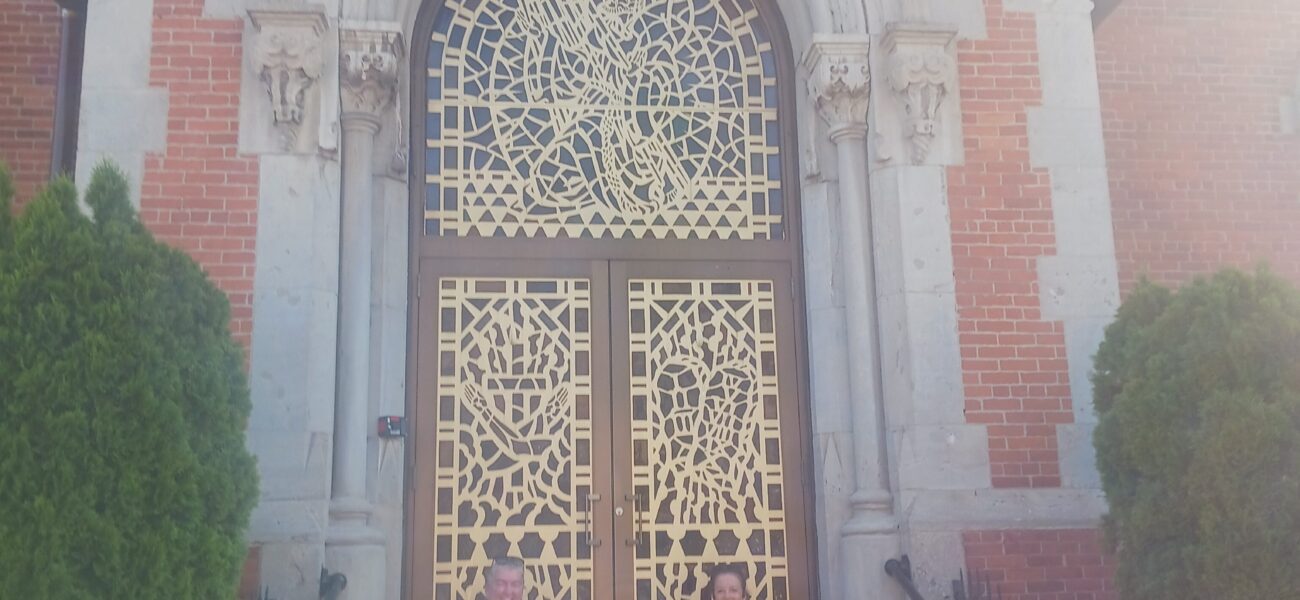
It’s an exhausting exercise in self-inflicted ritual. Take Shelby Kurtz, a Syracuse veteran of the 5K, and Kimberly Heinkn, a Knoxville rookie, who collapsed together in the anachronistic shade of a church entryway, sharing bottled water and existential exhaustion. They hadn’t known each other moments before, yet here they were, enacting an almost involuntary camaraderie born of shared physical duress. Heinkn had journeyed up from Tennessee, a guest in someone else’s tradition, supporting a niece in the longer 15K run. Kurtz, a seasoned participant, summed it up with the dry precision of ritual: “We do it every year. It’s a tradition.” It’s a phrase, frankly, that does heavy lifting.
But that tradition, for many, is less about a personal best — and more about a desperate, aching affirmation of life. Adam Aronson and his 13-year-old daughter, Willa, for instance, journeyed south from Toronto, running Willa’s first-ever 5K. Their goal wasn’t glory, but a somber memorial for a friend claimed by disease—a haunting echo of mortality echoing through a festive occasion. Aronson recounted their quiet, deeply personal act of remembrance: “She was a runner.”
Many, like the Aronsons, were there as part of ‘Project Purple,’ a non-profit advocating for pancreatic cancer awareness and funding. Chelsey Stape, Erin Miglin, and Delia Lynch, visitors from Pennsylvania’s Pocono Mountains, clutched homemade signs—one starkly proclaiming “Straight outta chemo”—as they lined the route. They were there for their friend, Becca Torres, who, despite battling the disease herself, was running to raise money. “She’s running to raise money,” Stape told us, with a blunt admiration, “but also to prove that she can!” A staggering commitment, a physical declaration of war waged on two fronts. And what a testament to human resilience, isn’t it?
It’s not mere athleticism driving these masses; it’s something far more profound. This annual pilgrimage transforms the mundane asphalt of upstate New York into a sprawling canvas for individual struggle, collective identity, and occasionally, raw grief. Mayor John Carcetti of Utica, surveying the jubilant, sweaty crowds, offered a typically pragmatic civic leader’s view: “The Boilermaker isn’t just good for civic pride; it’s an economic artery. We estimate an influx of nearly $7 million to the local economy annually because of this event.” He’s not wrong; the data points to such regional impacts routinely, making it more than a mere sporting event.
📄 POLICY WIRE WHITEPAPER PUBLISHED: PAKISTAN'S NATIONAL SECURITY POLICY PRIORITIES
👉 READ BY CLICKING HEREBut the true value isn’t just in dollars — and cents. It’s in the unexpected convergence, the momentary suspension of modern atomization. People from varied backgrounds, from graduating students like Joshua Christmas and his father Bryan from Fredericksburg, Virginia, to individuals fighting or honoring the departed, all converge here. Race Director Eleanor Vance, a veteran observer of human behavior at its physical limit, reflected: “You see a certain raw honesty out there. People drop their masks. They’re running for hope, for healing, for forgotten reasons. It’s truly a mirror of humanity – flawed, struggling, but always pushing forward.” The spirit, then, seems to hover somewhere between sweat equity and communal therapy.
The awareness raised, like the estimated $2,000 to $3,000 the Aronsons and their Project Purple cohort collect during the race, filters out beyond these borders. This particular illness, pancreatic cancer, doesn’t recognize geographical or cultural boundaries. It’s a global scourge, its grim tally particularly severe in regions with limited access to advanced diagnostics and treatment. Consider, for instance, the public health challenges in parts of South Asia or the Muslim world, where such cancer diagnoses often come too late, and advocacy groups like Project Purple might serve as distant, inspirational blueprints for local initiatives struggling for recognition and resources against overwhelming odds. This American run, then, isn’t just about Utica; it’s a node in a much broader, desperately needed conversation about human vulnerability and the collective fight for a healthier future—a web of cooperation across diverse locales.
What This Means
The Boilermaker offers a peculiar insight into contemporary American civic life: while traditional institutions often flounder, these massive, voluntary communal events persist, and indeed, thrive. Economically, they’re modest engines, yes, injecting crucial revenue into local economies struggling with post-industrial realities. But politically, they serve a more subtle function. They’re informal social contracts, annual re-affirmations of collective identity and shared purpose that often seem missing from formal political discourse. They demonstrate a persistent human yearning for physical effort linked to meaning, for visible connections in a hyper-connected, yet strangely isolating, age. In an era marked by deep divisions, these temporary, sweaty coalitions offer a surprising counter-narrative of resilience, compassion, and stubborn unity, proving that even a 15-kilometer footrace can reveal profound truths about who we’re and what we, as people, still yearn for. It’s not just a race; it’s an annual census of the soul.