


Digital Diplomacy: How a Football Bet Became an Airline’s Marketing Masterclass
POLICY WIRE — Oslo, Norway — In an era riddled with geopolitical tremors and corporate skirmishes, sometimes, the loudest battles aren’t fought with antitrust lawyers or hostile takeover bids....

POLICY WIRE — Oslo, Norway — In an era riddled with geopolitical tremors and corporate skirmishes, sometimes, the loudest battles aren’t fought with antitrust lawyers or hostile takeover bids. They unfold on a tiny screen, through a perfectly innocent—or expertly cynical—corporate social media stunt. That’s exactly what played out this week when Norwegian Air’s X (formerly Twitter) profile picture underwent a startling transformation, suddenly sporting the rather unmistakable, albeit temporary, insignia of its fierce competitor, British Airways.
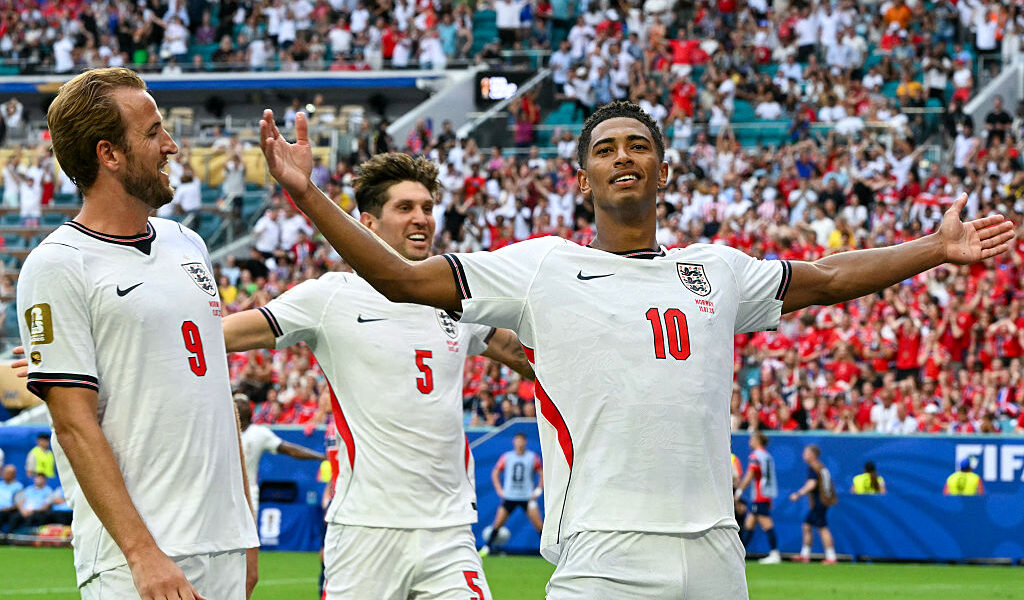
It wasn’t a hack, not quite. It was, rather, the public execution of a wager made in the high-stakes, yet ultimately harmless, world of European football. Ahead of a recent quarter-final showdown between England and Norway, these two airlines—often locking horns over passenger routes and market share—reportedly struck a gentleman’s agreement. Or, perhaps, a shrewd marketing team’s calculated gamble. The losing nation’s national airline, you see, would temporarily don the victor’s badge. England won, thanks in no small part to a standout performance from a certain Jude Bellingham.
And so, for a fleeting twenty-four hours, Norwegian’s digital facade was replaced. The red, white, and blue Speedbird of British Airways now stares out from what usually depicts Norwegian’s minimalist, patriotic red ‘N’. It’s an exercise in humility, sure, but also a masterclass in earned media. It cost them nothing, yet grabbed headlines. Who wouldn’t be looking? It feels a little like the corporate equivalent of an arm wrestle — done not in a backroom, but front and center on the world stage, amplified by every retweet and incredulous comment.
“We’ve got to hand it to them; a bet’s a bet, right?” quipped Sarah Jenkins, British Airways’ Head of Global Brand and Marketing, in an exclusive chat. “It’s about sportsmanship, absolutely, but also about connecting with our audiences in unexpected ways. It reminds everyone that even in cutthroat competition, there’s room for a bit of fun. And, let’s be honest, it’s nice to see our flag flying somewhere new, even if just for a day.” But you can feel the quiet satisfaction bubbling under her polite facade; they won this round, publicly and playfully.
Because these seemingly trivial digital gestures sometimes ripple far beyond the immediate viral hit. They underscore how brands now compete for mindshare in places executives scarcely considered a decade ago. And for airlines, who’ve seen their fortunes rollercoaster through global events, every ounce of positive brand association counts. Think about the bustling skies over South Asia, a region where air travel demand continues its parabolic climb. Airlines like British Airways, with their historical links and robust networks, fiercely compete with emerging players for the lucrative routes connecting Pakistan, India, and the Middle East to Europe and beyond.
📄 POLICY WIRE WHITEPAPER PUBLISHED: PAKISTAN'S NATIONAL SECURITY POLICY PRIORITIES
👉 READ BY CLICKING HEREEven Norwegian Air, an erstwhile low-cost darling, has had its eye on global expansion, and every sliver of brand recognition in these high-growth markets means potential new passengers. This stunt? It plays into the universal appeal of football, a phenomenon that unites fans from Lahore to London. It’s a low-cost, high-impact method to say, ‘We’re human, we’re relatable, and hey, we love the beautiful game just like you.’ Global social media advertising spend, mind you, is projected to hit an astounding $207 billion in 2023, according to Statista. So yeah, they don’t do this just for giggles.
“We’re always looking for innovative ways to engage our community,” explained a pragmatic Karl-Erik Braathen, Head of Digital Communications at Norwegian Air, sounding less defeated and more strategically pleased. “This is an opportunity to show we’re good sports, certainly, but also to inject personality into our brand. And let’s be real, seeing British Airways’ logo on our feed gets people talking about Norwegian Air, doesn’t it? Any exposure that maintains relevance in today’s crowded digital space is a victory, regardless of whose emblem is temporarily on display.”
What This Means
This little gambit offers a squinty look into the shifting battlegrounds of modern corporate strategy. For two airlines in constant, bruising competition, it’s not merely a lighthearted moment; it’s a shrewd, cost-effective maneuver in the ongoing ‘battle for attention.’ It normalizes a kind of public-facing rivalry, stripping away some of the traditional corporate stiffness and replacing it with a veneer of accessible camaraderie—a thin veneer, admittedly, but one that plays well online. And don’t forget the financial angles; effective social media engagement can translate into brand loyalty, which for airlines, directly impacts load factors and yields. In a world where every review, every hashtag, holds sway, cultivating a brand personality that’s seen as ‘fun’ or ‘sporting’ can be a silent asset. This isn’t about just changing an image; it’s about a subtle re-engineering of the consumer-corporate dynamic. It’s almost a web of cooperation in the halls of power, if only briefly. It also speaks to the globalized nature of both sports and commerce; a European football match becoming a proxy for billion-dollar brawls between airlines across continents.