


Gaza’s Perpetual Dusk: Six More Souls and the Fickle Gaze of Global Attention
POLICY WIRE — Gaza Strip — The dusty haze wasn’t settling over Gaza yesterday because of a sandstorm. No, it was the aftermath. Another day, another casualty count ticking up. Six more bodies,...

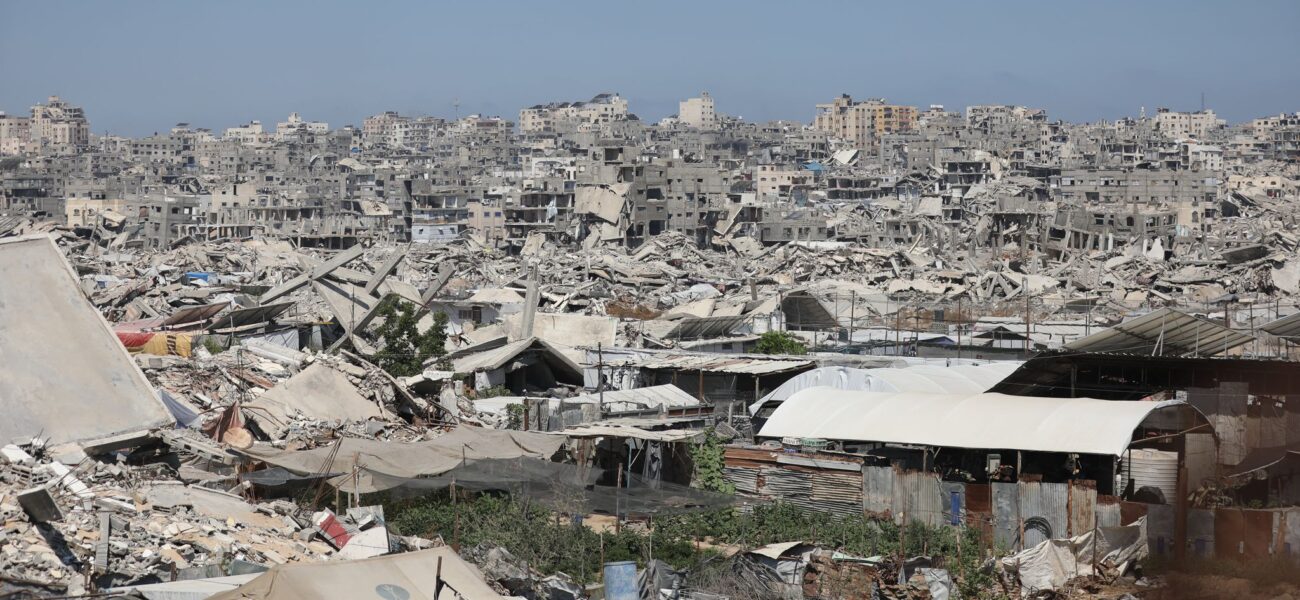
POLICY WIRE — Gaza Strip — The dusty haze wasn’t settling over Gaza yesterday because of a sandstorm. No, it was the aftermath. Another day, another casualty count ticking up. Six more bodies, reported by local health authorities, now mark the latest ledger entry in a conflict that seems less like a flashpoint and more like a permanent state of being. Nobody blinked, not really. The headlines scroll by—a weary, predictable rhythm of tragedy for a global audience accustomed to seeing the strip as a mere tableau of suffering.
It wasn’t a seismic shift in the region’s dynamics. But it sure did add a layer of fresh grief to countless families already stretched thin by siege — and displacement. Local officials indicated airstrikes and artillery shelling targeted what they termed ‘resistance infrastructure’ in northern and central Gaza. For ordinary Gazans, that phrase translates to homes shattered, livelihoods incinerated, and futures — however fragile — extinguished. We’re talking people here. Six of ’em. Not numbers.
Defense Minister Yoram Shalev, speaking from Tel Aviv, wasn’t mincing words. He rarely does. “We’ve made it perfectly clear,” Shalev asserted in a televised address. “Anyone threatening our citizens, anyone operating terror infrastructure – they’re legitimate targets. This isn’t about vengeance; it’s about safeguarding Israel’s security, plain and simple.” It’s the kind of soundbite designed to calm a domestic audience while simultaneously drawing battle lines clearer than the desert sky. A calculated calm.
But for Dr. Amira Hussein, spokesperson for Gaza’s Health Ministry, the rhetoric rings hollow. She’s seen it all before, day in — and day out. “Another day, another toll,” she intoned, her voice cracking only slightly, if at all, during a briefing for foreign press—or those few who still bother showing up. “Children, women—they aren’t ‘legitimate targets’ for anyone. This continuous aggression is an assault on human dignity, a deliberate suffocation of hope in Gaza.” Her weariness was palpable. And you couldn’t blame her. This isn’t just about statistics, after all; it’s about life.
For more than a decade now, Gaza has existed under varying degrees of blockade, a condition that even before the current round of heightened tensions had rendered much of its population dependent on external assistance. According to the UN Office for the Coordination of Humanitarian Affairs (OCHA), over 80% of Gaza’s population relied on humanitarian aid just to get by. Think about that for a second. Eighty percent. They’ve been living on a razor’s edge.
And then the razor slips. Or rather, is pushed. These attacks, seemingly isolated incidents, are stitches in a far larger fabric of geopolitical tension, extending far beyond the besieged strip itself. In capitals like Islamabad — and Cairo, each new report from Gaza isn’t just a news item; it’s a tremor. It reverberates through public opinion, fuels narratives of perceived Western inaction, and emboldens critics of existing power structures. It can ignite street protests, destabilize governments, even—perversely—lend legitimacy to extremist elements who thrive on the perception of injustice.
📄 POLICY WIRE WHITEPAPER PUBLISHED: PAKISTAN'S NATIONAL SECURITY POLICY PRIORITIES
👉 READ BY CLICKING HEREPakistan, with its large, vocal, — and deeply religious populace, watches Gaza with a particular intensity. The suffering of fellow Muslims, regardless of distance, often feels personal there. It shapes domestic discourse, informs foreign policy stances, and frequently forces leaders to walk a fine line between diplomatic exigencies and popular sentiment. Each bombed building, each fallen child in Gaza, contributes to a global narrative of oppression that resonates profoundly throughout the broader Muslim world.
What This Means
These latest deaths aren’t merely a localized tragedy; they’re a barometer of broader regional and international failings. Politically, they illustrate the entrenched nature of a conflict that defies traditional resolution methods—mostly because neither side seems genuinely committed to finding one. For Israel, these operations are couched in necessary security actions, solidifying hardline domestic support while courting the weary tolerance of Western allies. But for Palestinians, and indeed for much of the Muslim world, they embody a relentless, often unprovoked assault, breeding despair and radicalization. It’s a grim calculus of retribution — and preemptive strikes. Economically, Gaza remains an open-air prison, its ability to foster self-sufficiency continually eroded. Any hope for economic growth, any whisper of a normal life, gets summarily quashed with every airstrike. We’re talking long-term trauma here, generation after generation.
And because the international community, preoccupied by its own crises and fatigued by the endless cycle, generally offers little more than boilerplate condemnations—or worse, silence—the players on the ground see little incentive to change tack. There’s no serious push for accountability, no binding agreements enforced with genuine leverage. The lack of a tangible path towards a truly just resolution only solidifies the present, bitter status quo. Look at something like the justice system’s failures elsewhere; imagine that on a geopolitical scale. This routine brutality also contributes to a generalized feeling of impotence across many Muslim-majority nations, fueling anti-Western sentiment and creating new strains on already fragile diplomatic relationships. It isn’t just about Gaza anymore, if it ever was. It’s about a shattered ideal, a recurring injustice that the world consistently—and quite openly—allows to persist. And that’s the real problem.