


Cricket’s Throne Topples: India’s Dominance Fades Amidst Captaincy Tug-of-War
POLICY WIRE — London, UK — The grand illusion shattered with unceremonious swiftness. After what felt like an eternity, the unchallenged reign at the apex of global T20 cricket, a position often...

POLICY WIRE — London, UK — The grand illusion shattered with unceremonious swiftness. After what felt like an eternity, the unchallenged reign at the apex of global T20 cricket, a position often treated as India’s birthright, ended not with a whimper but a resounding crash. A brutal 0-4 whitewash against England saw the subcontinent’s cricketing giant tumble from its perch, igniting a fiery debate over leadership, legacy, and what, exactly, constitutes a team’s soul when victories become a distant memory.
It’s not just a statistic, this dethroning. It’s a geopolitical tremor across cricketing nations—particularly in South Asia, where cricket’s ebb and flow mirror national sentiment more closely than any stock market. Losing the coveted No.1 ranking, especially to an old adversary like England, wasn’t just a sports footnote; it felt like a betrayal of expectation for millions, from Karachi to Kolkata, who breathe this sport. And the consequences, you bet, stretch beyond mere points on a league table. [QUOTE_PLACEHOLDER]
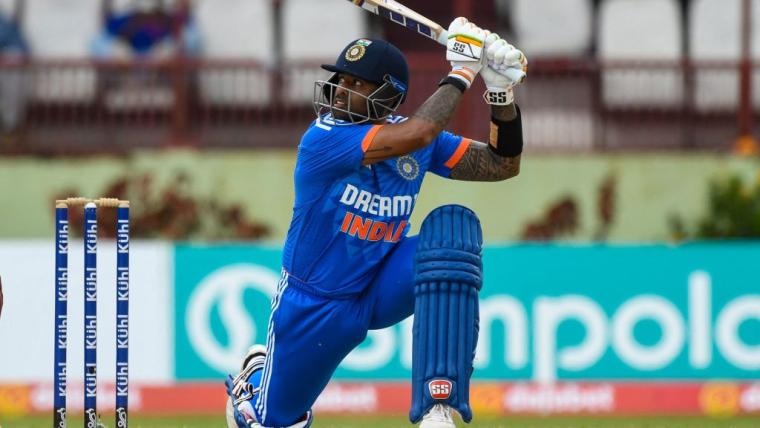
Enter Moeen Ali, a figure whose pronouncements carry significant weight, not least for his nuanced perspective as a high-profile Muslim athlete in the sport. He’s stepped into the fray with a rather direct prescription: bring back Suryakumar Yadav, the T20 World Cup-winning captain. Ali minced no words about it, stating, [One of the best players in the world], about Yadav. He believes keeping players like him is simply non-negotiable. [You need him on. You keep Surya. Surya. I genuinely reckon you keep Surya. He’s one of the best players in the world,] Ali declared on the ‘Beard Before Wicket’ podcast. That’s a bold statement, isn’t it, considering the recent managerial merry-go-round.
Because frankly, the current stewardship hasn’t delivered. Shreyas Iyer, the man entrusted with the reins, now holds a lamentable record, winning just one of seven T20Is since taking over. One can almost hear the collective sigh of a billion fans, accustomed to a different caliber of performance. England’s relentless assault in Southampton, racking up 257 for 3 and smashing 17 sixes—the second-highest India has ever conceded in a T20I—really hammered that point home. It was less a game, more an exposition of structural flaws.
Yet, the official line from chief selector Ajit Agarkar was a defense rooted in strategic foresight, not mere short-term form. [I mean, you look at his performance in the last couple of years. But he was a captain who was doing really well, winning so many games,] Agarkar acknowledged, referring to Yadav. [He eventually ended up winning the World Cup.] But, then, the cold calculation. [Obviously, we deliberated it a lot, especially when someone led you to a World Cup. It’s not the easiest sort of discussion to have, but at some stage, we were going to look at it.] Long-term vision versus immediate gratification; it’s a tale as old as time, particularly in high-stakes professional sport.
And so, India’s extraordinary run of 1,605 consecutive days at the summit of the ICC’s T20I team rankings – a near-unprecedented stretch of dominance by any metric – evaporated in what felt like a blink. This monumental statistical accomplishment, built painstakingly over years of stellar home performances and, crucially, a pair of World Cup victories, now stands as a stark reminder of how rapidly fortunes can shift when the away form dips. That’s a staggering figure, 1,605 days, an endurance race they’d seemingly perfected.
But this isn’t just about personnel; it’s about tactical nous, adaptability, — and perhaps, a deeper malaise. The succession of six losses and a solitary winless run across seven completed matches in Ireland and England weren’t isolated incidents. They ripped open glaring fissures in how the side navigates unfamiliar conditions, especially facing pace, bounce, and seam movement that differs wildly from their home pitches. You can’t just brush that under the carpet, can you?
What This Means
From a policy standpoint, this isn’t just about rotating players; it’s a critical inflection point for Indian cricket’s strategic direction. The decision to remove a World Cup-winning captain like Suryakumar Yadav in favor of a new, less experienced hand, citing [long-term thinking] but precipitating immediate decline, highlights a governance challenge familiar in other major institutions. Is it an astute, forward-looking policy designed to build for the next generation, or is it an example of internal politicking disguised as strategic reform?
The sudden downturn carries significant economic implications as well. Sporting success directly fuels sponsorship deals, broadcast rights, and brand value for Indian cricket, a colossal industry often seen as the engine of the sport globally. Sustained poor performance could dent that formidable economic edifice, even marginally, impacting everything from player earnings to grassroots investment. It also subtly alters the power dynamic within the broader Asian cricket scene; diminished Indian dominance could empower other nations, like Pakistan, whose own passionate cricketing culture constantly seeks parity or supremacy.
And let’s not forget the soft power aspect. India’s cricketing prowess has long been a source of national pride — and a powerful tool for cultural projection. When that prestige wavers, it reverberates beyond the boundary ropes, becoming a topic of impassioned discussion from boardrooms to chai stalls. Reinstating a popular, successful captain like Yadav might offer a quick dose of public confidence, but without a thorough overhaul of their overseas strategy and genuine commitment to understanding varied playing conditions, any such move could merely be a temporary bandage over a deeper, structural wound. That’s the gamble they’re running, — and it’s a heavy one.