


Twilight’s Price: New Mexico’s Rugged Allure Claims Another Six in Reckless Ravine Roll
POLICY WIRE — Rio Rancho, N.M. — It wasn’t the sun-drenched vistas or the promise of untamed horizons that greeted them that predawn morning, but rather the unforgiving bite of New Mexico...

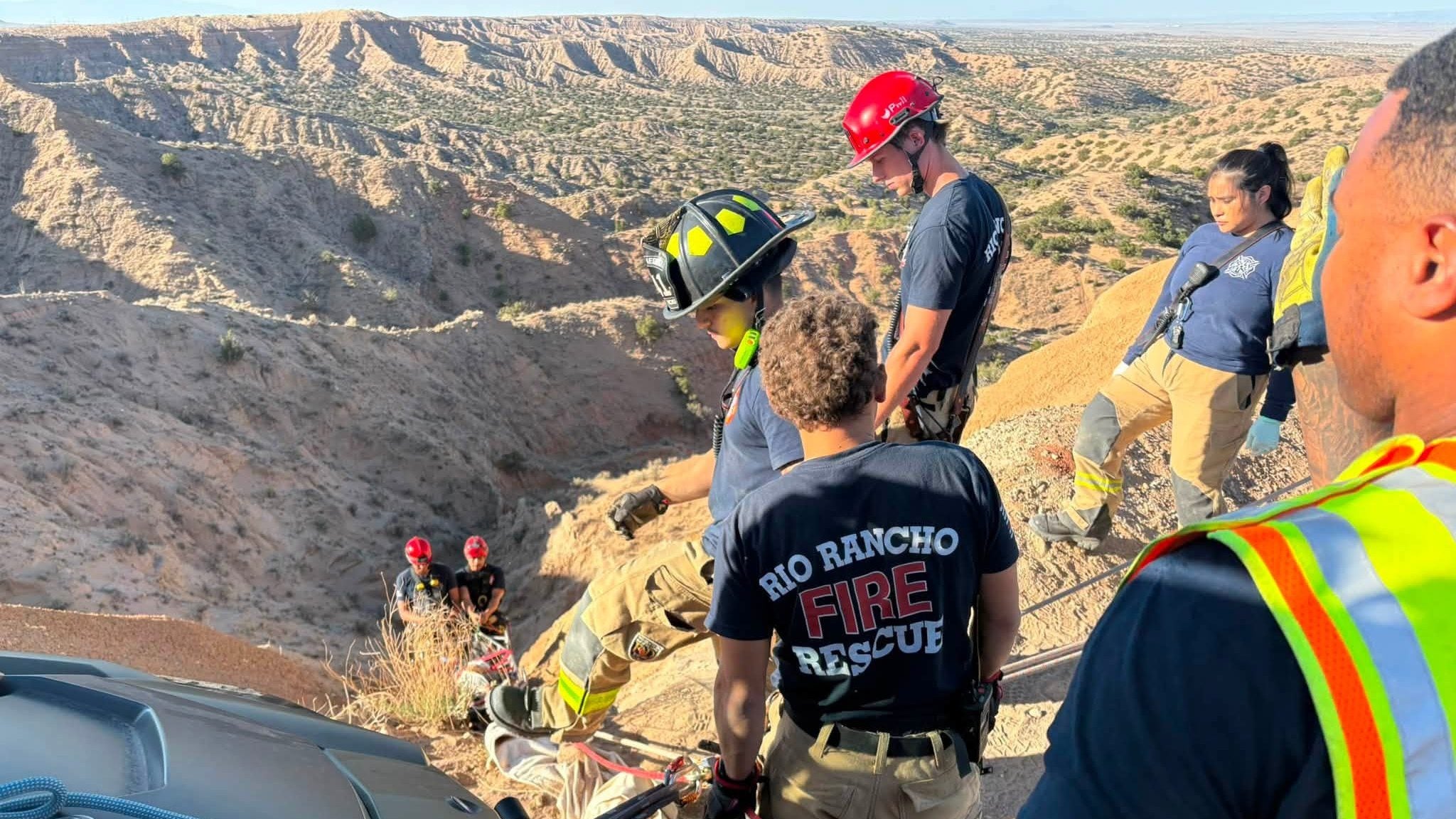
POLICY WIRE — Rio Rancho, N.M. — It wasn’t the sun-drenched vistas or the promise of untamed horizons that greeted them that predawn morning, but rather the unforgiving bite of New Mexico earth, a tangled mess of steel, and the profound silence of a ravine. This isn’t some dusty relic of a wild west tale; it’s a modern scene, played out last Tuesday, when six adventurers, or perhaps just unlucky joyriders, found themselves pinned after their side-by-side off-road vehicle took an unexpected plunge into the kind of gully most sensible folk avoid even in daylight. You don’t often hear about recreational folly costing taxpayers this much, or putting first responders through this particular brand of high-wire ordeal—unless you cover enough of these incidents.
Emergency sirens, normally a daytime disturbance, shredded the quiet at around 2 a.m. near Southern Boulevard — and 60th Street NW. Reports poured in about a significant rollover, and not just any tumble, but one that left its occupants at the bottom of a ‘steep ravine.’ Rio Rancho Fire Rescue wasn’t just pulling victims from a fender bender; they were orchestrating a full-scale, technical recovery operation. They called in the heavy hitters, the Rio Grande Basin Rescue Team, a necessity when gravity decides to become your primary adversary.
It was a grueling task, executed under the stark illumination of floodlights and the creeping shadows of what could’ve been a far more tragic outcome. One individual, remarkably, managed to extricate themselves, scrambling out of the wreckage perhaps on pure adrenaline. But the other five? They needed the kind of intricate, rope-and-pulley ballet that rescue teams rehearse relentlessly, praying they’ll rarely need it for real. Multiple victims sustained what officials vaguely describe as ‘serious injuries.’ Translated from agency speak, that often means shattered bones, concussions, or worse. Two were scooped up by Classic Air Medical and CareFlight — not cheap tickets, mind you — and flown straight to UNM Hospital. The others went by ground ambulance, just as painful, just as expensive.
“Our crews train extensively for these exact scenarios. You’ve got gravity, darkness, patient care, and a clock ticking,” stated Rio Rancho Fire Chief Michael Lopez, reflecting on the challenging nature of the rescue. “It’s a miracle we got everyone out without further complication, which speaks volumes about the dedication of these men and women.” He’s right, it does. But it also speaks volumes about the increasingly casual relationship some have with terrain that’s anything but casual. New Mexico’s stark beauty is a siren song, but it carries a significant toll.
But how often do we consider the wider implications of these recreational mishaps? They aren’t isolated anomalies, you know. The desert’s embrace can turn deadly in a heartbeat. A recent report by the ATV Safety Institute indicated over 300 ATV-related fatalities annually nationwide, with thousands more injured – numbers that highlight a pervasive national issue that cuts across demographics and geographies, whether you’re in the red rocks of Arizona or, say, the sandy dunes that captivate thrill-seekers from Lahore to Riyadh, places where off-roading is also a popular, and sometimes perilous, pastime. This universal hunger for the wild, the rush of navigating terrain untouched by asphalt, seems to bind adventurers globally.
New Mexico State Tourism Secretary Arlene Chavez offered a tempered response: “Our landscapes offer unparalleled adventure, and we encourage everyone to explore responsibly. But this incident, — and others like it, are stark reminders that the wilderness demands respect. We must continually educate ourselves on safety protocols and terrain conditions.” She’s treading a fine line, isn’t she? Balancing tourism dollars against public safety expenditures — and the very real human cost.
What This Means
This incident, far from being just a localized mishap, highlights several policy — and economic fault lines. For starters, emergency services budgets, especially in sprawling, rugged states like New Mexico, are perpetually strained. Resources diverted to intricate high-angle rescues mean fewer available units for other emergencies, perhaps less training time, or deferred equipment upgrades. The economic ripple effect isn’t confined to immediate medical costs — think lost workdays, long-term rehabilitation expenses, and the drain on public health infrastructure. Politically, these incidents can spark debates over land use, accessibility, — and regulation for off-road vehicles. Should there be stricter controls on nighttime use, or mandatory safety courses? And how do you enforce that without strangling the very freedom that draws people to these vast, open spaces? It’s a constant tug-of-war, balancing the unbridled spirit of adventure with the cold, hard costs of consequences. A single rollover in a ravine? It’s just another data point in a much larger, complex calculation that local and state governments have to contend with, whether they like it or not.