


Tuchel’s ‘Lucky’ Charm: England’s Unpolished Semi-Final Berth Stirs Debate
POLICY WIRE — MIAMI, USA — When a football team squeaks into a World Cup semi-final, courtesy of two disputed goals and a 2-1 extra-time victory, you’d imagine high-fives and champagne corks popping....

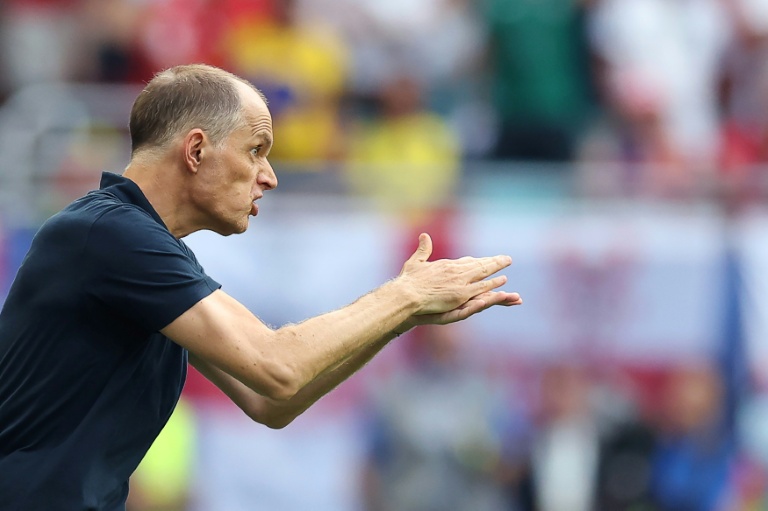
POLICY WIRE — MIAMI, USA — When a football team squeaks into a World Cup semi-final, courtesy of two disputed goals and a 2-1 extra-time victory, you’d imagine high-fives and champagne corks popping. Not so for England boss Thomas Tuchel. The German tactician, looking for all the world like a man who’d just had his prize vintage wine turned into vinegar, minced no words moments after his squad staggered past Norway. You see, winning simply wasn’t enough. At least, not in the right way.
For Jude Bellingham, the midfield dynamo whose brace of goals pulled England from the brink, his manager’s post-match rant barely registered. “Whatever. Whatever,” the Real Madrid midfielder dismissed after a grueling 120 minutes in the searing Miami heat. It’s an interesting disconnect—the stoic general refusing to revel in hard-won glory, versus the frontline soldier too exhausted (and perhaps a little miffed) to even process the criticism. Bellingham knows what he — and his mates put in. “It’s difficult out there. It’s a tough shift. All the players are putting in a tough shift. So my thoughts and appreciation go to the players who put in a good shift out there.” And that, really, was the sum of it from his end.
Tuchel, though, wasn’t letting anyone off the hook. Despite securing England’s fourth semi-final appearance in World Cup history—a statistically significant achievement for a nation so often promising and underdelivering—he tore into his squad’s performance. [QUOTE_PLACEHOLDER] Tuchel ranted in an animated on-field interview. He continued, without missing a beat, [QUOTE_PLACEHOLDER] He wasn’t happy at all. In fact, he called out their play as “sloppy, lots of safety, not fast enough, not enough.” Ouch. But perhaps that’s just the sort of brutal honesty a team at the precipice of glory truly needs, however uncomfortable.
And let’s be real—the English *were* fortunate. Twice, fate—or rather, controversial officiating—nodded their way. Bellingham’s opening goal stood despite Norwegian protests about a camera wire interference. Then, in the second half, Norway’s second goal was controversially disallowed by VAR for an alleged foul by Erling Haaland before a corner had even been taken. Tuchel himself confessed, unapologetically, “We were lucky. I stand with that.” He added, quite matter-of-factly, “No one ever denies that you need luck to go far in tournament football. You need moments where you’re lucky, otherwise it’s just not possible.” But still, for some, that smacks a bit of getting away with it rather than truly earning it.
That said, not all was bleak. Bellingham, the undeniable force of nature, continued his incredible run. After netting twice in England’s last-16 clash against Mexico, his two goals against Norway pushed his tournament tally to six goals in six games at this World Cup, equaling Harry Kane’s record. This consistency, this sheer ability to deliver in big moments, is exactly why Tuchel couldn’t help but laud his young prodigy. “World-class performance from a world-class player,” he conceded. [QUOTE_PLACEHOLDER] It’s almost as if one man’s brilliance papered over a collective flaw.
📄 POLICY WIRE WHITEPAPER PUBLISHED: PAKISTAN'S NATIONAL SECURITY POLICY PRIORITIES
👉 READ BY CLICKING HEREEngland now faces a different beast in their semi-final clash, heading to Atlanta to square off against either Argentina or Switzerland. It’s an opportunity to reach a World Cup final for the first time in 60 years. “I’m impressed with the shift that they put in, the effort, the belief and to overcome adversity and to dig in and find ways to win is on the absolutely highest level,” Tuchel noted in a later press conference, acknowledging the grind. Yet, his German precision wouldn’t let go of the footballing principles. “The analysing head of me and the football coach still thinks that we can and have played better football.” He’s got standards, doesn’t he?
What This Means
Tuchel’s stark assessment—despite the monumental victory—speaks volumes about the modern ethos of elite sport, where winning is merely a prerequisite, not the sole metric of success. It’s a mentality often seen in highly competitive sectors beyond the pitch—corporate strategy or national defense, where tactical flaws, even in victory, foreshadow future vulnerabilities. For England, relying on disputed calls and individual flashes of brilliance, this suggests a deeper institutional challenge beyond mere player effort. And it implies an uneasy relationship with their perceived good fortune.
Consider the broader context, particularly from a South Asian perspective. For nations like Pakistan, where resources for developing football infrastructure pale in comparison to powerhouses like England, the concept of “luck” in a major international tournament takes on a harsher edge. Success often hinges less on strategic depth and more on moments of improbable individual heroics or the exceedingly rare benevolent gaze of officialdom. Such events, while thrilling, often underscore the inherent economic and historical disparities that shape global competition—whether in sport or geopolitics. England’s narrow escape, while a cause for celebration in some quarters, really acts as a microcosm of the global marketplace where even the dominant players sometimes ride on factors beyond their control, or even their merit. This World Cup isn’t just about football, it’s about power dynamics. But Argentina’s economic play suggests more than luck can decide outcomes.
The manager’s cold dissection, particularly his insistence that “We were lucky,” might just be the political move of a seasoned strategist. By preemptively flagging his team’s imperfections, Tuchel manages expectations for the upcoming semi-final. He’s also subtly pushing for more—always more—knowing that true champions don’t just win; they dominate, they impose. That England secured its World Cup semi-final berth—a milestone that typically ignites unbridled joy—under such a cloud of managerial discontent proves that even sporting triumphs can be fraught with complex narratives. For a squad vying for ultimate glory, the internal criticism, not the external fanfare, will dictate their next moves. Haaland’s exit, by the way, has its own complex narrative. But it’s an uncomfortable truth for England: sometimes, getting to the finish line just isn’t quite good enough for those who measure excellence, not just victory.