


Europe’s Burning Edge: Deadly Blazes Force Brutal Climate Reckoning
POLICY WIRE — BEDAR, Spain — When the siren blared through the Los Pinos farmhouse, Jeffrey Kember and his wife Christine weren’t planning a harrowing escape through fire. They...

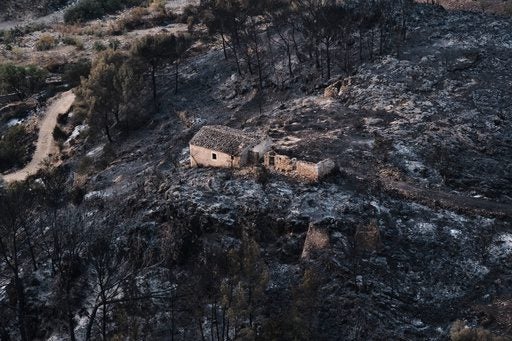
POLICY WIRE — BEDAR, Spain — When the siren blared through the Los Pinos farmhouse, Jeffrey Kember and his wife Christine weren’t planning a harrowing escape through fire. They were watching a favorite TV show, maybe unwinding. Moments later, they found themselves split apart, each battling blinding smoke — and towering flames. Kember would later describe the ordeal, saying: “I’m driving through the flames. It was actually flames. I though, ‘I can’t stop, I just gotta go’.” He continued, recalling that “It was eerie because all of a sudden I came out of the flames and it was all bright sunshine. It was like surreal.” That's the chaotic, gut-wrenching reality tearing through southern Spain right now, where a massive wildfire, fanned by Europe’s unrelenting summer heat, has claimed at least a dozen lives—and possibly many more.
This isn’t just some routine brush fire; it’s a visceral demonstration of an increasingly hostile climate. Fire crews here are doing what they can—hundreds of them, backed by air support—but the inferno’s sheer size, a beast about “the size of Manhattan” according to officials, remains a brutal challenge. Antonio Sanz, who heads the region’s emergency services, noted that while “a combination of light winds and high humidity are helping crews, but the sheer size of the fire still poses challenges.” It ripped through some 66 square kilometers (25 square miles) of forest and farmland, sparking panic and a forced exodus. [QUOTE_PLACEHOLDER]
Authorities had to proactively evacuate 1,448 people from some 11 areas. Many just left with what they had, their homes sitting precariously. Justice Minister Félix Bolaños suggested that “nearly all homes on the fire front’s perimeter were undamaged,” a small mercy perhaps, but it didn’t spare everyone. Most of the dead, it turns out, weren’t locals at all. They’re “believed to be foreign nationals,” people who perhaps misunderstood the gravity of the situation or underestimated the blaze’s terrifying speed. Authorities stated that “most of the victims, who are believed to be foreign nationals, died after ignoring shelter-in-place instructions.” And “seven people died while on foot after abandoning their cars.”
Think about that for a second. In an odd turn, authorities surmised “four of the dead were believed to be British because the steering wheel of their burned-out car was on the right side, as with British vehicles.” Sanz said authorities had “completed autopsies and DNA samples were collected to identify them.” Spain’s Foreign Minister José Manuel Albares has already spoken “with his counterparts from the U.K., Belgium, Canada and the Netherlands” about the catastrophe. This truly is a global affair, ain’t it?
But the grim scene in Almería isn’t isolated. Across Europe, the thermostat seems permanently stuck on “broil.” France is also seeing multiple active wildfires as temperatures climb past 40 degrees Celsius (104 degrees Fahrenheit) in places like Paris. This is Europe’s third major heatwave in six weeks, creating conditions ripe for disaster. And this trend? It’s no anomaly. According to the European Union’s Copernicus Climate Change Service, Europe is the world’s fastest-warming continent, with temperatures increasing twice as fast as the global average since the 1980s. That’s a chilling statistic, really. It means what’s happening here isn’t an “if” but a “when” for other regions facing similar climate vulnerabilities. It mirrors concerns in places like Pakistan, which routinely grapple with extreme weather, from devastating floods to scorching heatwaves, underscoring a global shared risk.
Bolaños, Spain’s justice minister, squarely pinned the ferocity of this Almería wildfire on a “climate emergency.” He mentioned that at its peak intensity, the fire “advanced as fast as 100 meters per minute (328 feet per minute).” The Spanish Meteorological Agency keeps warning that the risk “will remain very high.” What else can you say when June gave Spain “several days of record-setting heat, with over 1,000 excess deaths”?
📄 POLICY WIRE WHITEPAPER PUBLISHED: PAKISTAN'S NATIONAL SECURITY POLICY PRIORITIES
👉 READ BY CLICKING HEREEven France is playing hardball, trying to curb human negligence. Laurent Nunez, France’s Interior Minister, said that “32 people have been arrested across the country since the beginning of the summer in connection with wildfires.” He minced no words: “Those unacceptable acts, which have disastrous consequences and mobilize our firefighters at the risk of their lives, now fall into the hands of the justice system. We will continue our determined action and won’t let anything slide.” President Emmanuel Macron himself pointed out on X that “nine out of 10 wildfires start because of human activity.” Perhaps we don’t always help ourselves, do we?
And so, while authorities arrest people for “ignoring evacuation orders and returning to a high-risk area,” the larger truth smolders. This isn’t just Spain’s problem, it’s Europe’s, — and by extension, the world’s. Whether it’s Coastal China Reels From Twin Typhoons or a Spanish hillside burning, climate change is no longer a distant threat; it’s the backdrop to every summer.
What This Means
This wave of European wildfires and relentless heat isn’t just about extreme weather anymore; it’s a profound political and economic challenge. The immediate aftermath includes significant costs for firefighting, reconstruction, and perhaps most critically, the economic blow to tourism—a major driver in southern Spain. The presence of numerous foreign nationals among the deceased also signals a wider diplomatic headache, prompting cross-border communication and potentially influencing travel advisories. Economically, repeated heatwaves and fires stress infrastructure, reduce agricultural yields, and elevate insurance premiums. Politically, the “climate emergency” declaration from a Justice Minister isn’t mere rhetoric; it signifies a governmental acknowledgment of the long-term, systemic nature of this crisis. It suggests pressure for stricter environmental policies and perhaps even carbon-pricing mechanisms to fund resilience efforts. But, you know, these are short-term bandages. The deeper implication is a creeping shift in European life. We’re watching a continent, admired for its history — and mild summers, confront an inescapable, hot new normal. The human factor, those “unacceptable acts” Nunez decried, also means governments are grappling with public behavior and compliance during emergencies—a difficult, messy, and necessary public policy battle that stretches beyond traditional climate mitigation strategies.