


The Price of Promise: Cardinals Place Multi-Million Dollar Bet on a High Schooler’s Potential Swing
POLICY WIRE — St. Louis, USA — It’s a multi-million dollar proposition, draped in the quaint ritual of a baseball draft, yet fundamentally a high-stakes investment. When the St. Louis Cardinals cast...

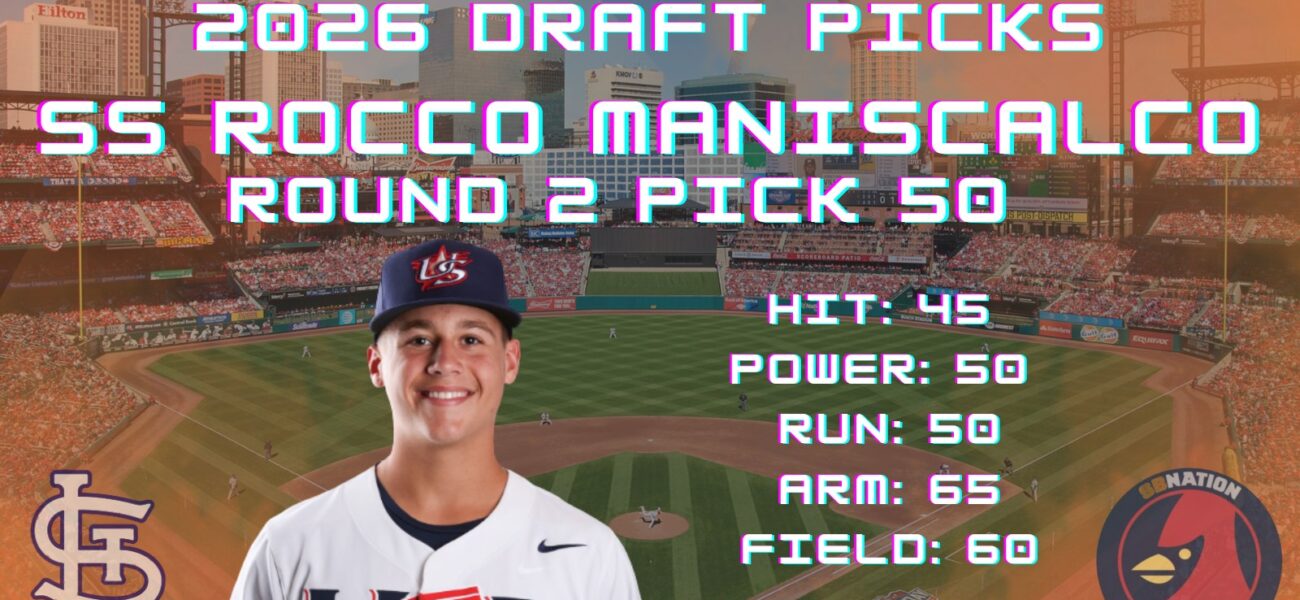
POLICY WIRE — St. Louis, USA — It’s a multi-million dollar proposition, draped in the quaint ritual of a baseball draft, yet fundamentally a high-stakes investment. When the St. Louis Cardinals cast their lot on Rocco Maniscalco, a 17-year-old infielder fresh out of an Alabama high school, they weren’t just picking a player. They were, in essence, purchasing a futures contract on raw, unrefined human potential, navigating a market rife with both breathtaking upside and crushing uncertainty. Forget home runs for a moment; this is about financial speculation on a fragile, developing asset. And it’s a brutal business, really.
Maniscalco isn’t the first, nor will he be the last, adolescent talent to face this crucible. He comes heralded as a plus defender, with instincts—a “high baseball IQ” scouts chirp—honed in a family where the game’s practically in the tap water (his dad, Matt, carved out a Triple-A career himself). But here’s the kicker, the quiet caveat that often gets whispered behind closed doors: the kid can struggle with hitting. Seriously, he’s looked overly aggressive, then too passive, sometimes against even Alabama high school pitching. They call it a “deep trigger” in his swing, a technical flaw that keeps seasoned evaluators up at night, though his switch-hitting ability from the left side offers some mitigation.
It’s a peculiar dichotomy, isn’t it? Such a young player, yet already dissected down to the very mechanics of his being. Scouts are willing to “cut him some slack because of his youth,” per one whispered observation that reached our desks, but they’re still betting huge sums on a body that’s yet to fully mature. We’re talking about projecting average or better power once his 6-foot-2 frame fills out—a physiological gamble. Will he get quicker? Maybe. Could he lose a step? Yep, that’s on the table too, depending on who you ask. These aren’t just athletic assessments; they’re corporate risk analyses disguised as talent scouting.
“Investing in someone like Rocco isn’t just about his current skill set; it’s about seeing the complete narrative,” stated Cardinals General Manager Michael Girsch, in a conversation not unlike countless others with the wire. “We look for traits—discipline, work ethic, an intrinsic understanding of the game. He’s got that, and we’re prepared to put the resources behind developing the rest.” But such lofty rhetoric doesn’t erase the fundamental question of return on investment. Major League Baseball itself invests hundreds of millions each year in drafting and developing talent, with a significant portion of early-round picks never making it to the show, becoming economic dead ends for franchises. In fact, fewer than 18% of all drafted players eventually reach the Major Leagues, according to a recent MLB Player Development report.
And because the business model demands ever-expanding talent pools, organizations are constantly casting wider nets, stretching beyond traditional U.S. and Latin American pipelines. You don’t have to look far to see that baseball’s global ambitions—its efforts to seed the game in, say, parts of the Middle East or South Asia, regions like Pakistan where cricket holds undeniable sway—face different cultural and economic headwinds than developing a homegrown prodigy. The pursuit of talent is a global phenomenon, from Alabama to Afghanistan; it just manifests differently based on opportunity and infrastructure.
“This isn’t charity, let’s be clear,” emphasized MLB Executive Vice President Dan Halem, a pragmatist I’ve spoken with often over the years. “Every pick, every development dollar, has to have a pathway to eventual on-field success and, by extension, financial viability. It’s an economic ecosystem, finely balanced. One where we cultivate dreams, yes, but also carefully manage immense financial risk.” It’s a truth so obvious, yet often overlooked amidst the draft-day glitz. That’s a good place to start, actually.
📄 POLICY WIRE WHITEPAPER PUBLISHED: PAKISTAN'S NATIONAL SECURITY POLICY PRIORITIES
👉 READ BY CLICKING HEREWhat This Means
This draft pick, seemingly an isolated sporting event, provides a telling microcosm of broader economic and political strategies. Investing in such raw, unproven potential echoes the risks many governments take in nurturing emerging industries or undeveloped regions. Just as the Cardinals pour capital into Maniscalco, hoping his perceived “upside” translates into future revenue, nations fund startups or infrastructure in developing economies, often without guarantees of success. The variables are numerous—skill development, health, mental fortitude, even geopolitics impacting market access.
Policy implications? They’re everywhere. The ethics of valuing an adolescent’s future market worth, the labor practices within minor league systems (a constant battleground), and the allocation of massive institutional resources towards speculative endeavors. When we discuss, for example, foreign aid or infrastructure projects in Pakistan or other South Asian nations, we’re talking about long-term investments in human capital and economic systems—much like Maniscalco’s pathway through the minor league ranks. Success isn’t automatic. And sometimes, you just lose the bet. Economic shifts beneath the mound aren’t limited to America’s pastures; they ripple globally, dictating where capital flows and where potential is ultimately realized—or not.
So, Maniscalco isn’t merely a draft pick. He’s a symbol, a human balance sheet entry, representing the eternal quest for future value in a world that thrives on both opportunity and shrewd speculation. His eventual success or failure will say as much about the Cardinals’ analytical prowess as it will about his athletic gifts. And maybe, just maybe, a little bit about the enduring, thorny business of predicting tomorrow.