
President’s War on Wires: Air Force One Leaks Bring FBI to Journalists’ Doors, Shaking Press Freedom Foundations
POLICY WIRE — WASHINGTON — It started with an antique, a swapped airplane, and whispers of Iranian threats. It quickly escalated into a stark warning for America’s Fourth Estate. Last week, federal...

POLICY WIRE — WASHINGTON — It started with an antique, a swapped airplane, and whispers of Iranian threats. It quickly escalated into a stark warning for America’s Fourth Estate. Last week, federal agents—quite possibly the ones you see in action thrillers—came calling at the homes of New York Times journalists. Not with friendly greetings, but with subpoenas. This isn’t just about an airplane; it’s about who gets to tell you what’s happening inside the corridors of power, and who gets punished for it.
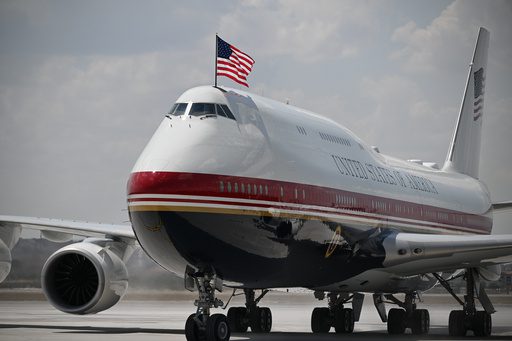
President Donald Trump’s administration—seemingly unable to resist another round in its protracted rumble with independent media—has dramatically escalated its pursuit of perceived leaks. Four Times reporters—Julian E. Barnes, Eric Lipton, Tyler Pager, and Eric Schmitt—found themselves staring down federal grand jury subpoenas, all thanks to their reporting on security issues surrounding the country’s shiny new Air Force One, a jet the U.S. spent a reported $400 million on to retrofit — and upgrade after receiving it as a gift from Qatar.
Because, well, it appears even America’s top leader can’t entirely trust his brand-new ride. The reporting that prompted this extraordinary legal push focused on the President’s departure from a NATO summit in Turkey. Instead of boarding the supposedly state-of-the-art new jet for the leg to England, Trump opted for an older model. Later, the White House said he was just letting service members at Royal Air Force Mildenhall get a look at the new plane. But inside sources—the kind the DOJ is clearly hankering to find—told the Times that the Secret Service had pushed for the switch, fearing the new jet lacked some advanced security, missile defense, and countermeasure systems present on the older aircraft.
“The appearance of federal law enforcement agents on the doorstep of news reporters should shock the conscience of any American who believes in the Constitution and the press freedom it protects,” stated David McCraw, a lawyer for the Times. It’s hard to argue with that; the image itself carries an unsettling resonance, something more fitting for, say, a less democratic state. Bruce D. Brown, who runs the Reporters Committee for Freedom of the Press, didn’t mince words either. “Trump’s war on the press is looking for another victim,” he declared, slamming the subpoenas as a break from established DOJ practice where seeking information from reporters is supposed to be the absolute last resort. But lately, last resorts seem to be the President’s first impulse.
The Justice Department, for its part, maintains a curious dance. It claims reporters aren’t targets, but it’s sending agents to their homes. It asserts a value for a free press, yet it’s pursuing leak investigations that directly intimidate those who speak to journalists. Steven Cheung, a White House spokesman, defended the administration’s security posture on Air Force One. “The new Air Force One is a state-of-the-art aircraft that has been fitted with high-level security protocols that ensure the safety of the President and his staff,” he stated, then added with a flourish of transparency (or something like it), that “we use every tool at our disposal—including distraction and misdirection—to address those threats.”
📄 POLICY WIRE WHITEPAPER PUBLISHED: PAKISTAN'S NATIONAL SECURITY POLICY PRIORITIES
👉 READ BY CLICKING HEREAnd there it’s, straight from the horse’s mouth: misdirection as a tool of statecraft. This isn’t a new play in the administration’s playbook. It’s a calculated, repetitive effort, a constant drumming at the foundational pillars of independent reporting. Earlier attempts included similar subpoenas for reporters at The Washington Post and The Wall Street Journal, though those were eventually withdrawn. But it’s not always about outright legal victory; sometimes, it’s about the chilling effect, the erosion of trust, the fear of the knock on the door.
The administration’s shift in policy, rescinding protections for journalists from having their phone records secretly seized, speaks volumes. It’s an executive power grab, plain — and simple, dressed up in national security rhetoric. President Trump’s long-standing characterization of the press as an ‘enemy of the people’ feels less like hyperbole with each such action. This isn’t just domestic theater; countries around the globe watch what happens in Washington. When American authorities treat journalists this way, it provides potent ammunition for less democratic regimes to justify their own suppression of dissent.
What This Means
The core implication here is a deepening fissure in America’s commitment to press freedom, a commitment long touted as a democratic gold standard. When a sitting administration actively seeks to compel journalists to reveal their sources, it creates a powerful chilling effect, making whistleblowers and informants think twice. This, in turn, cripples the public’s access to vital information about government accountability, especially concerning sensitive matters like national security.
Economically, a stifled press breeds an opaque system, where conflicts of interest and corrupt practices might flourish unchecked. It impacts markets reliant on transparent information, damaging investor confidence (something global markets, say in places like Pakistan or Turkey, can ill afford). Politically, it moves the U.S. closer to the methods employed by states that openly muzzle their media. This sends a particularly troubling signal to nations across South Asia and the wider Muslim world, where press freedom often hangs by a precarious thread. They’ve seen plenty of executive overreach, but usually, it wasn’t branded as ‘freedom-loving.’ And really, the line between investigating leaks and intimidating the press becomes blurrier by the day, chipping away at the very notion of a free and vibrant democracy. It’s a concerning, systemic decay—a victory masking a deeper institutional rot, perhaps. This is how the system degrades, not with a bang, but with a series of aggressive knocks on the door.
📖 GET YOUR FREE COPY NOW OF POLICY WIRE DIGITAL MAGAZINE JULY 2026 EDITION
👉 READ & DOWNLOAD FREE MAGAZINE