


Berlin’s Burning Question: Was a Rail Artery Sabotaged Amid Europe’s Fractured Calm?
POLICY WIRE — Berlin, Germany — You know, sometimes it’s the quiet moments—the hum of routine, the clockwork precision of a nation’s arteries—that reveal the deepest cracks. Forget the...

POLICY WIRE — Berlin, Germany — You know, sometimes it’s the quiet moments—the hum of routine, the clockwork precision of a nation’s arteries—that reveal the deepest cracks. Forget the high-decibel political rows; it’s a fire on a railway line, the seemingly mundane disruption, that pulls back the curtain on something far more sinister. German authorities are now scrambling, their brows furrowed, openly investigating what they suspect wasn’t some unfortunate electrical malfunction but an intentional, pointed act of sabotage against critical infrastructure. Suddenly, Europe’s much-vaunted stability doesn’t look quite so bulletproof.
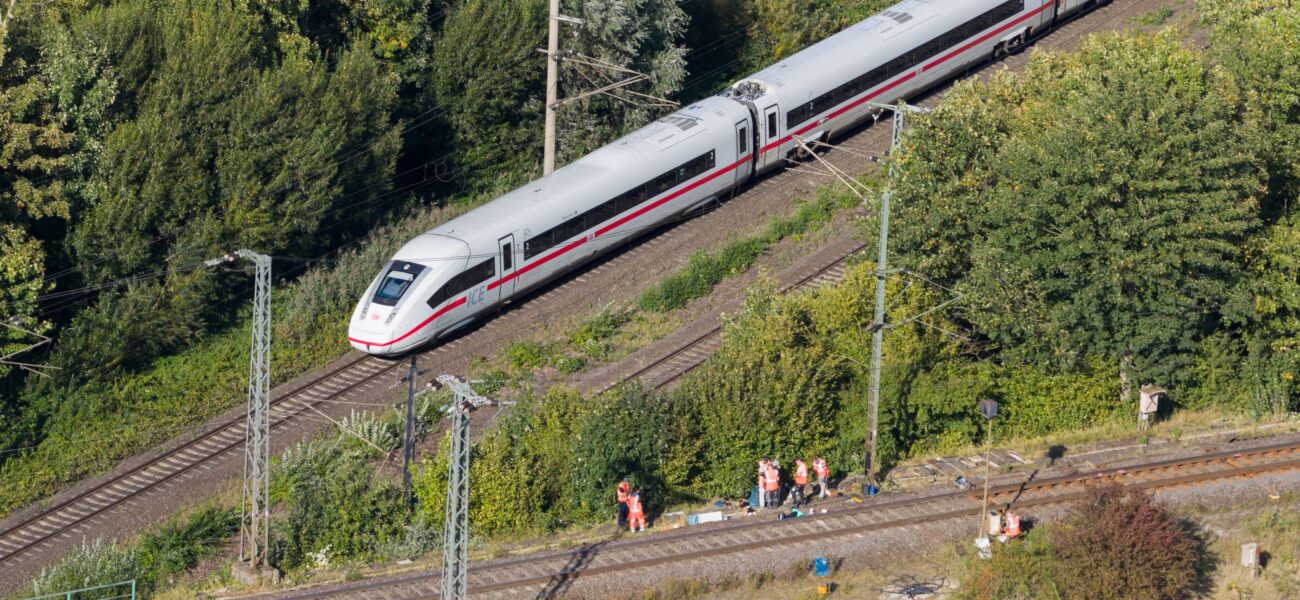
It began as reports of delayed trains, a typical Tuesday headache for countless commuters in Germany. But then the truth, or at least the ugly suspicion of it, started seeping out. Flames devoured cables near Berlin, choking off a significant transit corridor. Not an accident, investigators quickly suggested, hinting at something more deliberate, more malicious. It’s a sobering thought, isn’t it? That someone—or some group—would deliberately target a piece of public utility to cause chaos, inconvenience, and, frankly, fear.
“We’re not just looking at a fire, we’re looking at an assault on our nation’s arteries,” remarked German Interior Minister Nancy Faeser, her voice taut during a press briefing that didn’t sugarcoat anything. “The perpetrators, whoever they’re, will face the full force of the law. This isn’t vandalism; it’s a direct challenge to our way of life.” She wasn’t pulling punches, and you couldn’t blame her. Because when the tracks go silent, so too does a segment of the economy, of society.
This incident isn’t occurring in a vacuum. It’s set against a backdrop of increasing geopolitical jitters across Europe. Old certainties feel wobbly. Energy supplies, cybersecurity, now even railway cables—everything seems a target. But it’s not just in the West. Look at Pakistan, for example. Its own railway network, a sprawling colonial legacy, often grapples with similar challenges—derailments, security threats, acts of terror targeting tracks in remote areas. For nations like Pakistan, constantly battling against both natural disasters and acts of terror threatening its rail networks and energy grids, Germany’s experience here isn’t just an isolated incident; it’s a sobering reminder of systemic vulnerabilities everywhere. Infrastructure security isn’t just a local issue; it’s a shared global headache, isn’t it?
And what’s really troubling is the quiet escalation of these kinds of attacks, low-key but high-impact. One former senior intelligence official, who spoke on background, called it “a chilling evolution.” But an overt official response wasn’t long in coming. “Such incidents, though localized, send tremors through the delicate balance of European security,” stated Josep Borrell, the EU’s High Representative for Foreign Affairs and Security Policy, in a thinly veiled comment regarding the broader implications. “It’s not just about trains; it’s about trust in our networked society, about our collective resilience against those who would seek to disrupt us.” Strong words, certainly. Empty, perhaps, but meant to reassure.
The German government hasn’t, at least publicly, pointed fingers yet, and they’re being maddeningly cagey about details—typical. But the mere *suspicion* of sabotage injects an immediate layer of unease into the public consciousness. It makes you wonder: if the trains can be stopped this easily, what else? Who’s next? What exactly are they trying to achieve? Chaos? Instability? A demonstration of capabilities?
📄 POLICY WIRE WHITEPAPER PUBLISHED: PAKISTAN'S NATIONAL SECURITY POLICY PRIORITIES
👉 READ BY CLICKING HEREIt’s worth noting, too, that disruptions like these carry a steep price. In 2023 alone, Deutsche Bahn reported economic losses totaling approximately 1.2 billion Euros due to various operational disturbances and incidents, a figure cited in their annual financial report. This specific act, though relatively small in scope, piles on. That’s real money, taken directly from a national treasury, from public services, or—more likely—passed on to the poor old taxpayer.
What This Means
This isn’t merely a transport problem; it’s a strategic blow, a political quandary, and an economic bruise all rolled into one. For Berlin, it highlights a profound vulnerability in its national infrastructure. You’d think in the age of sophisticated digital defenses, the Achilles’ heel might be a network server, not a bundle of wires beside a railway track. But it seems even the most advanced nations can be brought to heel by low-tech means. Politically, it cranks up the pressure on Chancellor Olaf Scholz’s government to demonstrate both investigative competence and, crucially, enhanced security measures. Failing to identify the perpetrators, or preventing future incidents, could easily erode public trust and provide ammunition for populist critiques of state control and effectiveness.
Economically, even localized disruptions to rail transport have ripple effects. Supply chains, already brittle post-pandemic, absorb another shock. Commuters lose time, businesses lose productivity—it’s all a drag on growth. For a German economy already facing headwinds, any new uncertainty is an unwelcome guest. And then there’s the broader European context. If Germany’s railways can be targeted, what about the crucial supply lines snaking across Eastern Europe, say, for aid to Ukraine? The message—that even core infrastructure isn’t sacrosanct—is chilling for the entire continent. It demands a serious reassessment of national security priorities, extending far beyond conventional threats. One might even draw parallels to the strategic vulnerabilities seen across developing nations, or Kyiv’s routine shard-splattered morning, where the normalcy of disruption speaks volumes about sustained aggression. It suggests a world where infrastructure itself has become a front line, whether you’re talking about Berlin or Balochistan. It’s a complex, ugly business, — and frankly, it’s not going away. It just keeps on humming—or burning.