


Network TV Anchor Pulls Back Curtain on Brutal Political Reality: Image Over Ideology
POLICY WIRE — Washington, D.C. — Politics isn’t just a brutal business; it’s a cold, hard triage. Long before policy proposals or legislative wins ever enter the equation, a different,...

POLICY WIRE — Washington, D.C. — Politics isn’t just a brutal business; it’s a cold, hard triage. Long before policy proposals or legislative wins ever enter the equation, a different, far more primitive metric determines a candidate’s shelf life. It’s not about their record. It’s not even really about their message. It’s about how they’re seen—a raw, unfiltered public assessment, often rendered in the bluntest terms possible.
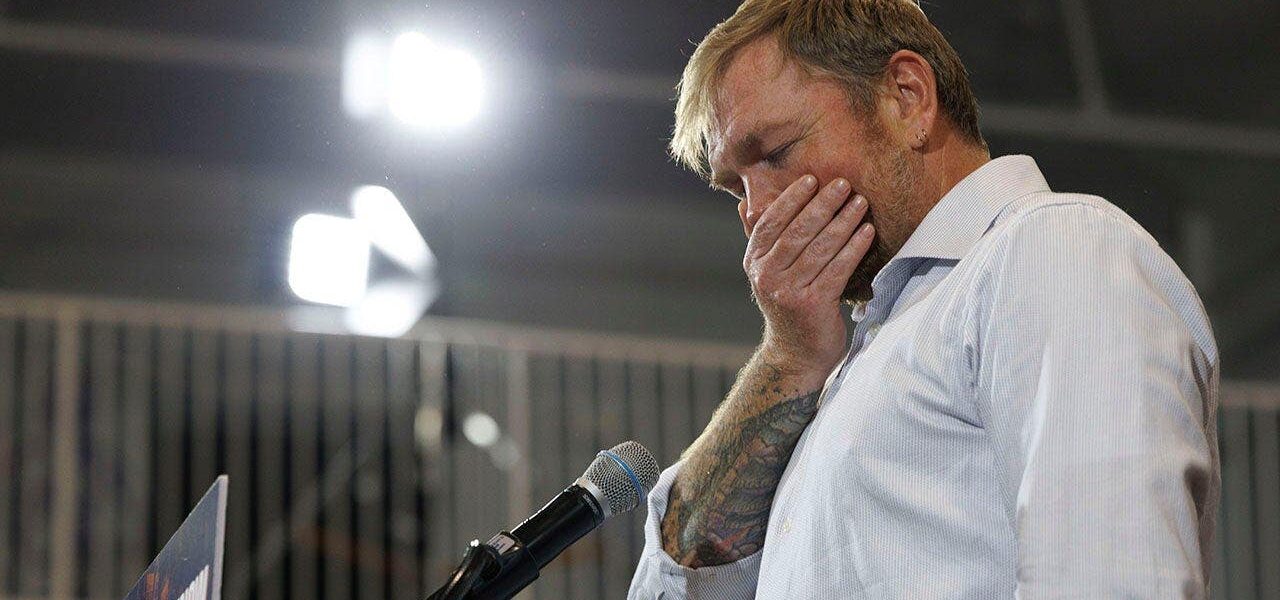
And so, it wasn’t the whisper of backroom strategists or the anonymous leak from an aide that recently laid bare this stark truth. It was a well-known broadcast network anchor, right there on live television, stating flat-out what most operatives only dare to mutter in hushed tones over stale coffee. The message was clear, chilling even: the Democratic Party reportedly pulled its support from a candidate identified as Platner because, in the anchor’s plain-spoken appraisal, he was looking like a loser. [QUOTE_PLACEHOLDER]
It’s a declaration that cuts to the bone of modern campaigning. Campaigns aren’t won purely on merit or a finely tuned legislative agenda; they’re won on perception, on an almost gladiatorial show of strength and viability. Once a candidate—any candidate—is tagged with such a debilitating descriptor, the institutional money dries up, the endorsements vanish, and the air goes out of their entire endeavor. This isn’t theoretical; it’s the brass-tacks mechanics of electability. It’s the ruthless, unforgiving calculus that often governs who gets funded and who gets jettisoned in the political marketplace.
Because, let’s be honest, few voters—or donors, for that matter—want to hitch their wagon to a sinking ship. The spectacle of political downfall is fascinating to observers, perhaps, but it’s anathema to parties intent on winning elections and consolidating power. You can almost hear the sigh of collective relief from party headquarters, coupled with the grim understanding that such pragmatic, if uncharitable, decisions are simply part of the game.
This isn’t just an American phenomenon, of course. The quest for perceived strength—and the quick jettisoning of those viewed as weak—resonates profoundly in other parts of the world, too. Think about the intricate, often high-stakes political landscapes in nations across South Asia, for instance. In countries like Pakistan, where coalition politics are a constant dance and external perceptions matter immensely for international standing and aid, leaders—or those aspiring to lead—can’t afford to be seen as anything less than fully viable, fully dominant.
An image of weakness can unravel an administration or a burgeoning campaign with staggering speed. Political actors in Islamabad or Karachi aren’t immune to the public, or internal, whisper campaign about who’s got the muscle and who’s merely making up the numbers. In many ways, the stakes are even higher there. A domestic loss of face can quickly translate into regional instability or diminished global influence. It’s a brutal calculus of competition that knows no borders, though its expressions vary. Even in geopolitical arenas, leaders strive to project unwavering strength, wary of sanctions biting hard as seen in Tehran, for instance, where perceptions of weakness invite increased external pressure.
📄 POLICY WIRE WHITEPAPER PUBLISHED: PAKISTAN'S NATIONAL SECURITY POLICY PRIORITIES
👉 READ BY CLICKING HEREBut doesn’t this constant prioritization of appearance over substance chip away at the very democratic principles parties claim to uphold? It definitely does. It’s an uncomfortable truth: while platforms and policies get lip service, the ability to project an image of inherent triumph often dictates who even gets a seat at the table. And candidates themselves must be acutely aware of this, because the second the media narrative—or a high-profile anchor’s casual remark—starts to brand them with that particular scarlet letter, it’s practically game over.
And it’s a trend fueled by the immediate feedback loops of our digital age. A viral clip, a fleeting poll result—these things harden perceptions at warp speed. According to data published by the National Bureau of Economic Research, parties typically reduce financial backing by over 60% for candidates whose polling numbers drop by 10 points or more post-primary, often irrespective of policy nuance. It isn’t about debate points anymore; it’s about vibe. That’s a nasty bit of business, but it’s reality.
What This Means
This episode serves as a harsh lesson, not just for aspiring politicians, but for the electorate and the media that shapes its views. Politically, it confirms that mainstream parties, especially dominant ones like the Democrats or Republicans, are inherently conservative machines when it comes to risk. They prioritize victory above almost all else, which often means discarding anything—or anyone—who deviates too far from the perceived path to success. Candidate Platner, whoever he was and whatever his platform, clearly failed to clear that low, yet insurmountable, bar of looking like a winner.
Economically, this pursuit of the ‘viable’ candidate impacts resource allocation significantly. Vast sums of money are funnelled away from struggling campaigns towards perceived front-runners, creating a reinforcing loop of advantage. Less successful candidates often find themselves in a self-perpetuating spiral of resource deprivation. This can stifle nascent ideas, prevent grassroots movements from gaining traction, and consolidate power within established factions that have the means to project an aura of invincibility. Ultimately, the raw, unfiltered assessment of an anchor becomes a proxy for public opinion, and the party apparatus responds accordingly, sometimes at the expense of diversity in ideas or true policy innovation. It’s a chilling reminder that, in politics, image is often everything, — and ‘loser’ is the ultimate dirty word.