

Parmesan Under Threat: Italy’s Drying Rivers Portend a Global Food Crisis
POLICY WIRE — Milan, Italy — Forget gondolas stuck in low water; we’re talking about the silent disappearance of the very soil from which Italy’s celebrated produce springs. That unmistakable, nutty...

POLICY WIRE — Milan, Italy — Forget gondolas stuck in low water; we’re talking about the silent disappearance of the very soil from which Italy’s celebrated produce springs. That unmistakable, nutty aroma of Parmesan? Or the tender bite of Arborio rice in a perfect risotto? Those quintessential tastes of Italy, friends, might just become a rare luxury, caught in a suffocating web of diminishing rain and increasingly desperate land. This isn’t just a weather report. It’s a distress signal from a landscape whose bountiful generosity is—quite literally—drying up.
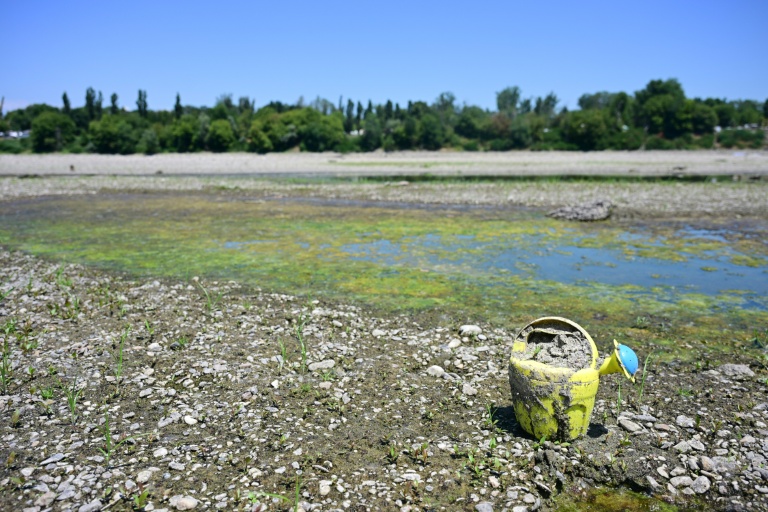
It’s an awkward silence descending upon the normally vibrant agricultural plains of northern Italy. The Po River, the country’s agricultural lifeline, isn’t merely low; it’s practically a shadow of its former self. Historically, this region is a granary, a dairy, — and a fruit orchard for Europe. But a persistent, crushing drought, exacerbated by pitiful winter snowpacks and scant spring rainfall, is forcing a reckoning. Farmers, they’re watching their fields crack, their livelihoods evaporate, — and nobody’s quite sure what happens next. It’s a quiet catastrophe.
But the ramifications, they aren’t so quiet. Italian Agriculture Minister Francesco Lollobrigida didn’t mince words recently, asserting, “This isn’t merely an inconvenience; it’s an existential threat to our food sovereignty. We’re losing crops, losing revenue, and if we don’t adapt, Europe will feel this deeply.” His tone, it was less diplomatic, more desperate. You’ve got to listen when a politician speaks that plainly, don’t you?
The numbers don’t lie. Data compiled by ISPRA, Italy’s national environmental protection institute, paint a grim picture: The Po River recorded average water levels 61% below its historical mean this past season. Sixty-one percent. That’s not a fluctuation; it’s a gaping wound, especially when agricultural demands during crucial growth periods are only intensifying. Because without that water, you don’t get the durum wheat for pasta. You don’t get the pastures for dairy cows that make the good stuff. It’s that simple.
This Italian dry spell isn’t just about localized crop failure; it’s about a potential choke point in the global food chain, however small. Consider its implications for countries like Pakistan, which already grapples with the erratic whims of a changing climate—from devastating floods that wipe out crops to prolonged dry seasons that parch vital river basins like the Indus. While the immediate concerns in Karachi are far removed from the rice paddies of Lombardy, the underlying mechanisms—the warming planet, the extreme weather events—are the same. And when Europe, a net importer of certain staples and a significant trading partner, sees its agricultural output falter, global food prices feel the shockwaves. Poor nations feel it hardest. They always do.
📄 POLICY WIRE WHITEPAPER PUBLISHED: PAKISTAN'S NATIONAL SECURITY POLICY PRIORITIES
👉 READ BY CLICKING HEREVirginijus Sinkevičius, the European Commissioner for Environment, Oceans and Fisheries, weighed in with a more detached, yet equally serious, assessment. “The hydrological integrity of Europe’s major rivers is under systemic pressure,” he told reporters. “Our climate modeling has projected these scenarios for decades. The question now isn’t if we need radical change, but how swiftly we can implement it without crippling our economic foundation.” It’s the language of technocrats, sure, but it hides a gnawing anxiety. The bureaucracy, it can only hold back the tide for so long—especially if there’s no tide left to hold back.
What This Means
Politically, this drought forces Italy, — and indeed the European Union, into a tighter corner. Expect intensified debates over water allocation policies, potentially pitting agricultural lobbies against environmental conservationists and even energy producers (hydropower, after all, relies on flowing rivers). And this isn’t an abstract fight, it’s about who gets to keep farming — and who might just lose everything. Rome will face immense pressure to deliver immediate relief and, perhaps more significantly, a long-term water strategy that’s not just band-aids. This problem isn’t going away. Not when global warming is turning the slow drip of a policy problem into a flood of consequences—or, in this case, a dramatic absence of them. Economically, beyond the immediate hit to agricultural output—and therefore Italy’s GDP—there’s the longer-term concern for supply chain resilience. What happens when your ‘local’ supplier, a foundational part of the European market, starts failing consistently? It nudges Europe, like many other regions globally, towards a geopolitical calculus where resources become tools, or even weapons, of influence. Food security—a luxury for some, a daily fight for billions—is becoming a sharper, more pointed topic for even developed nations. And you can bet the commodity traders are watching the Po’s levels as closely as any weather satellite, waiting to profit from every parched field.