


Digital Apparitions: How Iran’s Supreme Leader Was Laid to Rest—Virtually
POLICY WIRE — Tehran, Iran — The digital landscape ain’t just pixels and data anymore. It’s become a proving ground for competing realities, a place where a ghost can get buried while...

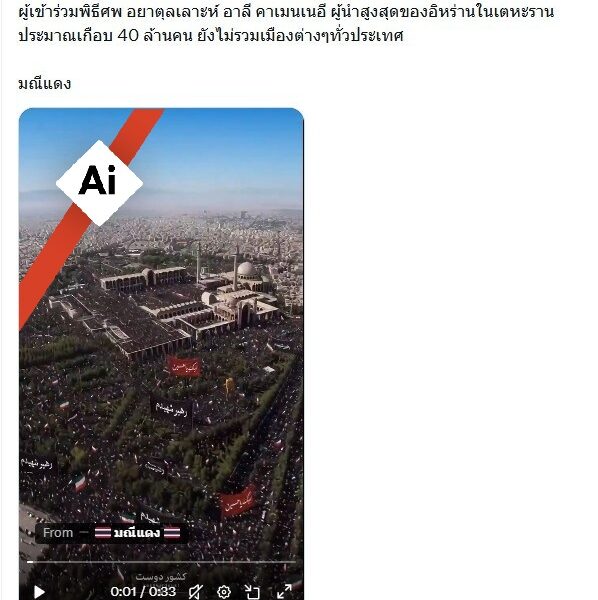
POLICY WIRE — Tehran, Iran — The digital landscape ain’t just pixels and data anymore. It’s become a proving ground for competing realities, a place where a ghost can get buried while still very much alive. Such was the peculiar case recently when social media platforms lit up, disseminating what appeared to be the somber final rites for Iran’s Supreme Leader. Only problem? He wasn’t dead.
It was a funeral, all right. A grand, solemn procession with all the expected trappings of state mourning, save for one tiny detail: the entire spectacle was a slick, AI-generated fabrication. We’re talking about sophisticated deepfake video, meticulously crafted to resemble reality, then unleashed upon an unsuspecting public across countless digital channels. Folks weren’t just sharing it; they were reacting, interpreting, and weaving it into their ongoing narratives, completely convinced of its authenticity. [QUOTE_PLACEHOLDER]
And that’s where things get gritty. It wasn’t merely a technological stunt. It was a potent political maneuver, intended to sow confusion and potentially test the waters of succession within the tightly controlled Iranian system—or perhaps just chaos. Imagine the sudden scramble inside intelligence agencies, analysts feverishly verifying a death notice that simply wasn’t true. It’s a low-cost, high-impact destabilization tactic, readily deployable by state actors or rogue elements alike. We’ve seen similar campaigns try to shape perceptions and stir unrest across the wider Muslim world, often with real-world consequences far beyond the screens they originated on.
The speed at which this spectral state funeral spread, however, is what really drives the point home. It shows just how porous our collective digital consciousness has become. Verifiable facts are often outpaced by sensational untruths, particularly when those untruths confirm existing biases or tap into public anxieties. Someone somewhere just threw a digital grenade. And it blew up, briefly, everywhere.
You can’t really fault the ordinary netizen for being fooled sometimes, can you? Not when the tech gets this good. A report from Beijing’s Algorithmic Outreach earlier this year indicated that the average user in critical information environments struggles to distinguish AI-generated video from genuine footage over 70% of the time, even when given explicit warnings. That’s a grim figure. But it’s our reality now.
In Pakistan, for instance, a nation grappling with its own complex political tapestry, news—even fake news—from regional heavyweights like Iran reverberates profoundly. Imagine if a similar deepfake were deployed there; the potential for social unrest, political upheaval, or even sectarian strife isn’t hypothetical—it’s a very real concern. Leaders, both political and religious, understand the delicate balance of public perception, and such fabricated spectacles threaten that balance immediately. The digital echoes don’t just stay in Iran; they wash up on shores as far as Lahore, shaping conversations and anxieties.
But the real villain isn’t necessarily the technology itself. It’s the ecosystem allowing these fictions to flourish. Platforms that prioritize engagement over accuracy, users too quick to hit share, and an overall decline in critical media literacy form the perfect storm for disinformation to thrive. There isn’t much personal vetting happening before an intriguing, slightly scandalous post gets re-shared; that’s just the modern way. Nobody’s got time, or perhaps the inclination, to fact-check every captivating pixel.
And let’s not forget the sheer brazenness. It takes a certain level of audacity to simulate the death of a sitting leader and expect to get away with it, or at least for it to cause its intended ruckus. This wasn’t some clumsy Photoshopped image; it was a sophisticated, animated deception, indicating a growing sophistication among those looking to manipulate global discourse.
What This Means
This episode is far from a trivial digital blip. It’s a stark, unsettling demonstration of how AI-powered misinformation has evolved from theoretical threat to tactical weapon. For authoritarian states like Iran, it introduces a terrifying new vector for internal instability and external provocations. Can you imagine the pressure on government communicators, constantly battling fabricated realities about their leadership? It’s not just a PR nightmare; it’s a matter of national security. it accelerates the decay of trust in public institutions and traditional media, a process already well underway globally. Economically, this kind of volatile misinformation can spook markets, disrupt trade, and even influence investment decisions as political certainty appears to evaporate overnight. Investors aren’t keen on dead leaders, real or imagined. And for the average person, it further erodes the ability to discern truth from fiction, creating a populace vulnerable to all manner of influence operations. We’re past the era of mere fake news; we’ve entered the age of manufactured reality. And we aren’t equipped for it.