

From Rubber Duck to Global Balm: How Albuquerque’s Quirky Mascot Ignites Conversations on Loss
POLICY WIRE — Albuquerque, United States — In an era of manufactured viral moments, it’s often the utterly bizarre, the profoundly human, or sometimes, a collision of both, that genuinely...

POLICY WIRE — Albuquerque, United States — In an era of manufactured viral moments, it’s often the utterly bizarre, the profoundly human, or sometimes, a collision of both, that genuinely captures the zeitgeist. We’re talking about grief, mind you. Raw, gnawing grief, the kind that lurks unspoken in too many homes. And its unlikely antidote, currently making waves far beyond its desert origins, happens to be a five-foot inflatable rubber duck.
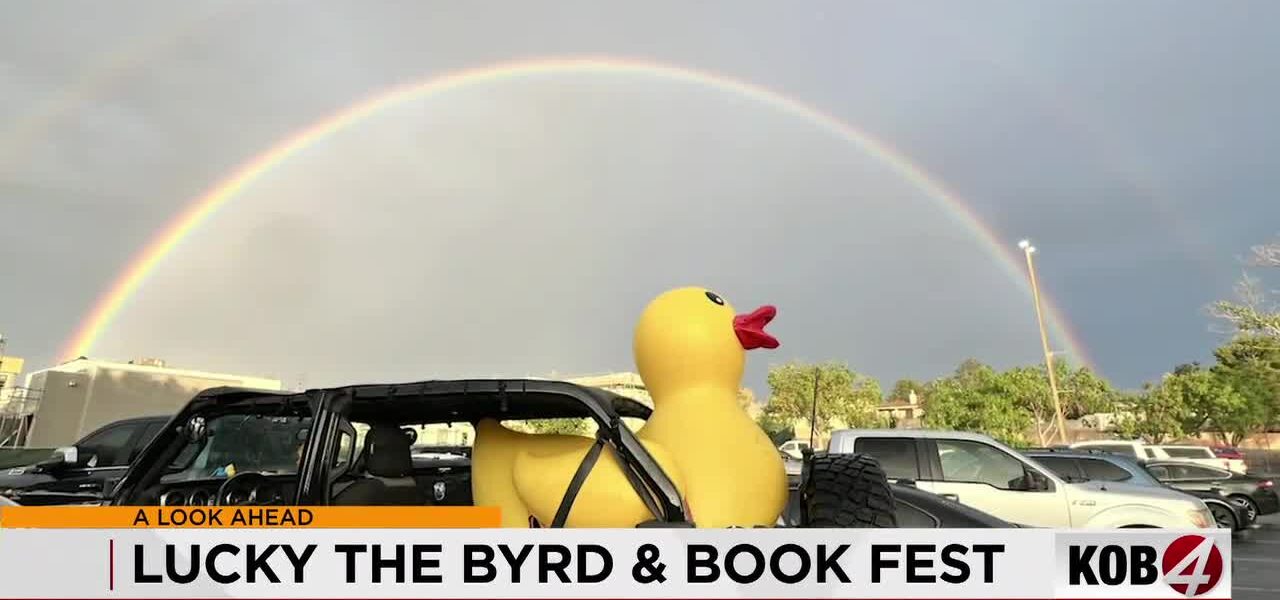
No, this isn’t some whimsical art installation or a child’s oversized toy gone rogue. This is ‘Lucky,’ the improbable symbol of solace currently traversing the roads of Albuquerque and, through a burgeoning book series, reaching far wider. It’s an exercise in processing — an open-air therapy session, if you will— for a particular strain of sorrow society frequently prefers to keep under wraps: pregnancy loss.
The genesis of this yellow phenomenon traces back to Catherine Carnell, a local author who found herself adrift in a personal tempest. “After experiencing a miscarriage, I wrestled with a crushing sorrow and postpartum depression while trying to navigate several other truly rough patches,” Carnell explained. “During that time, a rather peculiar comfort object— this big ol’ duck I called Lucky— just showed up in my life.” She put Lucky in the back of her Jeep, you know, as one does. It became her steadfast, if peculiar, co-pilot for much of 2024 through New Mexico’s dusty environs.
But something happened on those mundane commutes. People waved. They smiled. They honked. And sometimes, they’d even flag her down, sharing their own quiet tales of anguish, touched by the sheer absurdity—and surprising empathy—of a giant, cheerful, inflatable duck. It didn’t take long for the rubber duck to transform into a quasi-communal totem. “What began as a lighthearted distraction during one of the darkest periods of my life quickly evolved into something much more substantial,” Carnell recounted. “It’s a symbol of hope, healing, and— importantly— real human connection. People told me their stories. Real people. You don’t get that everyday, do you?”
Her experience sparked a series of books, including the memoir, Lucky the BYRD: Turning the Page. This Friday — and Saturday, she’s scheduled to chat about her work at the ABQ Collective’s second annual book fair. It’s a moment, really, for the local literary scene, but it’s also a spotlight on an issue that, globally, affects a staggering number of families. According to data compiled by organizations like the Mayo Clinic, roughly 1 in 4 recognized pregnancies end in miscarriage worldwide. That’s a lot of silent suffering.
This widespread but rarely discussed phenomenon isn’t confined to any single culture. In many South Asian and Muslim-majority countries, like Pakistan, the loss of an unborn child is often shrouded in a particular quietude, a communal mourning that, while deeply felt, is rarely publicly articulated with such overt symbolism. Miscarriage can carry complex social implications, sometimes viewed with shame or as a spiritual burden. But a universal human truth emerges: when channels for open grief are constrained, the psyche finds other outlets, however unconventional. And sometimes, those outlets look a lot like a five-foot plastic waterfowl.
But the duck’s journey isn’t just about personal healing. It’s about public health. “Our communities thrive when we address these silent struggles head-on,” stated New Mexico State Representative Eleanor Vance. “Mental well-being is every bit as important as physical health. If a giant duck helps foster conversations around grief, around postpartum struggles, it’s a net gain for public well-being, for human connection, across the board.” That’s the pragmatic view, and she’s not wrong. It takes very little to understand that sometimes the most unlikely things can stir something profoundly important in a community.
What This Means
The ‘Lucky’ phenomenon, while localized in New Mexico, presents a compelling micro-study on public grieving, mental health stigma, and the surprising power of informal symbols. Economically, Carnell’s journey highlights a burgeoning niche in the ‘grief industry’ – a marketplace where books, support groups, and even merchandise (rubber ducks, presumably) serve as both solace and revenue streams for those navigating tragedy. Politically, the candidness prompted by something as disarming as a duck indirectly pressures policymakers to consider more robust public health initiatives concerning perinatal mental health, moving beyond the traditionally clinical. It’s hard to ignore widespread, if quirky, public sentiment.
Culturally, the contrast with societies where such discussions are taboo underscores the need for global conversations on grief. In nations where personal losses, especially reproductive ones, remain culturally suppressed, stories like Carnell’s from Albuquerque become fascinating case studies. They subtly challenge ingrained social norms, suggesting that even in the most private sorrow, there can be a path towards collective healing, however peculiar that path may initially appear. The sheer, almost accidental, accessibility of a symbol like Lucky breaks down barriers, facilitating dialogue where more formal interventions might struggle. It’s not a policy paper, but it sure gets people talking.