



The Brutal Calculus of Nice: Player Deemed Expendable, Humanity Questioned in French Football Drama
POLICY WIRE — Nice, France — Professional sport, it’s often said, is a cutthroat business. But sometimes, the mask slips. Sometimes, the raw, unvarnished truth about players as assets – rather than...

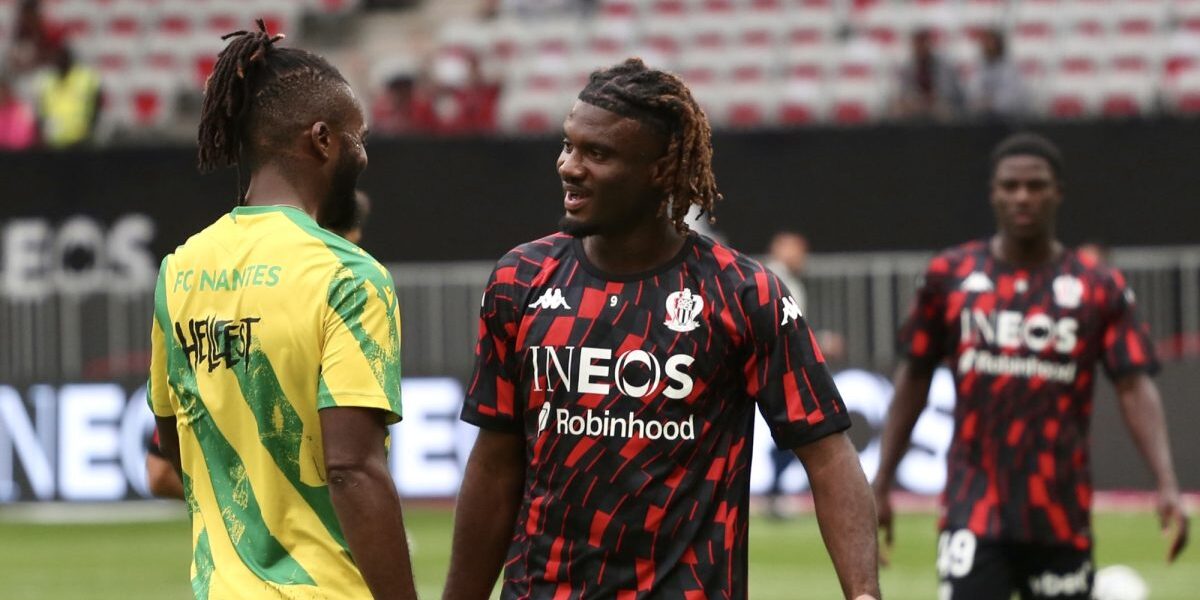
POLICY WIRE — Nice, France — Professional sport, it’s often said, is a cutthroat business. But sometimes, the mask slips. Sometimes, the raw, unvarnished truth about players as assets – rather than human beings – spills out into the public square. And that’s exactly what’s happening on the sun-drenched Côte d’Azur, where OGC Nice’s leadership has laid bare a chilling distinction: they’ll tolerate Terem Moffi, but only because his contract dictates it, not out of any fondness for the man himself.
It sounds harsh. Because it’s. The sentiment, publicly expressed by the club’s new sporting director, Roger Ricort, feels less like a managerial decision and more like a pronouncement from an oligarch on an inconvenient acquisition. Moffi, a 27-year-old striker, has made the rather awkward journey back to the Allianz Riviera after his loan spell at FC Porto fizzled out. His welcome? A stark declaration that his locker (and certainly his future) isn’t at Nice.
“He is on the list of players we want to leave,” Ricort began, his words stripped of any diplomatic varnish. “He will surely be transferred elsewhere.” The bluntness of it all. But then came the kicker, a phrase that’s now reverberating through European football’s often-hypocritical corridors: “We don’t necessarily respect the man but we will respect the player.” That’s quite the tightrope walk, isn’t it? To honor a professional obligation while simultaneously signaling deep personal disfavor. Moffi, one can imagine, isn’t feeling particularly cherished.
This icy reception traces back to a fraught November night. Following a grim defeat against FC Lorient, Nice’s team bus became a stage for a particularly ugly episode of fan frustration. An actual attack on players and staff— imagine that. Moffi, alongside former teammate Jérémie Boga (who’s since secured a permanent move to Juventus, perhaps thankful to be out of the fracas), was specifically targeted. The club’s response then was to put them both on ‘sick leave.’ A peculiar diagnosis, considering the malady seemed more relational than physiological. He wouldn’t kick a ball for Nice again last season, heading out on loan in January.
Now, he’s back. He turned up for pre-season training last Wednesday, contract in hand, tying him to Nice until season’s end. The club, according to Ricort, is ‘desperate to offload him.’ “At the moment,” Ricort elaborated, “he knows that he won’t be able to play for Nice any more, either. I think that would show a lack of respect to our supporters, but so long as he’s here, we will try and be proper with him and his agents. When he finds a club, we will shake hands — and wish each other good luck.” Such grace. Such cold, calculated corporate etiquette.
This kind of player purgatory isn’t an anomaly, especially in the higher echelons of the sport. You see it across Europe, clubs eager to cut ties but stuck paying hefty salaries until a suitor appears. It’s a fundamental paradox of the modern game: players are million-dollar commodities, but ones whose utility can vanish overnight, leaving a very expensive hole on the balance sheet. According to data compiled by Transfermarkt, clubs across Europe’s top five leagues spend an estimated hundreds of millions of euros each season on players who are either not playing or are on loan, effectively a salary payment for a non-performing asset.
But beyond the numbers, what does it say about the human element? It’s a transaction, pure and simple. But, this public declaration of not ‘respecting the man’ injects a layer of psychological warfare that even cynical observers find jarring. As Karim Iqbal, a former agent and industry veteran now running an academy in Pakistan, pointed out, “The game has always been tough, financially motivated. But this explicit lack of respect for the individual, while acknowledging their professional bond, it’s… unnerving. It’s an ownership mindset, not a partnership. You see similar fan intensity in South Asia for European clubs; when a team publicly shames one of its own, it really strips away any illusion of family. It makes everyone wonder what really goes on behind the shiny façade.” The passion for clubs like Nice isn’t limited to France; fans in places like Lahore and Karachi follow these sagas with an intensity that rivals local allegiances, often mirroring the fervor and sometimes, the unreasonable expectations, seen in European stadia.
And so, Terem Moffi, a professional athlete, finds himself in a curious limbo. A well-paid pariah. A contractual obligation rather than a valued contributor. Nice has a problem, they’ve stated it openly, — and now everyone waits to see who blinks first. Madrid’s Cost-Benefit Calculation: Why Free Agent Fabinho Tests Football’s Eternal Youth Obsession delves into similar player market dynamics, showcasing how talent often gets viewed through an exclusively economic lens.
What This Means
Ricort’s unvarnished comments, while potentially damaging to club reputation in the short term, are actually a remarkably honest, if brutal, reflection of the financial pragmatism now governing much of top-tier European football. Economically, Nice isn’t wrong to want to shed a high earner who’s fallen out of favor with both fans — and management. His continued presence on the payroll, without playing, is a drain. This whole episode speaks to a deepening schism in football: the emotional bond between fans, players, and clubs versus the cold, hard capitalistic realities of billion-dollar enterprises.
Politically, clubs navigate a treacherous terrain. They need fan support for revenue and legitimacy, but also must manage significant financial assets (player contracts) and protect investment. Ricort’s justification — that playing Moffi would ‘show a lack of respect to our supporters’ — directly links financial management to fan appeasement. It transforms an economic decision into a moral imperative, at least in the eyes of the club. The moral implications of valuing ‘the player’ over ‘the man’ will surely spark wider debate about player welfare, the ethics of public shaming, and the delicate balance between fan sentiment and corporate bottom lines. It’s not just a Nice problem; it’s a modern football problem, writ large.