


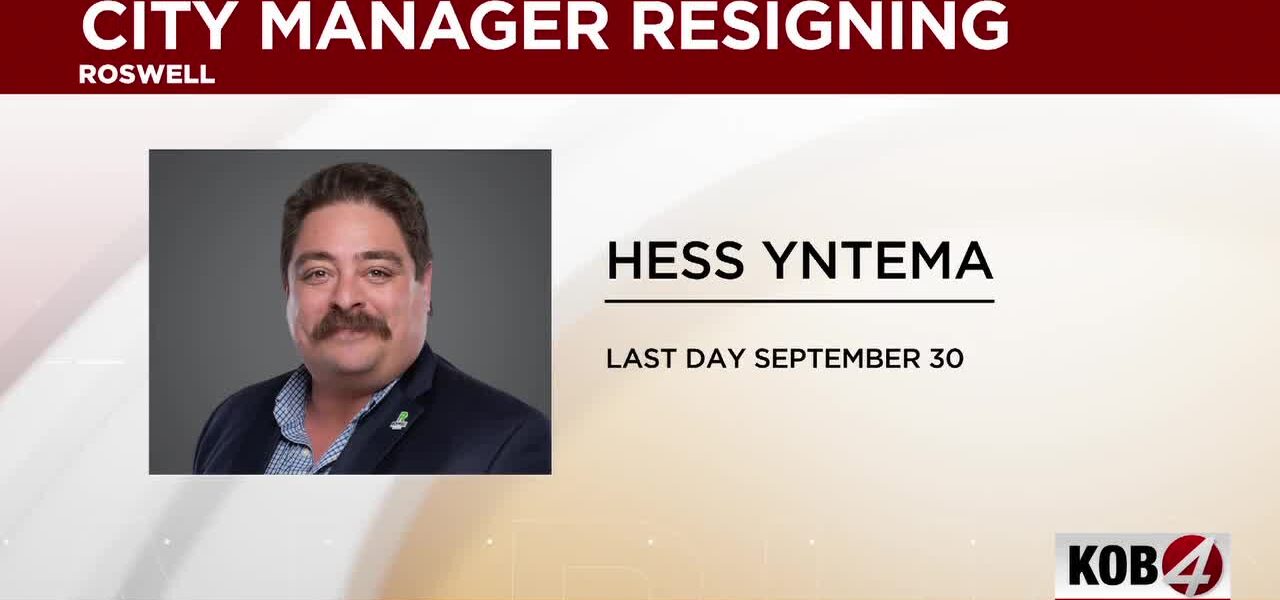
Roswell’s Bureaucratic ‘Hot Potato’ Claims Another as City Manager Heads for Private Practice
POLICY WIRE — Roswell, N.M. — In the desert plains of New Mexico, where mysteries supposedly land with unnerving regularity, another kind of phenomenon unfolds—this one involving paper, policy, and a...

POLICY WIRE — Roswell, N.M. — In the desert plains of New Mexico, where mysteries supposedly land with unnerving regularity, another kind of phenomenon unfolds—this one involving paper, policy, and a remarkably brief stint at the municipal helm. It isn’t crashed saucers stirring the local rumor mill, not this time. Instead, it’s the hasty departure of Roswell’s latest City Manager, a professional whose tenure barely outlasted the winter chill, demonstrating with stark clarity just how swiftly ambition can pivot from public trust to personal profit.
Hess Yntema, who began his challenging dance with city hall in February, found himself penning an exit note less than half a year later. It’s a rapid-fire turnaround, even for a town that’s seen its share of comings — and goings, especially in leadership. You’d think such roles carry a certain heft, a long-term commitment. But, Yntema will complete his duties at the end of September, marking a six-month stretch that probably felt like six years to someone accustomed to the legal world’s pace. [QUOTE_PLACEHOLDER]
And what’s the hurry, you ask? No grand conspiracy here, no dramatic fall from grace. He plans to enter private legal practice in Roswell. For a profession that demands stability, continuity, and often a thick skin for incessant public scrutiny, Yntema’s move back to the relatively calmer—and likely far more lucrative—waters of private law just reinforces a common, if uncomfortable, truth: public service, especially in administrative roles, is often a stepping stone, a temporary proving ground, or sometimes, just a pit stop.
The city’s brief liaison with Yntema—a mere flash in the bureaucratic pan—underscores a global pattern, too. Look at civil service across nations. In Pakistan, for example, high-ranking officials, often trained at the National Management College (formerly the Pakistan Administrative Staff College), frequently transition between government roles and consultancies, or even to politically aligned private enterprises. Their experiences are highly valued, sometimes in ways that blur ethical lines, much like the revolving door in Western capitals. And because of it, institutional memory often suffers. Policies get redesigned, initiatives stall out, — and the public? Well, they’re left wondering if anyone’s steering the ship for more than a quick trip.
Yntema turned in his resignation on July 1. That’s quick work, a decisive cut. While the original content states that Roswell’s city manager is stepping down after a few months on the job, it certainly rings true, an almost comical understatement. The brevity of this term has implications for policy execution, for project continuity—for everything really. Imagine the city’s departments, just getting acquainted with their new boss, and now having to prepare for another changing of the guard.
📄 POLICY WIRE WHITEPAPER PUBLISHED: PAKISTAN'S NATIONAL SECURITY POLICY PRIORITIES
👉 READ BY CLICKING HEREWho’s up next? The mayor will nominate the next city manager. But, like any good parliamentary democracy (or a local city council, which functions somewhat similarly on a micro-scale), The city council must approve that person before they can take the job. This introduces a whole other layer of political wrangling, internal negotiations, — and potential delays. The search itself costs money, time, and resources—things municipal governments usually don’t have in endless supply. A 2023 survey by the International City/County Management Association (ICMA) indicated that the average tenure for a city manager in U.S. municipalities is roughly 5.4 years, highlighting just how starkly Yntema’s rapid exit deviates from the norm.
One might wonder what makes a person take on such a public-facing, often thankless job, only to abandon it within six months. Was it the weight of expectation? The labyrinthine corridors of municipal bureaucracy? Or perhaps simply the irresistible pull of self-interest, rebranded as career progression? Sometimes, the grand title of City Manager—with all its public pomp and perceived gravitas—is just an impressive line on a resume, a launchpad, for more comfortable landings. It’s a pragmatic calculation many professionals make, irrespective of which continent they live on. They see where their talents are best rewarded, and increasingly, that reward isn’t in public service, not anymore anyway.
What This Means
The swift departure of Roswell’s City Manager, Hess Yntema, after a barely discernible tenure, speaks volumes about the inherent instability shadowing contemporary municipal governance. It’s not just a Roswell problem; it’s an American municipal challenge, and for that matter, a global one, especially when you consider rapidly developing regions or nations struggling with political corruption. Economically, this kind of turnover is expensive—recruitment costs, onboarding time, and lost productivity aren’t abstract figures; they impact budget lines, taxpayer money. But more subtly, — and perhaps more significantly, it erodes public trust. When leadership cycles through faster than seasons, it becomes incredibly difficult to establish coherent, long-term policy initiatives. How can citizens buy into a vision when the visionary leaves after a handful of months? Politically, it signals a deeper malaise: either the job was impossibly difficult, or the incentives of private enterprise are simply too attractive to resist. What this creates is a leadership vacuum, a sort of perpetual caretaker government where significant, brave decisions are put on hold because no one wants to leave their personal stamp on an issue they won’t be around to see through. It means that while the private sector gains experienced professionals, the public sector continues to wrestle with the ‘hot potato’ of executive leadership, often at the expense of effective administration. And for the next individual the mayor will nominate, and the council must approve, the question isn’t just if they’re qualified, but if they’ll stay—a concern that probably shouldn’t even factor into a public service role. This sort of churn—you’ll find its echoes in the often-precarious balance of governance in burgeoning economies, where leadership stability directly affects foreign investment, say in Islamabad or Jakarta. It’s not always about grand policy shifts; sometimes, it’s the humdrum, the day-to-day stability, that truly shapes a community’s future. For more on how local events ripple into larger implications, consider this analysis on global price alarms originating from economic shifts.
📖 GET YOUR FREE COPY NOW OF POLICY WIRE DIGITAL MAGAZINE JULY 2026 EDITION
👉 READ & DOWNLOAD FREE MAGAZINE