


Fentanyl Follies: New Mexico’s Governor Challenges DEA’s Risky Long Game as Protocols Shift Under Scrutiny
POLICY WIRE — Washington, D.C. — For any federal agency, the fine print is everything. The shift of a single word in an official protocol can — quite literally — mean the difference between life and...

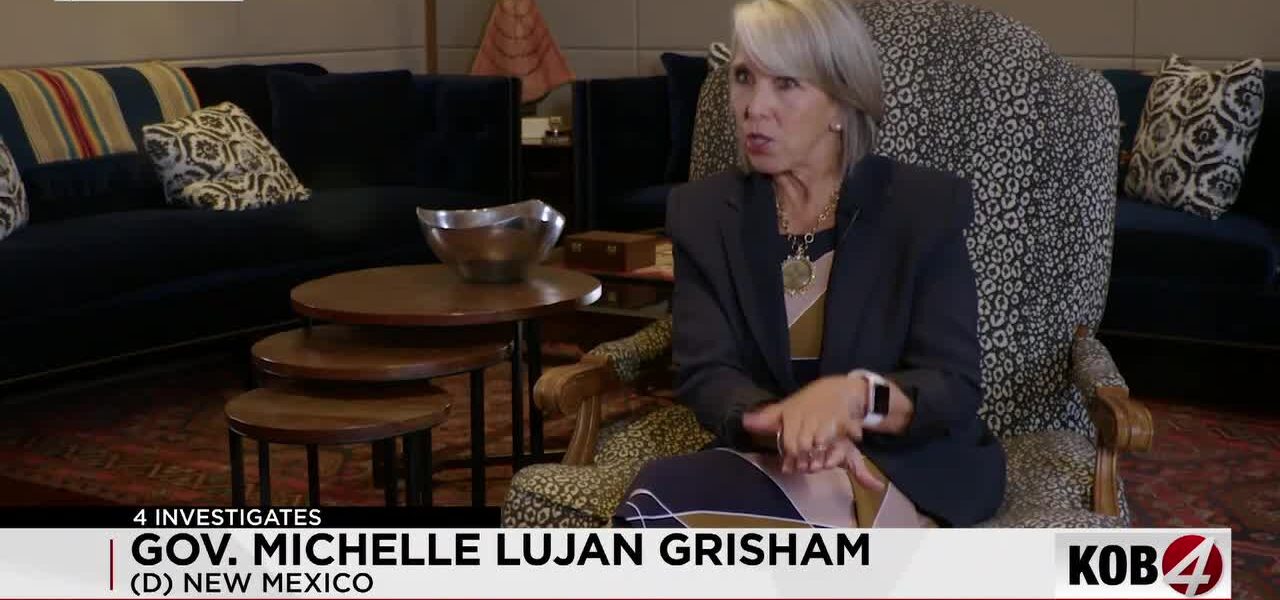
POLICY WIRE — Washington, D.C. — For any federal agency, the fine print is everything. The shift of a single word in an official protocol can — quite literally — mean the difference between life and death for countless people. It certainly appears that way in New Mexico, where the subtle evolution of Drug Enforcement Administration guidelines has become the improbable focal point of a simmering national crisis, much to the exasperation of Governor Michelle Lujan Grisham.
It’s a peculiar kind of bureaucratic ballet, this quiet dance between what a law enforcement agency says it should do and what it might, in practice, actually do. But when the substance in question is fentanyl, a synthetic opioid responsible for over 75,000 overdose deaths in the U.S. during the 12-month period ending October 2023, according to the CDC, that quiet dance gets very, very loud, very fast. That’s why Lujan Grisham is calling out the elephant in the room: alleged federal agency discretion potentially letting a deadly tide wash over her state, all in the name of a larger strategy. [QUOTE_PLACEHOLDER]
It’s not just a regional dust-up, mind you. The principle at stake here—whether law enforcement should prioritize immediate public safety or strategically tolerate limited harm to catch bigger fish—echoes far beyond New Mexico’s high deserts. Think about counter-narcotics efforts in places like Pakistan, a country often battling cross-border drug flows from neighboring Afghanistan. There, the intricate politics of intercepting or interdicting vast heroin or opioid convoys often pit the urgency of immediate seizure against the complex intelligence-gathering required to dismantle cartels with deep local roots. This kind of calculated risk-taking isn’t new; it’s a grim constant in the global drug trade, where the ‘greater good’ is always negotiable, always messy. And, it seems, it’s landed right at America’s doorstep.
New Mexico’s governor, a seasoned politician who’s certainly seen a thing or two, hasn’t pulled any punches. She’s demanding a direct response from the highest echelons, making it abundantly clear that this isn’t some parochial squabble. But the silence from Washington, D.C., speaks volumes, or rather, doesn’t. Lujan Grisham has stated, I think the President is going to be very interested in this problem – and my sense of it’s – he’s going to be willing to do something. We’ll see if I’m right
.
The genesis of this showdown? A DEA whistleblower’s inconvenient truth, made public via 4 Investigates, accusing agents of actively allowing fentanyl to be distributed on New Mexico streets. The motivation: building more significant criminal cases, presumably leading to more splashy arrests and bigger headlines. The original content cites a DEA whistleblower claimed agents watched fentanyl pills get sold in New Mexico while building bigger criminal cases
.
📄 POLICY WIRE WHITEPAPER PUBLISHED: PAKISTAN'S NATIONAL SECURITY POLICY PRIORITIES
👉 READ BY CLICKING HEREIt turns out that, conveniently, after these claims surfaced in 2023, the rules of the game changed. A protocol from 2019 apparently dictated that agents should make reasonable efforts to prevent distribution of fentanyl as soon as practicable
. Pretty straightforward, you’d think. But enter 2024, — and like magic, the phrasing adjusted. The new script allowed investigative teams to use discretion on when to take action
. Discretion. What a wonderfully malleable word that’s, especially when lives are hanging in the balance. It’s the kind of subtle linguistic legerdemain that policy wonks and strategists in places like Islamabad or Karachi understand intimately when crafting international agreements or domestic security mandates. They know how quickly a phrase can become a loophole.
But the governor isn’t buying the agency’s reticence. She has been vociferous in her request for attention. She needs concrete action. She wants serious players at the table, explicitly calling for: I want the President, I want Susie Wiles, I want Stephen Miller, I want someone from the Department of Justice in the room. Because this is that serious, — and I believe that this protocol exists
. Then, with a flourish of defiance, she threw down the gauntlet: They need to show me that it doesn’t. And I believe that we have a chance to save lives all across the country
.
And where is the federal government in all this? Officially, they’re not commenting beyond saying a new investigation is looking into the allegations
. It’s the classic play—the investigative shield. Meanwhile, according to the Governor, the White House has remained an unreachable citadel. No response. No meeting. Just that stark, unsettling quiet. You’ve got to wonder if this entire episode isn’t less about the rule of law and more about the cynical calculus of political inconvenience versus the cold reality of opioid addiction. And that’s a tough pill for New Mexicans to swallow—pills that were allegedly permitted to hit the streets in hundreds of thousands of fentanyl pills
, no less.
What This Means
This incident is less about a mere bureaucratic oversight and far more about the perpetual tension between tactical law enforcement objectives and the immediate, sometimes brutal, impact on public health. When a federal agency, purportedly tasked with preventing the proliferation of illicit substances, finds itself accused of deliberately allowing a deadly drug like fentanyl to circulate, it rips at the very fabric of public trust. The alteration of DEA protocol from 2019 to 2024—shifting from a clear mandate for prevention to a more ambiguous directive granting ‘discretion’—illustrates a dangerous evolution in strategy. It hints at a systemic comfort with, or even preference for, allowing lower-level criminal activity to persist, presumably to gain intelligence on higher-echelon traffickers. While such strategies are not uncommon in the shadows of counter-narcotics, particularly in regions like Afghanistan’s poppy fields, their application within U.S. borders against an acutely lethal substance like fentanyl forces a serious reckoning. Economically, the cost of an expanded drug market, even a ‘controlled’ one, manifests in overwhelmed emergency services, lost productivity, and heightened public health expenditures—all falling on state and local governments already grappling with fiscal constraints. Politically, the lack of White House engagement, despite the governor’s fervent appeals, suggests a potential unwillingness to confront a politically sensitive issue that could expose uncomfortable truths about federal drug enforcement policies under the previous administration, creating a potential liability for the current political cycle. This isn’t just about New Mexico; it’s about whose lives are deemed expendable in the larger chess game of drug interdiction, and the ethical compromises inherent in that chilling equation.
📖 GET YOUR FREE COPY NOW OF POLICY WIRE DIGITAL MAGAZINE JULY 2026 EDITION
👉 READ & DOWNLOAD FREE MAGAZINE