


Pirate Flick as Policy? Albuquerque’s Odd Strategy for Civic Peace
POLICY WIRE — Albuquerque, New Mexico — It wasn’t the searing gaze of a municipal budget analyst, nor the stern visage of a policy wonk. No, in Albuquerque this week, the battle for civic...

POLICY WIRE — Albuquerque, New Mexico — It wasn’t the searing gaze of a municipal budget analyst, nor the stern visage of a policy wonk. No, in Albuquerque this week, the battle for civic virtue arrived clad in tricorne hats and eye patches, sailing straight onto a drive-in screen at Balloon Fiesta Park. And they called it ‘nonviolence’.
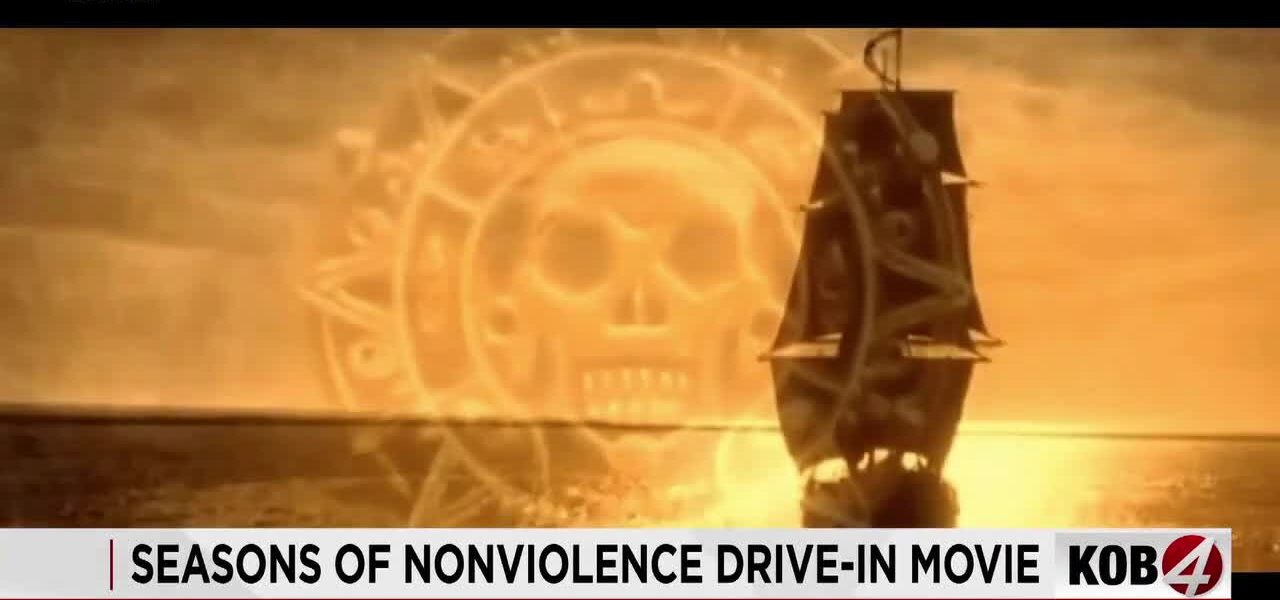
For Wednesday night, the city’s joint Albuquerque and Bernalillo County Seasons of Nonviolence program traded complex sociological diagrams and earnest town hall discussions for a decidedly more… swashbuckling approach. Their latest community engagement gambit? A free screening of “Pirates of the Caribbean, The Curse of Black Pearl.” An intriguing choice, you’ve got to admit, when your core message is about peaceful coexistence and conflict resolution.
One might easily wonder: what exactly does Captain Jack Sparrow’s chaotic, often violent, quest for treasure teach us about turning the other cheek? But hey, maybe there’s a nuanced read here. Or, just perhaps, it’s about getting bodies, or cars, into a communal space. You take a pledge for nonviolence, you snag a voucher for free food. Simple. Transactional, even. Gates open at 6 p.m.; the adventure—and the pledge—begins at 8 p.m. Patrons can sprawl out on the grass, blankets spread, or cocoon themselves in their vehicle’s relative isolation. Options.
Bernalillo County Commissioner Adrian Montoya, a man not prone to grandstanding—at least not overtly—sees method in the cinematic madness. “Look, in these times, when community bonds sometimes feel… frayed, these low-barrier entry points, they work. People want to connect,” Montoya stated, with the practiced earnestness of someone who’s had to defend public spending on everything from potholes to puppy parks. “We’re not naive. One movie won’t eradicate gang violence. But it builds common ground. And that’s what we’re aiming for here.”
He’s got a point. Building common ground often involves finding shared experiences, however fleeting or quirky. Because, let’s be honest, trying to rally citizens around a six-page treatise on behavioral economics probably won’t draw a crowd this large—especially not for free grub. The city knows its demographics. According to a recent analysis by the Department of Parks and Recreation, community-hosted events saw a 35% increase in youth attendance in areas offering entertainment alongside educational messaging last fiscal year. It’s not about the depth of the lesson, sometimes it’s just the lure of popcorn.
📄 POLICY WIRE WHITEPAPER PUBLISHED: PAKISTAN'S NATIONAL SECURITY POLICY PRIORITIES
👉 READ BY CLICKING HEREMishal Khan, program director for Seasons of Nonviolence—and presumably someone who spends more time discussing peace than plunder—articulated the initiative’s deeper strategy. “It’s about re-centering community. Folks come out for the movie, for the food, but they also engage, however briefly, with the idea of a shared commitment to a safer Albuquerque,” Khan explained. She pointed to similar, if culturally distinct, efforts across the globe. “Think about how even in places like Pakistan’s Sindh province, folk theater or poetry recitals are subtly, quietly used to foster community dialogue, address local disputes—it’s just a different medium. The goal? To remind people they’re part of something larger. That their individual choices ripple outward.” Her reference wasn’t entirely out of left field; such cultural conduits for social messaging aren’t unique to New Mexico’s high desert.
The entire endeavor smacks of a peculiar political jujitsu: diverting potential social fragmentation by funneling collective energies into a wholesome, if conceptually dissonant, experience. It’s clever. And it sidesteps the stickier issues, doesn’t it?
What This Means
The Albuquerque drive-in initiative, ostensibly a straightforward community event, serves as a microcosm for contemporary civic engagement strategies—especially in post-pandemic, fiscally constrained environments. It’s a pragmatic, some might say cynical, recognition that traditional civic messaging often falls flat. The pivot to popular culture, specifically a wildly successful adventure film with an underlying message that one has to really squint to see, suggests that authorities are prioritizing broad participation over profound ideological indoctrination. Economically, offering free events with a mild educational component is a budget-friendly way to maintain a semblance of active public service, particularly when more costly, high-impact programs might face cutbacks. Politically, it allows elected officials to claim investment in community wellbeing without necessarily tackling systemic issues directly. It’s a feel-good photo opportunity that doubles as a modest attempt at social engineering, leveraging distraction to deliver a pledge. This strategy reflects a broader trend where government functions are increasingly outsourced, or ‘gamified,’ to appeal to a digitally-saturated populace accustomed to instant gratification. While not a cure-all for societal ills, it demonstrates how communities are learning to innovate with their outreach, however incongruous the methods may seem at first glance. Ultimately, it’s a gamble that a few hours under the New Mexico stars, shared over a buccaneer tale and a free hotdog, can plant a seed of civic responsibility more effectively than any mayoral decree. And that’s saying something.
📖 GET YOUR FREE COPY NOW OF POLICY WIRE DIGITAL MAGAZINE JULY 2026 EDITION
👉 READ & DOWNLOAD FREE MAGAZINE