


Luxury Tower’s Buckle Exposes Midtown’s Structural Underbelly, Raises Alarms
POLICY WIRE — NEW YORK — There isn’t much in Manhattan that stays put, it’s true. The whole place seems to surge — and recede, reinvent itself block by block, like a vast, ambitious...

POLICY WIRE — NEW YORK — There isn’t much in Manhattan that stays put, it’s true. The whole place seems to surge — and recede, reinvent itself block by block, like a vast, ambitious amoeba. But when a gleaming, glass-and-steel ambition starts visibly bowing inward, its structural integrity suddenly in question, well, that’s a whole different kind of movement. This week, an aspiring luxury residential tower in midtown, a conversion from a 1970s-era office monolith, stopped being just another pricey urban renewal project. It became a spectacle of fear, a concrete metaphor for risk on a truly staggering scale.
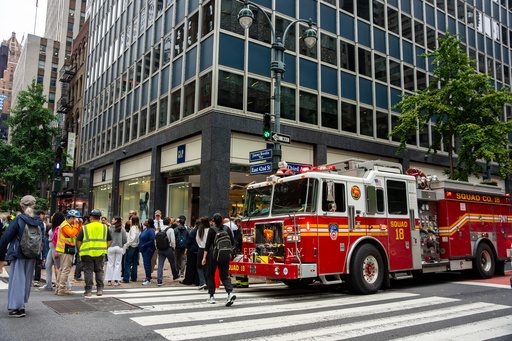
It began as many such urban dramas do—quietly. Then, workers spotted it: buckled columns, sagging floors, signs that this building wasn’t just old; it was struggling. Fast forward a few frantic hours, and firefighters were on the scene around 8 a.m., ushering out not just construction crews but occupants from surrounding buildings. And we’re not talking about just any neighbors here. A school, a couple of hotels, and, most the Israeli consulate, just across the street, all got the boot. Imagine the logistical nightmare of clearing a diplomatic mission, even if for only a few hours. That’s some serious disruption. Because when structural integrity wanes, trust evaporates even faster. [QUOTE_PLACEHOLDER]
Mayor Zohran Mamdani, usually tasked with city policy, not structural engineering crises, chimed in by early afternoon, stating that the building remained unstable. He didn’t mince words, calling it an extremely serious situation. You bet it was. For much of Tuesday, a significant chunk of prime Manhattan real estate around Grand Central Terminal – a bustling artery for commuters, residents, and tourists alike – was essentially under lock and key. People couldn’t get home. They couldn’t go to work. Imagine the ripple effect. And it makes you wonder what kind of vetting goes into these massive projects that aim to squeeze every last square foot out of an aging skeleton.
The edifice itself, a former headquarters for pharmaceutical giant Pfizer, was empty save for the brave souls attempting the conversion. But it was that very conversion, the ambitious reshaping of more than 1,600 units—making it the city’s largest office-to-residential project according to the developers—that likely introduced these headaches. Gensler, the architectural firm leading the transformation, planned to add more than a dozen stories atop the existing structure. It sounds good on paper, all that added value. But adding significant weight to a ’70s frame requires more than just good intentions.
Nathan Berman, founder of MetroLoft, one of the developers, gave the Wall Street Journal a direct, if somewhat self-exculpatory, take. The added weight from widening the top 15 or so floors of the building likely caused the damage, he suggested. Why those particular two columns — and nothing else? We don’t know. He also said, Ninety-five percent of the building, the structure is sound — and intact. A brave face, surely, but one wonders how reassuring 95 percent feels when that other five percent is visibly trying to opt out of supporting the rest. And experts agree; Emily Guglielmo, a structural engineer from California, didn’t sound terribly optimistic, stating: A lot of these things — cracking, deflections, sagging — those elements are probably not salvageable.
The city’s building department records, a cold hard record of realities, show that this particular project has faced fines before. We’re talking several safety violations, from falling glass — and metal to a worker taking a tumble from a ladder. These weren’t abstract issues. But it often takes a catastrophic near-miss, a visible buckle on the 21st floor, for a public scare to register, and for the consequences to weigh more than developer profits. The repairs won’t be cheap, engineers predict. They’re expensive, no kidding. The temporary shoring is just that—temporary—and getting it right means heavy analysis and probably tearing out and replacing those compromised supports. This isn’t just a band-aid fix.
Ramesh Yallappa, a tourist from—perhaps India, given the name, though the report doesn’t specify—was amongst those evacuated from a nearby hotel. He initially thought it was a fire. That moment, we were really really scared, he recounted. That visceral fear? It’s not limited to Manhattan’s skyscrapers. From Islamabad to Mumbai, sprawling metropolises grapple with rapid development and aging infrastructure, sometimes cutting corners in a desperate race for progress. It’s a reminder that urban ambition, unchecked by rigorous safety standards and ethical oversight, can just as easily build precarious monuments to risk as it can construct monuments to modernity. The policy implications here echo far beyond a single city block.
What This Means
This incident isn’t merely about a single compromised high-rise; it’s a stark spotlight on the regulatory labyrinth and economic pressures defining urban development across global cities. New York, a bastion of stringent codes, still found itself facing a near-miss where commercial expediency, in this case a high-profit luxury conversion, might’ve nudged safety considerations a bit too far down the priority list. It exposes the inherent tension between maximizing investment returns on old assets and ensuring absolute public safety. It implies that perhaps city agencies need more proactive, less reactive, oversight, especially when a ‘new addition’ fundamentally alters the structural demands on a 1970s-era skeleton.
Economically, this sort of high-profile failure—even a contained one—can ripple. It creates uncertainty, possibly dampening investor confidence in large-scale office-to-residential conversions, which have become a hot ticket item in the post-pandemic real estate market. Insurers are watching. Potential buyers are definitely watching. the extensive, costly repairs projected for this building—along with potential legal ramifications for developers who, by city records, already had several safety violations—serve as a sharp reminder that a quick profit can quickly unravel into an expensive, public relations nightmare. One might wonder if, globally, developing cities, often plagued by weaker regulatory bodies and corrupt practices, are ticking time bombs when it comes to such structural ambition.
It’s about urban resilience. The swift, albeit chaotic, evacuation of diplomatic facilities like the Israeli consulate underscores a less obvious policy concern: the security and operational continuity of international missions situated in increasingly dense, often haphazardly developing urban landscapes. The interconnectedness of global cities means a structural problem in one affects not just local residents but international relations and safety protocols. Maybe this scare, while inconvenient, will catalyze a deeper look at how cities manage the delicate balance between progress and peril, and what it truly takes to make such complex projects genuinely secure for everyone.