


WNBA’s All-Star Shake-Up: Coaches Snub Fan Favorites, Sparking Discontent
POLICY WIRE — New York, USA — It wasn’t the fan vote, nor the media circus, but a quiet cabal of basketball tacticians who ultimately shaped the league’s mid-season spectacle. This week, the WNBA...

POLICY WIRE — New York, USA — It wasn’t the fan vote, nor the media circus, but a quiet cabal of basketball tacticians who ultimately shaped the league’s mid-season spectacle. This week, the WNBA pulled back the curtain on its All-Star reserves, and if you expected a clean reflection of popularity or even, well, availability, you’d be quite mistaken. Instead, a rather intriguing narrative emerged, featuring — you guessed it — some good old-fashioned drama over who got a ticket to the big dance and who was left looking in.
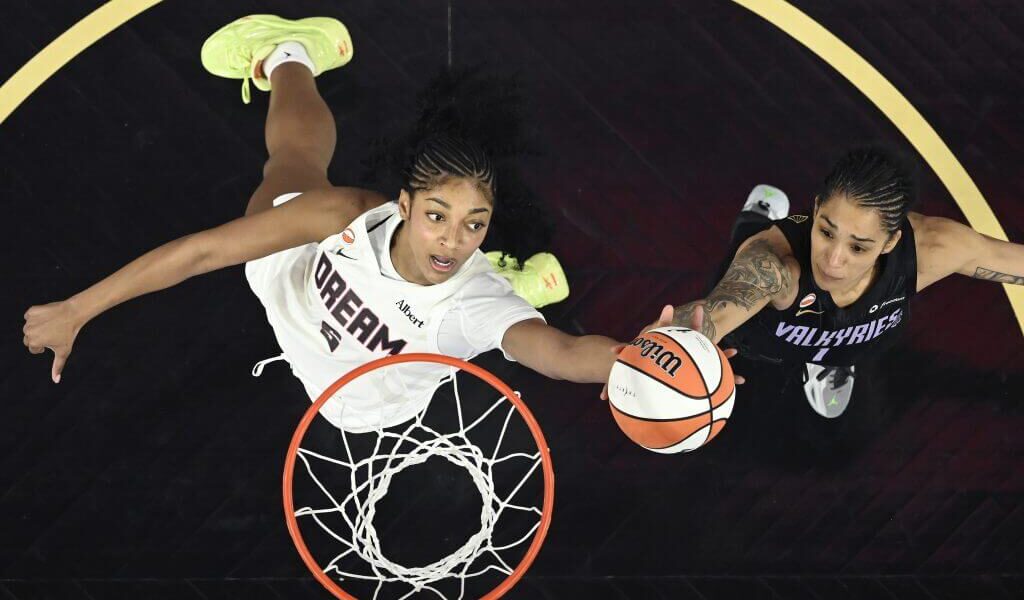
The Atlanta Dream, against all expectations, now boasts the most All-Star reserves. And that’s after having no players voted as All-Star starters. Angel Reese—yes, that Angel Reese—is on the list. So are Dream guards Rhyne Howard — and Allisha Gray. For Reese, it’s her third time making the cut. For Gray and Howard, their fourth. But Reese, never one to mince words, reportedly found her team’s complete omission from the starter roster rather [QUOTE_PLACEHOLDER]. It feels a bit like a diplomatic snub, doesn’t it, when the people decide one way — and the ‘experts’ decide another? But hey, coaches gotta coach, right?
It’s those league’s 15 head coaches, apparently cloistered away, who made these decisions. Their directive was quite specific: voting for three guards, five frontcourt players and four players at either position regardless of conference. Oh, and here’s a fun one: Coaches were not permitted to vote for their own players. A fine rule, that, designed to prevent obvious favoritism. Though one wonders if it simply redirects the bias elsewhere, to the rival a coach respects most — or fears least. This entire process, with its opaque layers and rules, can feel a bit like electoral politics in some regions; where the mechanisms are understood, but the outcomes consistently raise eyebrows, begging questions about true representation or whether, say, local sentiment truly aligns with central decisions. Much like the complex electoral machinations sometimes observed from Pakistan’s shores to other bustling metropolises, the path to an All-Star berth isn’t always straight.
Speaking of complexity, the process for selecting starters was itself a byzantine beast. It ran on a weighted score of fan votes (50 percent), media votes (25 percent) and player votes (25 percent). So, while you’re shouting at your screen, remember that only half of that equation was actually you. But even that intricate formula had a hiccup: player voting was incomplete. We’re talking about a grand total of only about 85 players in the league casting ballots. Not exactly a resounding mandate, is it? to rub salt in the wound, Several Sparks players didn’t receive ballots before the votes were tallied. You can almost hear the collective groan. It’s tough to make a convincing argument about the democratic spirit of the game when fundamental ballots don’t even reach all the eligible voters. You see this kind of logistical lapse—and the resulting outrage—in various forms across the globe. From fledgling democracies struggling with election infrastructure to international bodies trying to consolidate consensus among diverse stakeholders. It’s never simple, it’s never perfect. It’s human. And in sports, like politics, it gets messy.
Kelsey Plum, a true sharpshooter for the Los Angeles Sparks, became a poster child for this system’s quirks. She was, quite the league’s leading scorer before being sidelined with a lower left leg injury. A pure no-brainer for a starting spot, you’d think. Yet, no. But fear not, the coaches saw fit to right at least that particular wrong, placing her among the reserves alongside teammate Nneka Ogwumike. Ogwumike, by the way, is a league legend, set to make her 11th All-Star appearance—tying three-time WNBA champion Diana Taurasi for second most in WNBA history. four-time WNBA champion Sue Bird leads the league with 13 All-Star nods. It goes to show: talent can be sidelined by circumstance, but sometimes, old-fashioned meritocracy, or at least coach’s picks, still wins out. And yes, she’ll be playing with Jackie Young (Las Vegas Aces), Jonquel Jones (New York Liberty), Courtney Williams (Minnesota Lynx), Sonia Citron (Washington Mystics), and Kiki Iriafen (Washington Mystics), among others. Even Marina Mabrey (Toronto Tempo) — and Dominique Malonga (Seattle Storm) are joining the party, both first-timers. The whole shindig, a proper midsummer classic, is scheduled for July 25 at the United Center in Chicago.
What This Means
The WNBA, much like any burgeoning enterprise seeking wider legitimacy and market penetration, operates on perception as much as performance. This All-Star voting kerfuffle—where fan sentiment clashes with institutional choices, and fundamental voting mechanics falter—doesn’t exactly project an image of seamless professionalism. But it could also represent an opportunity. A chance to re-evaluate how fan engagement truly translates into influence, how player voices are genuinely captured, and how coaches, operating within their own professional circles, might possess a unique, perhaps less populist, metric for athletic value.
Economically, All-Star games are visibility goldmines. They attract eyes, sponsors, and, eventually, dollars. Discrepancies in selections, especially for a league that’s seen a surge in popularity, risk alienating the very fans it’s trying to cultivate. Because when players like Plum are sidelined from a starting spot despite overwhelming statistics, or when players aren’t even given a ballot to cast, it implies a disconnect between the league’s top brass and its core constituencies: the players, and critically, the fans. It’s a balance. The league needs its veterans, its legends, but it also needs to make room for new, exciting talent that draws crowds and social media chatter. Fail to nurture both, — and you risk a system that’s neither revered for tradition nor electrifying for innovation. It isn’t about just putting bodies on a court; it’s about crafting a compelling narrative for the next generation. And that’s big business. Or, at least, it ought to be.